A Moment Frozen in Motion: Exploring Edgar Degas’s “Dancers Relaxing”
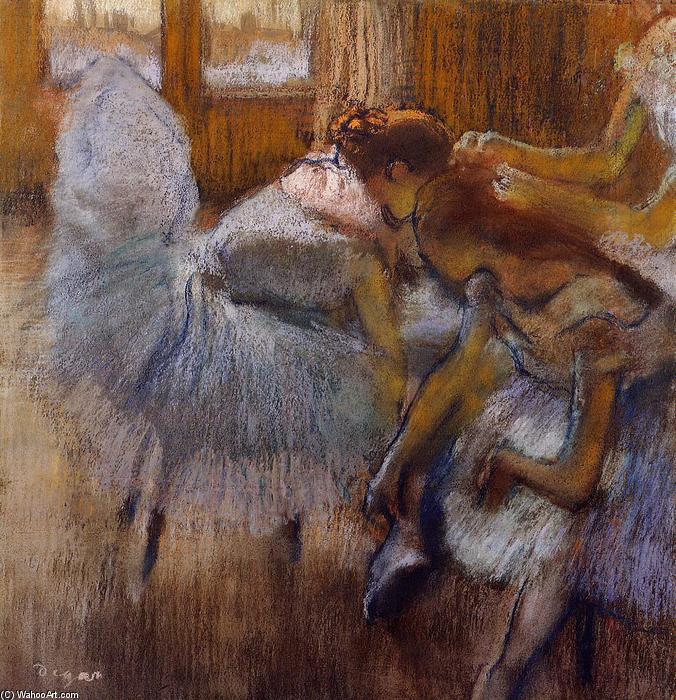
The world of art holds countless treasures—paintings that whisper stories of bygone eras, sculptures that embody timeless beauty, and prints that capture fleeting impressions. Among these masterpieces stands “Dancers Relaxing,” a pastel by the celebrated French Impressionist Edgar Degas, completed in 1885. More than just a depiction of ballet dancers; this artwork delves into the complexities of artistic observation and the subtle nuances of human emotion—a testament to Degas’s singular vision.
The Artist's Vision: Beyond Impressionism
While often categorized as an Impressionist, Degas fiercely resisted such classification. He insisted on being recognized as a Realist, driven by his unwavering commitment to portraying subjects with uncompromising accuracy. This approach isn’t merely stylistic; it reflects Degas’s profound respect for the world around him and his meticulous attention to detail—qualities that permeate every facet of his oeuvre. Unlike Impressionists who sought to capture the ephemeral effects of light and atmosphere, Degas focused on capturing movement itself—a challenge he tackled with remarkable skill and sensitivity.
A Study in Pastel: Technique and Atmosphere
“Dancers Relaxing” exemplifies Degas’s mastery of pastel technique. He skillfully blended hues of pink, mauve, and peach to create a luminous, ethereal atmosphere that transcends mere representation. The soft textures of the pastel medium lend themselves beautifully to capturing the delicate contours of the dancers' bodies and the subtle folds of their clothing—elements that contribute significantly to the painting’s overall impression of tranquility. Notice how Degas utilizes hatching and cross-hatching to convey depth and volume, subtly hinting at the underlying musculature beneath the surface.
The Ballet Stage: Context and Symbolism
Painted during a period of intense artistic experimentation, “Dancers Relaxing” speaks volumes about the cultural landscape of late 19th-century France. The ballet was undergoing a revival, attracting audiences eager for spectacle and refinement—a fascination that mirrored Degas’s own preoccupation with performance art. The two dancers depicted in repose are not merely figures on a stage; they embody themes of vulnerability, companionship, and the quiet dignity of everyday life. The dancer resting her head on the lap of her fellow performer symbolizes intimacy and support—a poignant reminder of the human connections that underpin artistic creation.
Emotional Resonance: Capturing Tranquility
Ultimately, “Dancers Relaxing” succeeds in conveying a profound sense of serenity. Despite its formal setting—the chair and couch providing a grounding element against the pastel hues—the painting radiates warmth and compassion. Degas’s masterful use of color and texture invites viewers to linger on the canvas, absorbing the stillness of the moment and contemplating the beauty of human interaction. It's an artwork that transcends mere visual pleasure; it offers a glimpse into the artist’s soul—a testament to his ability to transform observation into enduring emotion.
- Artist: Hilaire Germain Edgar Degas
- Year Created: 1885
- Medium: Pastel
- Location: Private Collection