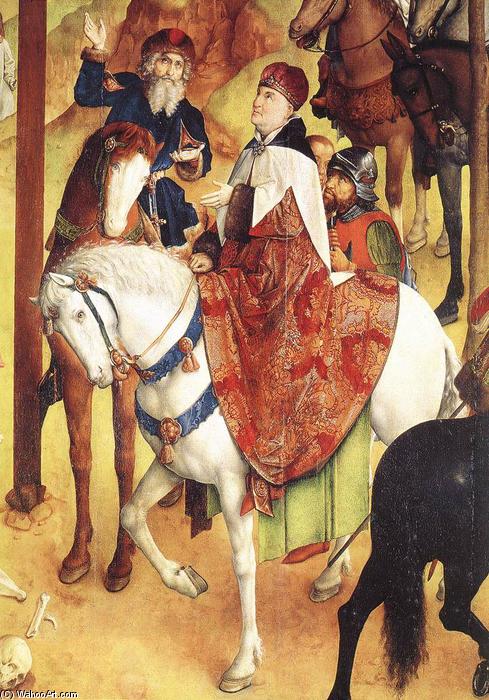
A Window into the Soul: Hugo van der Goes’ Calvary Triptych (detail)
The 1465 oil-on-panel painting, “Calvary Triptych (detail),” by Hugo van der Goes isn't merely a depiction of a biblical scene; it’s an immersive experience, a profound meditation on faith, mortality, and the human condition. Born in Ghent around 1440, Van der Goes was a revolutionary figure who shattered the conventions of his time, injecting a startling realism and psychological depth into his work that would profoundly influence generations of artists. This particular detail panel, part of a larger triptych now housed at the Cathedral of St Bavo in Ghent, offers a concentrated dose of this artistic power – a glimpse into the artist’s intensely personal vision.
The scene itself is instantly arresting: a central figure, likely representing Christ on the cross, dominates the composition. He's not idealized or distant; instead, he possesses a palpable humanity—a weary strength etched onto his face, a quiet dignity in his posture. Mounted upon a magnificent white horse, adorned with a vibrant blue cloth, he embodies both sacrifice and regal authority. The horse’s head is turned towards the viewer, creating an immediate connection, as if inviting us to share in this moment of profound sorrow and acceptance.
- Northern Renaissance Realism: Van der Goes was a pioneer of Northern Renaissance realism, moving beyond the stylized depictions prevalent in earlier Flemish art. His meticulous attention to detail—the texture of the clothing, the folds of the drapery, the subtle nuances of light and shadow—is breathtaking.
- Psychological Depth: More than just a visual representation, this panel conveys a powerful sense of emotion. The artist masterfully uses color – rich reds, deep blues, and earthy browns – to evoke feelings of grief, contemplation, and spiritual yearning.
- Symbolic Elements: The presence of the skull at the base of the scene is a potent reminder of mortality, a common motif in religious art of this period, yet rendered with an unsettling directness that forces us to confront our own vulnerability.
The Artist’s Hand and Technique
Van der Goes' mastery lies not only in his subject matter but also in his technical skill. He employed a technique known as *sfumato*, subtly blurring lines and edges to create an atmospheric effect, lending the scene a sense of depth and realism. The use of oil paint allowed him to achieve incredible luminosity and richness of color – qualities rarely seen in earlier tempera paintings. Notice how he builds up layers of pigment, creating subtle gradations of tone that give the figures a three-dimensional quality.
The composition itself is carefully orchestrated. The diagonal lines created by the horse and Christ’s body draw our eye through the scene, while the surrounding figures—a diverse group of mourners and witnesses—add to the sense of drama and immediacy. The artist's use of perspective, though not entirely mathematically precise, creates a convincing illusion of space.
Historical Context and Legacy
Created around 1465, “Calvary Triptych (detail)” reflects the artistic and intellectual ferment of the late medieval period. It’s a time of growing interest in humanism, a renewed appreciation for classical art and philosophy, and a burgeoning sense of individual identity. Van der Goes' work embodies these trends, while simultaneously retaining a deeply rooted religious sensibility.
The triptych as a whole was commissioned by the city of Ghent, highlighting its importance to the artist’s career. The fact that this detail panel has survived and been studied for centuries speaks to its enduring power and artistic significance. Hugo van der Goes' influence can be seen in the work of later masters such as Jan van Eyck and Hans Memling, cementing his place as one of the most important figures in the development of Northern Renaissance art.
Bringing the Masterpiece Home: Reproductions and Inspiration
While experiencing the original is a privilege, high-quality reproductions offer an accessible way to appreciate Van der Goes’ genius. ArtsDot.com offers stunning, hand-painted reproductions that capture the essence of this iconic work. Whether you're seeking a statement piece for your living room or a thoughtful gift for an art lover, a reproduction of “Calvary Triptych (detail)” is sure to evoke contemplation and admiration.
Consider how Van der Goes’ masterful use of light, color, and composition can inform your own creative endeavors. His ability to convey profound emotion through seemingly simple imagery serves as an enduring inspiration for artists and designers alike.