The Sun King’s Eternal Gaze: A Masterpiece of Baroque Grandeur
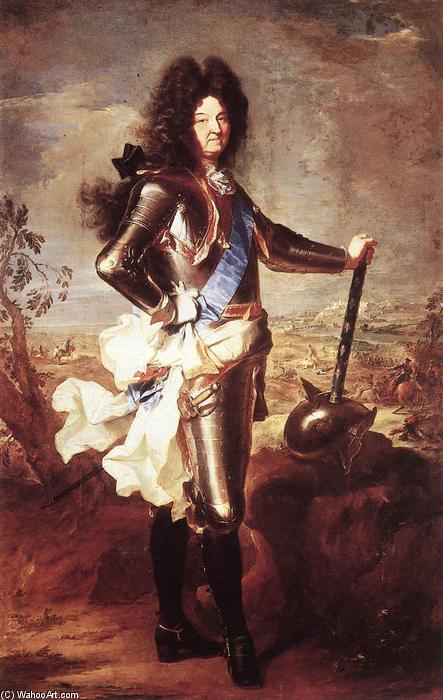
To stand before Hyacinthe Rigaud’s Portrait of Louis XIV is to encounter more than just a painted likeness; it is to be confronted by the very embodiment of absolute monarchy. Painted during the zenith of the French Baroque, this monumental work serves as a carefully constructed manifesto of power, designed to immortalize the "Sun King" as a figure of divine right and unshakable authority. Rigaud, a master of the portraiture genre, does not merely capture the physical features of the monarch; he orchestrates a visual symphony of status, using every brushstroke to reinforce the legitimacy of the Bourbon dynasty. The painting transcends the boundaries of traditional portraiture, functioning as an instrument of political propaganda that has captivated viewers for over three centuries.
The composition is a masterclass in theatricality and scale. Louis XIV is positioned centrally, commanding the space with a posture that radiates both confidence and effortless command. His gaze, direct and piercing, establishes an immediate psychological connection with the viewer, demanding respect and recognition. The artist employs a sophisticated use of chiaroscuro—the dramatic interplay between light and shadow—to sculpt the King’s features and imbue the scene with a sense of solemnity and depth. This technique does more than create three-dimensional realism; it lends a celestial quality to the subject, as if the light itself is an extension of his royal aura.
A Tapestry of Symbolism and Royal Splendor
Every element within the frame has been meticulously curated to communicate specific themes of sovereignty and conquest. The King is arrayed in a sumptuous suit of armor, polished to a brilliant sheen, which serves as a potent symbol of his role as the protector of France and a formidable warrior. Beneath this martial display lies the opulence of the French court; the heavy, ermine-trimmed coronation robes cascade around him in rich folds of blue and gold, representing the weight and dignity of the crown. This juxtaposition of the soldier and the sovereign creates a narrative of a ruler who is both physically powerful and divinely ordained.
The symbolism extends to the very objects surrounding the monarch. His left hand rests upon a meticulously rendered globe, a silent but profound declaration of his dominion over the world and the far-reaching influence of French power during his reign. The background, featuring a dramatic, cloud-swept landscape, adds an epic dimension to the portrait, suggesting that his influence is as vast and enduring as the heavens themselves. For collectors and designers, these layers of meaning offer a profound intellectual depth, making the piece much more than a decorative element; it is a conversation piece steeped in historical significance.
An Inspiration for Timeless Interiors
For the discerning art lover or interior designer, a high-quality reproduction of this masterpiece offers an unparalleled opportunity to introduce a sense of historical gravity and classical elegance into a space. The rich color palette—dominated by regal blues, burnished golds, and deep shadows—provides a sophisticated anchor for luxurious room settings. Whether placed in a formal study, a grand dining hall, or a curated gallery wall, the Portrait of Louis XIV brings with it an atmosphere of prestige and cultural sophistication.
Integrating such a work into a modern or classical interior allows for a striking dialogue between the past and the present. The painting’s ability to evoke emotion—ranging from awe at its technical brilliance to a sense of nostalgic grandeur—makes it a transformative addition to any collection. It is an investment in beauty that transcends fleeting trends, offering a permanent connection to the golden age of French art and the enduring legacy of the Sun King.