A Moment Frozen in Time: Jacopo Ligozzi’s ‘The Sacrifice of Isaac’
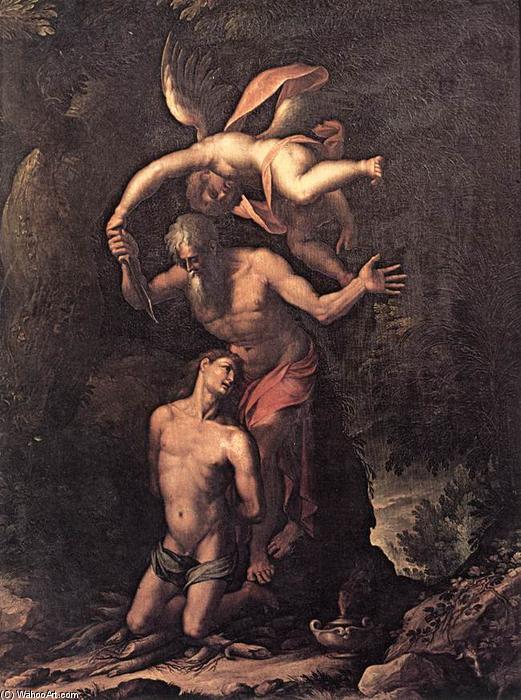
Jacopo Ligozzi's “The Sacrifice of Isaac,” painted in 1596 and now residing within the hallowed halls of the Galleria degli Uffizi, is more than just a depiction of a biblical narrative; it’s a profound exploration of faith, obedience, and the agonizing weight of divine command. This oil painting transcends its religious subject matter to become a timeless meditation on human morality and the unsettling intersection between personal responsibility and the dictates of a higher power. Ligozzi masterfully captures a pivotal moment – Abraham poised to fulfill God's decree, Isaac kneeling in resigned acceptance, and an angel intervening with a desperate plea for mercy – creating a scene brimming with dramatic tension and emotional complexity.
The painting’s stylistic roots firmly anchor it within the Florentine Mannerism of the late 16th century. Ligozzi, deeply influenced by the artistic tutelage of Giovanni Battista Buonarroti, eschews the overtly flamboyant gestures often associated with the period's exuberance. Instead, he favors a restrained palette dominated by earthy tones – ochres, browns, and muted reds – that lend the scene an atmosphere of somber gravity. The lighting is particularly striking; a dramatic chiaroscuro effect, characteristic of the Baroque era but subtly executed here, sculpts the figures with stark contrasts, emphasizing Abraham’s outstretched hand and Isaac's bowed head. This masterful use of light and shadow not only heightens the drama but also draws the viewer’s eye directly to the central figures, forcing a confrontation with their profound predicament.
Symbolism Woven into the Canvas
“The Sacrifice of Isaac” is rich in symbolic meaning, extending far beyond its immediate narrative. Abraham himself embodies the virtues of faith and obedience – his willingness to submit to God’s will, even at the cost of his son's life. However, Ligozzi doesn’t present this as a simple act of piety; rather, he subtly conveys Abraham’s internal struggle, evident in the tension etched on his face and the hesitant movement of his hand. Isaac, kneeling passively, represents innocence and vulnerability, highlighting the tragic nature of the event. Crucially, the angel, descending from the upper right corner, isn't merely a divine intervention; it symbolizes hope and mercy, offering a reprieve from an inevitable tragedy. The ram, poised to take Isaac’s place, becomes a potent symbol of substitution – a testament to God’s ultimate compassion and a reminder that sacrifice doesn’t always necessitate bloodshed.
A Window into the Artist's World
Jacopo Ligozzi was a unique figure in 16th-century Italy, celebrated not only for his paintings but also for his pioneering role in integrating art with scientific observation. Born in Verona and trained by Giovanni Battista Buonarroti, he possessed a meticulous eye for detail and an appreciation for the natural world – qualities that are vividly reflected in this painting. Ligozzi’s background as part of a family involved in silk production and tapestry weaving instilled within him a deep understanding of color and texture, contributing to the richness and depth of his palette. Furthermore, his later work focused heavily on botanical illustrations and depictions of fauna, suggesting a lifelong fascination with the intricacies of nature – a theme subtly echoed in the careful rendering of Isaac’s youthful features and the surrounding forest.
Bringing ‘The Sacrifice of Isaac’ Home: A Reproduction for the Soul
ArtsDot offers meticulously crafted hand-painted reproductions of Jacopo Ligozzi's “The Sacrifice of Isaac,” allowing you to experience this masterpiece in exquisite detail. Each reproduction is created by skilled artisans who painstakingly recreate Ligozzi’s nuanced techniques, capturing the painting’s dramatic lighting, subdued color palette, and profound emotional impact. Whether displayed in a grand salon or a quiet study, this reproduction serves as a powerful reminder of humanity's capacity for both faith and sorrow – a timeless work of art that continues to resonate with viewers centuries after its creation. Explore our collection at ArtsDot, or discover more about Ligozzi’s life and legacy on Wikipedia.