The Echoes Within Stone: Exploring Tissot's "The Ruins (Inner Voices)"
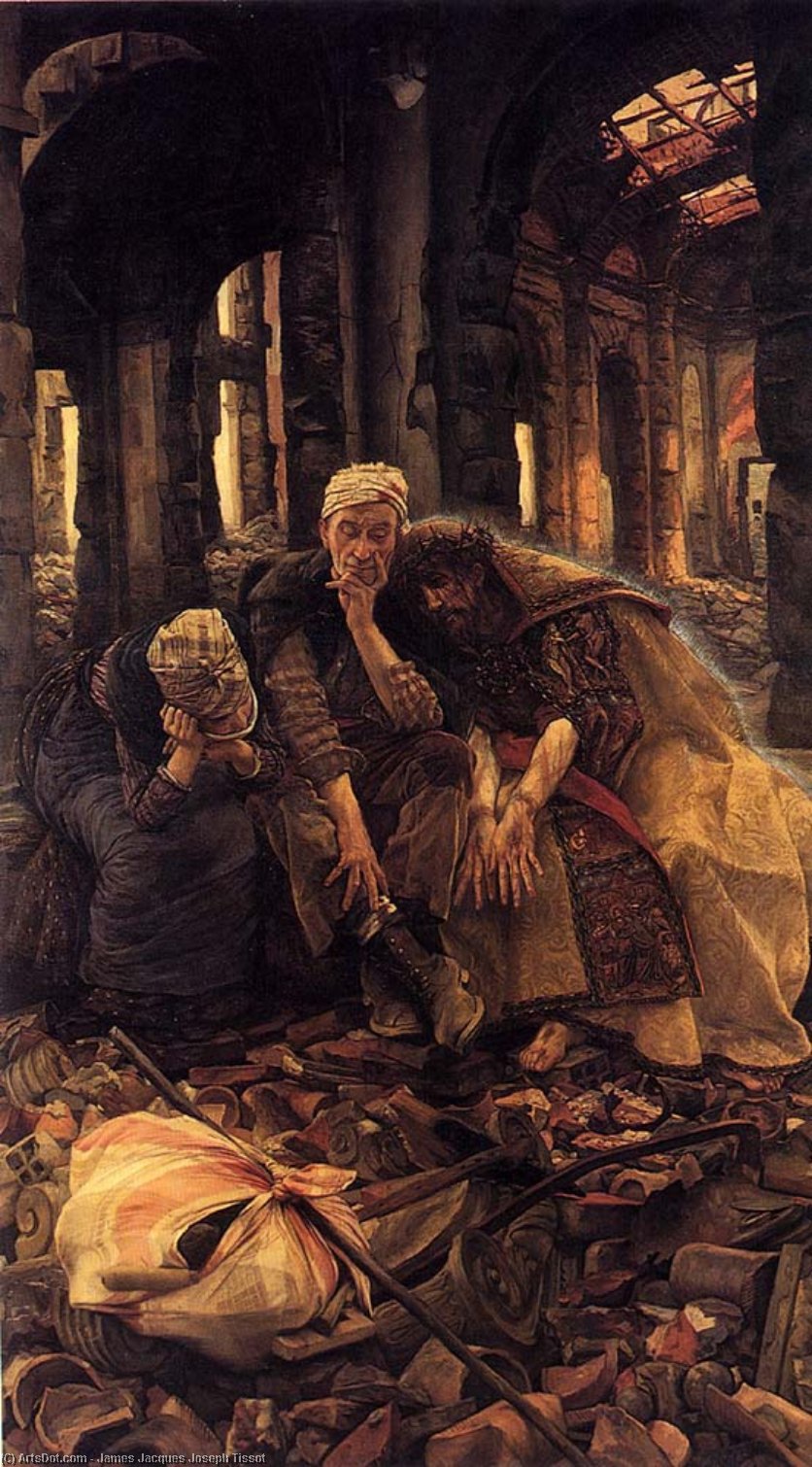
To stand before The Ruins (Inner Voices) is not merely to observe a scene of decay; it is to step into a profound meditation on the human condition. Painted by Jacques Joseph Tissot in 1885, this masterful oil on canvas transcends its depiction of crumbling architecture to become a deeply resonant psychological portrait. The composition, rendered with meticulous attention to detail, draws the viewer into a space where history and introspection collide. One senses the weight of time pressing down upon the very columns that frame the figures, suggesting that the structures around us—be they physical or societal—are themselves subject to inevitable erosion.
A Study in Realism and Shadow
Tissot’s command of Realism is breathtakingly apparent here. He captures not just what was seen, but what felt palpable: the texture of crumbling stone, the drape of fabric, and the subtle tension held within the postures of the figures. The interplay of light and shadow, a masterful deployment of chiaroscuro, carves out depth from the canvas. Notice how the limited illumination seems to spotlight the emotional core of the group. The black and white quality of the photo description hints at this dramatic tonal range, where deep umbers yield to stark highlights, guiding our gaze across the rubble-strewn foreground and up toward the implied grandeur that once stood here.
The Weight of Inner Lives
The figures themselves are central to the painting's narrative power. Clustered within this desolate setting, their clasped hands and downward gazes suggest a shared moment of contemplation or perhaps quiet despair. They are enveloped by the ruins, making it difficult to discern if the decay belongs to the building or to the spirit inhabiting it. The inclusion of seemingly mundane objects, like the handbags resting near the periphery, anchors the sublime drama in relatable human experience. These details invite us to ask: what secrets do these silent witnesses hold?
Symbolism and Enduring Resonance
Art historically, The Ruins (Inner Voices) functions as a potent allegory. The ruins are rarely just background dressing; they symbolize the passage of time, the fallibility of human endeavor, or perhaps the decay of societal ideals. Tissot uses this setting to explore themes of memory and introspection—the "inner voices" referenced in the title suggest that the most profound drama unfolds not among the broken columns, but within the quiet chambers of the heart. For collectors and designers alike, owning a reproduction of this work is acquiring more than just art; it is acquiring a focal point for deep thought.
Bringing the Masterpiece Home
ArtsDot offers exquisite, hand-painted reproductions that allow you to bring the sophisticated mood and technical brilliance of Tissot's original vision into your own space. Our skilled artisans employ high-quality materials to emulate the rich depth and nuanced tonality of this 1885 masterpiece. Whether adorning a grand hall or lending intellectual gravity to a private study, this piece promises an immediate connection to the profound emotional currents that defined late 19th-century Parisian art.