A Portrait of Exoticism: Jan Andrea Lievens’ “Old Man in Oriental Garb”
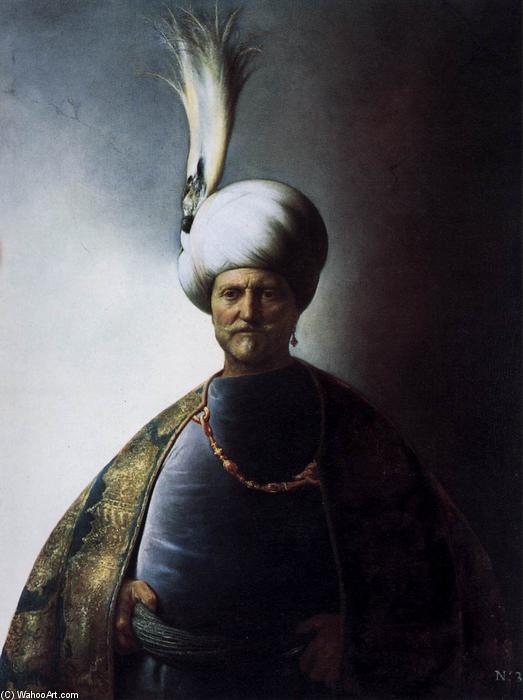
Within the hallowed halls of the Schloss Sanssouci in Berlin resides a captivating painting – Jan Andrea Lievens’ “Old Man in Oriental Garb,” a work that transcends mere portraiture to become a window into a bygone era of trade, diplomacy, and burgeoning European fascination with the East. Completed in 1628, this oil on canvas isn't simply a depiction of an individual; it’s a carefully constructed tableau brimming with symbolic weight and artistic mastery, reflecting both the meticulous realism favored by Lievens and the exotic allure of Ottoman culture.
The subject himself is rendered with remarkable detail – an older gentleman, his face etched with a contemplative serenity, draped in opulent attire that immediately transports the viewer to a distant land. The rich, dark robe, adorned with intricate patterns reminiscent of Persian carpets, speaks volumes about wealth and status. A crisp white turban, topped with a flamboyant plume, anchors the composition, instantly signaling the subject’s connection to the Ottoman Empire – a realm often perceived as both mysterious and alluring during this period. The subtle shift in lighting, originating from an unseen left-hand source, sculpts the figure's features, highlighting the texture of his clothing and drawing attention to the details that define his exotic appearance.
A Masterclass in 17th-Century Dutch Realism
Lievens’ skill as a painter is immediately apparent. The work exemplifies the hallmarks of 17th-century Dutch realism, characterized by an unwavering commitment to accurate representation and a sophisticated understanding of light and shadow. The meticulous rendering of fabrics – from the velvet of the robe to the shimmering sheen of the turban – demonstrates a remarkable ability to capture texture and depth. Notice how Lievens skillfully employs layering techniques with oil paint, creating subtle gradations in color that give the subject’s attire a tangible quality, almost as if one could reach out and feel its luxurious weight.
The composition itself is carefully balanced, drawing the eye directly to the man's face. The neutral expression – neither overtly joyful nor sorrowful – invites contemplation, suggesting a quiet dignity and perhaps even a hint of melancholy. The dark background serves not as an obstruction but rather as a powerful amplifier, intensifying the impact of the figure’s presence and emphasizing his distinctive appearance.
Historical Echoes: Prussia, Trade, and the “Orient”
To fully appreciate “Old Man in Oriental Garb,” it's crucial to understand its historical context. The Schloss Sanssouci itself was a testament to Prussian King Frederick the Great’s vision of a refined summer retreat – a space designed to evoke the tranquility and beauty of the French court. The painting, housed within this opulent setting, reflects the broader European fascination with the East that flourished during the 17th century, fueled by burgeoning trade routes and diplomatic exchanges.
The Ottoman Empire, in particular, held a powerful allure for Europeans, representing a world of exotic customs, luxurious goods, and untold riches. This painting can be viewed as a visual manifestation of this fascination – a carefully constructed image designed to capture the essence of “Oriental” culture. The inclusion of elements like the turban and elaborate robes served not only to depict an individual from that region but also to embody the broader cultural exchange taking place between Europe and the East.
Symbolism and Emotional Resonance
Beyond its technical brilliance, “Old Man in Oriental Garb” resonates with a subtle emotional depth. The subject’s contemplative gaze suggests a wisdom earned through experience, while his regal attire hints at authority and power. The painting invites us to consider the complexities of cultural interaction – the allure of the unfamiliar, the potential for misunderstanding, and the enduring human desire to connect across boundaries.
Ultimately, this portrait is more than just a likeness; it’s a carefully crafted narrative that speaks volumes about the historical context, artistic techniques, and emotional resonance of 17th-century Dutch painting. It remains a compelling testament to Jan Andrea Lievens' skill and a captivating window into a world both distant and deeply intriguing.