A Vision of Neoclassical Grace
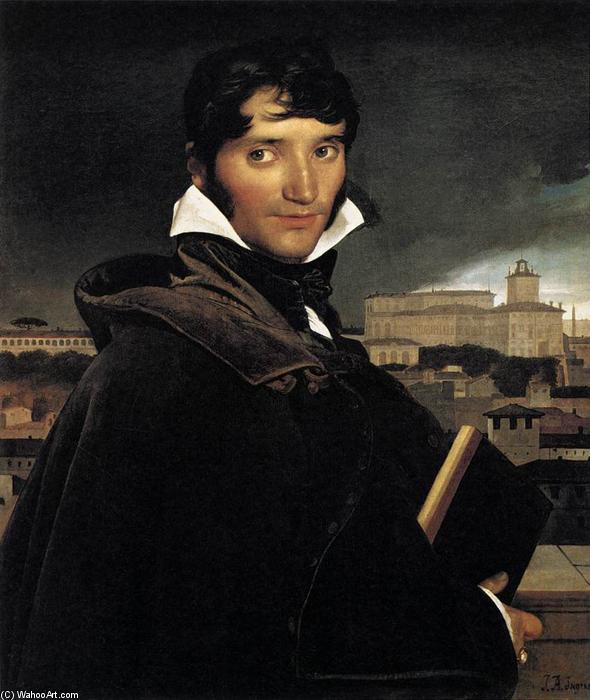
In the quiet, commanding presence of Jean-Auguste-Dominique Ingres’s François-Marius Granet, one finds more than just a mere likeness; one encounters a profound meditation on the dignity of the human intellect. Painted in 1809, this masterful portrait captures the essence of a man who was much more than his title. As a prominent French diplomat and humanist scholar, Granet is presented not through the lens of political power, but through the lens of contemplative wisdom. His gaze, steady and direct, establishes an immediate and intimate connection with the viewer, pulling us into a silent dialogue that transcends the centuries. It is this very ability to bridge the gap between the historical subject and the modern observer that makes this piece such a captivating centerpiece for any curated collection.
The technical execution of the work serves as a testament to Ingres’s unparalleled command over the Neoclassical tradition. Eschewing the turbulent, expressive brushstrokes that would later define the Romantic movement, Ingres instead embraces a style characterized by smooth, idealized forms and surgical precision. Every line is deliberate, every contour meticulously rendered to reflect a sculptural clarity. The artist’s ability to render anatomy with such remarkable accuracy provides a sense of permanence and weight to the subject, as if Granet were carved from marble rather than painted in oil. For the discerning collector or interior designer, this level of technical refinement offers a sense of structural elegance that complements both classical and contemporary sophisticated interiors.
Symbolism and the Spirit of an Era
Beyond the surface beauty of the portrait lies a rich tapestry of symbolism that speaks to the Enlightenment values of the early 19th century. The book held firmly in Granet’s hands is far from a mere prop; it is a potent emblem of erudition, representing the pursuit of knowledge and the humanist commitment to reason. This intellectual weight is further anchored by the architectural backdrop—a stylized cityscape that evokes the grandeur of Roman ruins. By placing Granet against such a classical setting, Ingres reinforces the subject's status as a figure of cultural prestige, deeply rooted in the traditions of antiquity. The composition creates a harmonious balance between the individual and the historical continuum, suggesting that true greatness is found in the preservation of wisdom.
To possess a reproduction of this work is to invite an atmosphere of dignified composure into one's space. The emotional impact of the painting lies in its ability to inspire quiet reflection and a sense of moral seriousness. It does not shout for attention with garish colors; rather, it commands respect through its restraint and clarity. Whether placed in a private study, a library, or a grand salon, François-Marius Granet serves as an enduring reminder of the virtues of intellect and virtue. ArtsDot is proud to offer exceptional, high-quality reproductions of this Ingres masterpiece, meticulously crafted to preserve every subtle nuance of the original's light and form, ensuring that the spirit of Neoclassical excellence can be cherished in any home.