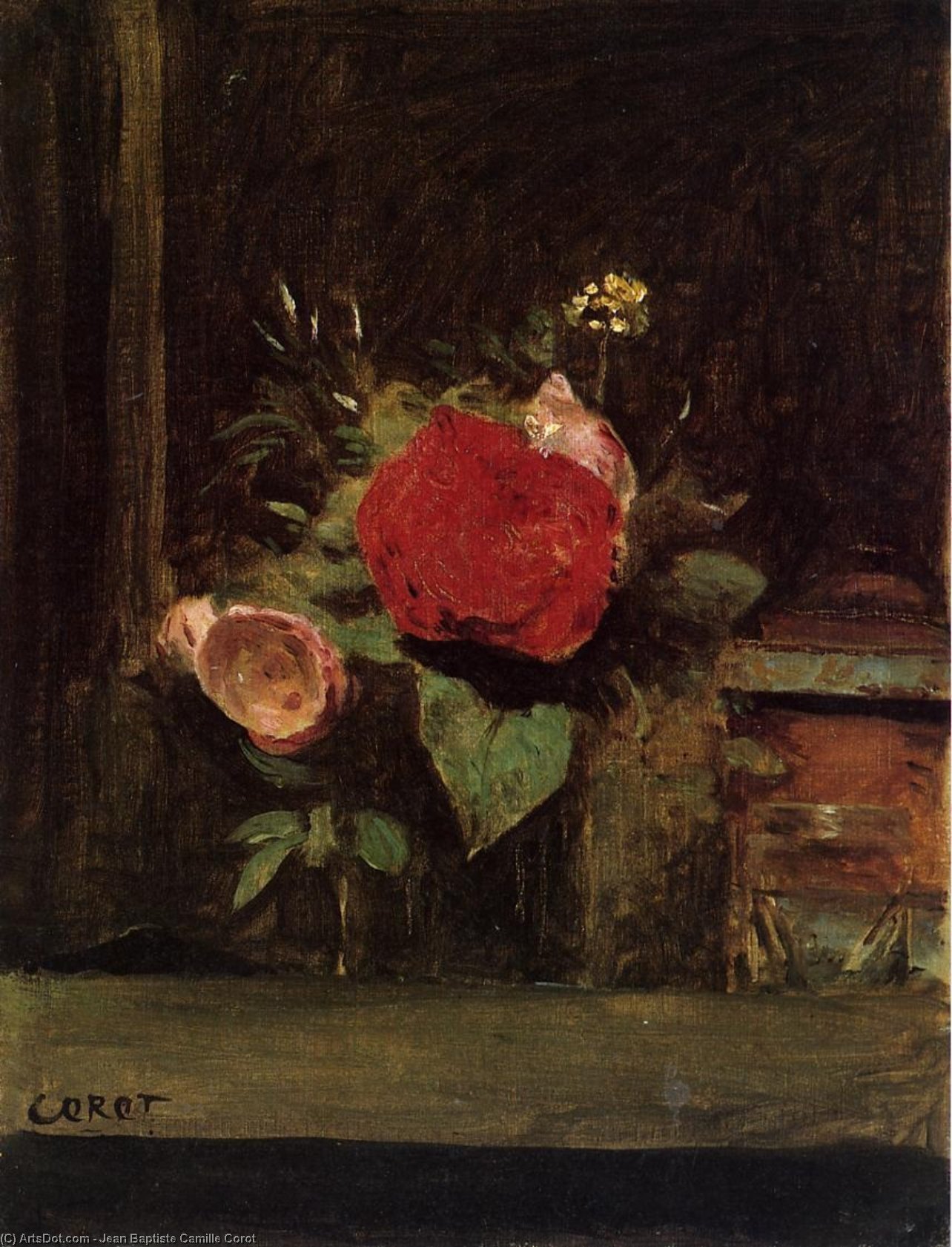
A Moment Frozen in Time: Exploring Corot’s “Bouquet of Flowers in a Vase next to a Pot of Tobacco”
Jean Baptiste Camille Corot's "Bouquet of Flowers in a Vase next to a Pot of Tobacco" isn’t merely a depiction of botanical beauty; it’s an embodiment of Romantic sensibility distilled onto canvas. Painted circa 1865-67, this oil on canvas masterpiece resides within the Musées Royaux des Beaux-Arts in Brussels, Belgium—a testament to Corot's enduring influence on landscape art.
- Subject Matter: The painting centers around a simple yet profound tableau – a vase brimming with vibrant red and pink roses juxtaposed against a terracotta pot containing tobacco leaves. This deliberate pairing speaks volumes about the artist’s preoccupation with capturing fleeting moments of rural life and subtly hinting at themes of mortality and contemplation.
- Style: Corot championed Realism, prioritizing truthful representation over idealized beauty. However, he achieved this realism not through photographic precision but by employing a masterful technique that prioritizes tonal harmony and atmospheric perspective—characteristics deeply rooted in the Romantic movement’s fascination with nature's grandeur and emotional resonance.
Corot’s brushstrokes are remarkably soft and blended, creating an illusion of diffused light that envelops the scene. He meticulously builds up layers of pigment to achieve subtle gradations of color—a technique honed over decades of observation and experimentation. The artist skillfully renders the textures of the vase, roses, and tobacco pot, conveying a palpable sense of materiality without sacrificing the painting’s ethereal quality.
Historical Context: Romanticism's Embrace of Nature
Painted during the height of Romanticism—a period characterized by fervent emotion, individualism, and an unwavering reverence for the sublime—"Bouquet of Flowers in a Vase next to a Pot of Tobacco" reflects the movement’s core tenets. Artists like Corot sought inspiration in untamed landscapes and rural traditions, rejecting the neoclassical emphasis on rationality and formal structure.
The choice of tobacco as an element within the composition is particularly noteworthy. Historically, tobacco was associated with contemplation, melancholy, and even death—symbolic references that resonate powerfully within the Romantic aesthetic. It serves as a counterpoint to the vibrancy of the flowers, prompting viewers to consider the cyclical nature of life and decay.
Symbolism Beyond Aesthetics
- Roses: Representing love, beauty, and passion—classic symbols imbued with romantic fervor.
- Tobacco Pot: Symbolizing mortality, introspection, and a connection to the natural world’s rhythms.
"Bouquet of Flowers in a Vase next to a Pot of Tobacco" transcends mere visual pleasure; it invites contemplation on fundamental questions about existence. Corot's masterful execution—characterized by tonal harmony, atmospheric perspective, and delicate brushwork—captures not only the beauty of the scene but also its emotional depth.
Emotional Impact: Tranquility Amidst Decay
The painting’s overall effect is one of serene tranquility punctuated by subtle hints of melancholy. Corot succeeds in conveying a profound sense of stillness and contemplation—a reminder that even amidst the inevitable passage of time, beauty persists. It's a piece that speaks to the human spirit's yearning for connection with nature and its acceptance of life’s inherent contradictions.
For those seeking inspiration or planning to adorn their homes with a stunning reproduction, exploring Corot’s “Bouquet of Flowers in a Vase next to a Pot of Tobacco” offers an unparalleled opportunity to immerse oneself in the timeless artistry of Romantic landscape painting. Discover more about this masterpiece at ArtsDot.