Jean-Baptiste Camille Corot
Excellent
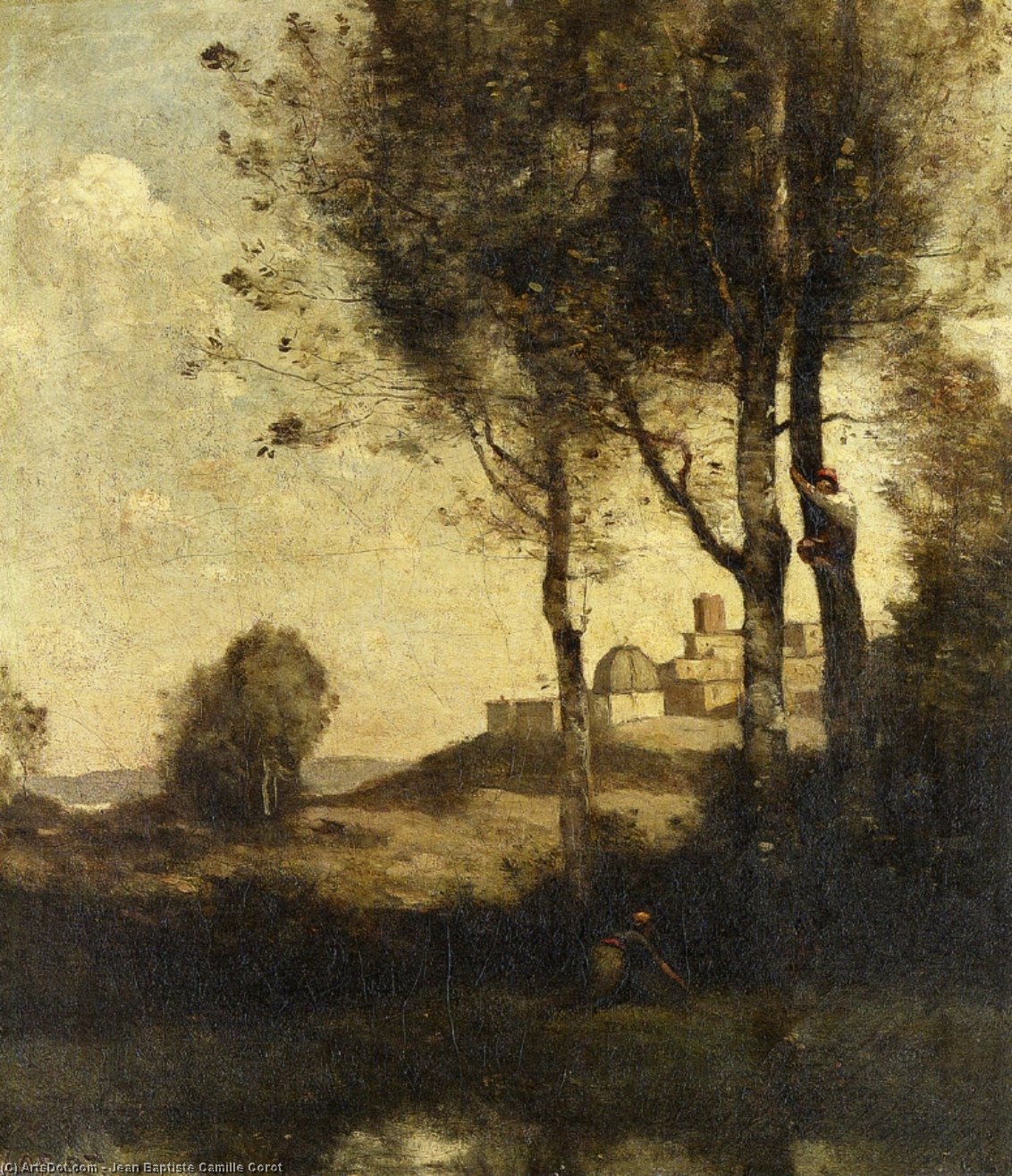
A serene landscape depicting men excavating soil, bathed in soft light. The painting captures the essence of Tuscan countryside and embodies Corot's signature style.
29 1⁄2 x 25 1⁄2 in.
$138,600
landscape
Oil on Canvas
Important Collection
Les dénicheurs Toscans
1855
Jean Baptiste Camille Corot: Echoes of Provence
Jean Baptiste Camille Corot (1796 – 1875) stands as one of the most revered figures in French landscape painting, a master whose canvases capture not merely visual beauty but also the very soul of Provence. Born into a bourgeois family in Paris, Corot’s early life was profoundly shaped by his upbringing amidst the rural landscapes surrounding L’Isle-Adam – an experience that would become inextricably linked to his artistic vision.
Neo-Classical Roots and Impressionistic Horizons
Initially influenced by Neo-Classical ideals championed by artists like Ingres, Corot swiftly embraced the burgeoning Impressionist movement. Unlike many of his contemporaries who sought to depict fleeting moments of light and color with rapid brushstrokes, Corot favored a deliberate approach—a meticulous layering of paint that allowed for subtle gradations of tone and texture. This technique, honed over decades of observation and experimentation, resulted in paintings characterized by an unparalleled luminosity and atmospheric depth.
A Painter's Obsession: Capturing Light and Atmosphere
Corot’s artistic philosophy centered on the belief that “the painter must strive to render the effects of light.” He spent countless hours studying the changing conditions of Provence—the dappled sunlight filtering through olive groves, the misty mornings clinging to mountain peaks—translating these observations onto canvas with astonishing accuracy. His brushstrokes were broad and expressive, yet remarkably controlled, creating surfaces that seemed to shimmer with reflected light.
Symbolism Within Simplicity: Landscapes as Reflections of Emotion
While Corot’s landscapes appear deceptively serene on first glance, they are imbued with a deeper symbolic resonance. He wasn't merely depicting scenery; he was attempting to convey the emotional state of the artist—his contemplation of nature, his connection to the rhythms of the seasons. The muted palette – dominated by earthy greens and browns – reflects the quiet grandeur of the Provençal countryside, inviting viewers to immerse themselves in a meditative experience.
Legacy: An Inspiration for Generations
Corot’s influence extends far beyond the confines of his own time. Artists such as Claude Monet, Pierre-Auguste Renoir, and Frédéric Bazille recognized him as a pivotal figure in the development of Impressionism, adopting his meticulous technique and prioritizing atmospheric effects. Today, Corot's paintings continue to inspire artists and collectors alike, securing his place as one of the greatest landscape painters of all time—a testament to the enduring power of observation and artistic sensitivity.