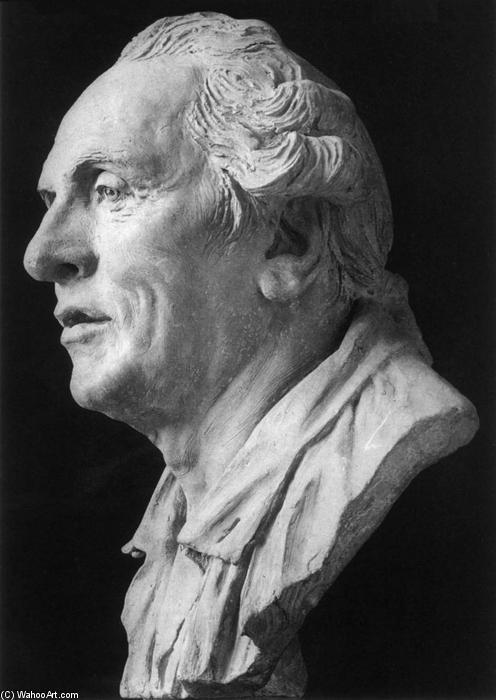
Experience the dignified reflection of Pigalle's Neoclassical Self-Portrait (1777), capturing masterful chiaroscuro on plaster or marble; discover this timeless piece today.
Jean-Baptiste Pigalle (1725–1805): Französischer Bildhauer, der Barock & Neoklassizismus vereinte! Entdecken Sie dynamische Figuren, Porträts u. das berühmte Nude Voltaire!
Louvre
(Paris, Frankreich)
Paris
Frankreich
Entdecken Sie den Louvre in Paris! Meisterwerke wie die Mona Lisa & Venus von Milo erwarten Sie. Eine Reise durch Kunstgeschichte vom alten Ägypten bis zur Renaissance.
Louvre
Musée du Louvre
Frankreich
Paris
Louvre Museum
Mona Lisa
8.7 Millionen (2024)
380.000+ Objekte
Kunstmuseum
1793
Eine königliche Residenz
3
Wofür wurde der Louvre ursprünglich gebaut?
A Portrait of Dignified Reflection: Jean-Baptiste Pigalle’s “Self-Portrait”
The photograph captures a striking monochrome depiction of Jean-Baptiste Pigalle's sculpture, "Self-Portrait," a testament to the burgeoning Neoclassical aesthetic and a poignant glimpse into the artist’s personal vision. Executed in 1777, this piece transcends mere representation; it embodies the intellectual currents shaping eighteenth-century France and speaks volumes about artistic ambition and contemplative introspection.
The Sculpture's Essence: Form and Light
Pigalle’s masterful craftsmanship is immediately evident in the sculpture’s meticulous detailing—a deliberate choice reflecting the stylistic principles of his time. Constructed primarily from plaster or marble (the exact material remains undisclosed), the bust presents a powerfully expressive face, positioned in profile to convey an aura of solemn composure. The artist skillfully employs chiaroscuro – dramatic contrasts between light and shadow – directing illumination upwards and slightly forward to sculpturally delineate the contours of the head, hair, and clothing folds. These lines aren’t merely descriptive; they actively contribute to the sculpture's three-dimensional impact, guiding the viewer’s gaze and emphasizing the solidity of the form. The rough texture of the material itself underscores the physicality of artistic creation and hints at the laborious process involved in transforming raw material into enduring art.
Neoclassical Influence: Echoes of Antiquity
“Self-Portrait” firmly establishes Pigalle within the broader context of Neoclassicism, a movement that sought inspiration from the idealized forms and rational ideals of ancient Greece and Rome. Unlike the exuberant ornamentation characteristic of Rococo—the style championed by Marie Suzann Roslin and Jean Baptiste Pater—this sculpture prioritizes clarity, restraint, and anatomical accuracy. The pose itself mirrors classical sculptures depicting philosophers and statesmen, conveying an image of intellectual seriousness and moral virtue. This deliberate allusion to antiquity underscores Pigalle’s commitment to upholding humanist values and elevating art beyond mere decorative indulgence.
Symbolism Beyond Appearance: Wisdom and Experience
Beyond its formal qualities, “Self-Portrait” carries subtle symbolic weight. The dignified expression—a gaze directed inward—suggests contemplation and a profound awareness of selfhood. It speaks to the artist’s desire to portray not just his likeness but also his inner life, reflecting the humanist preoccupation with understanding human nature that permeated intellectual circles during Pigalle's era. This introspective quality aligns perfectly with Debret’s exploration of Brazilian identity through art—a shared fascination for capturing the essence of individual experience within a larger historical narrative.
A Legacy Preserved: Reproduction and Artistic Appreciation
ArtsDot offers exceptional reproductions of Jean-Baptiste Pigalle’s “Self-Portrait,” allowing collectors and enthusiasts alike to immerse themselves in the beauty and intellectual depth of this iconic sculpture. Each print is meticulously crafted using archival inks on premium canvas, ensuring that its timeless elegance remains faithfully reproduced for generations to come—a celebration of artistic heritage and a conduit for inspiring appreciation across cultures.