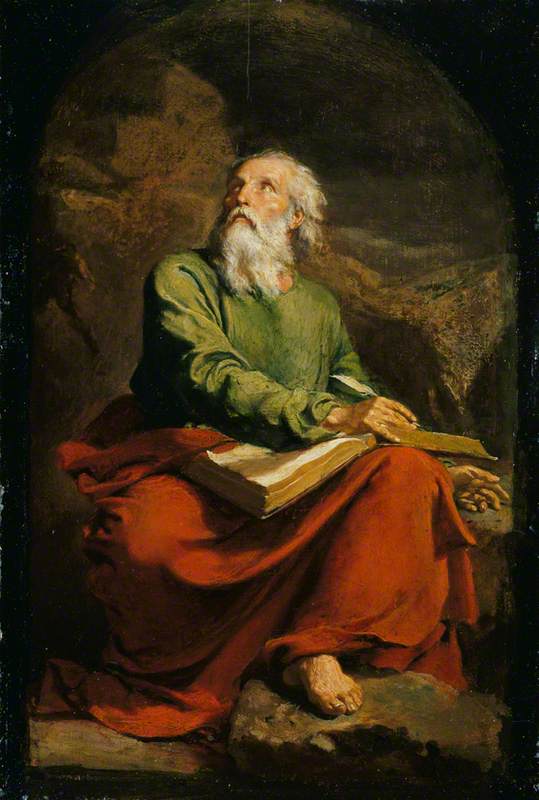
Experience microscopic realism with Meissonier's Isaiah, a 19th-century masterpiece capturing profound prophetic contemplation; discover this timeless narrative art today.
Entdecken Sie Jean-Louis Ernest Meissonier! Meister der Miniaturmalerei & historische Szenen (Napoleon, bürgerliches Leben). Erleben Sie französischer Klassizismus!
Entdecken Sie Pracht & Eleganz im Wallace-Museum! Französische Meisterwerke, Waffenkunst & edle Möbel in einem historischen London Hausmuseum.
Isaiah by Jean Louis Ernest Meissonier - A Masterpiece of Historical Realism
Jean-Louis Ernest Meissonier (1815–1891), a name synonymous with meticulous detail and historical narrative in 19th-century French painting, emerged as a pivotal figure bridging the gap between academic tradition and a burgeoning realism. Born in Lyon in 1815, his path to artistic renown was initially met with familial resistance. His father envisioned a career in business for young Ernest, yet the allure of art proved too strong to ignore. At seventeen, he secured permission to pursue his passion, embarking on a journey that would establish him as one of France’s most celebrated and financially successful artists. Early training under Léon Cogniet provided a foundational grounding, but it was through diligent study of the Dutch masters at the Louvre – painters like Gabriel Metsu and Gerard Douw – that Meissonier truly discovered his artistic voice. These masters, renowned for their intimate scenes of bourgeois life r
Subject Matter and Narrative Depth
The painting depicts a solemn tableau: Isaiah, portrayed as an elderly prophet seated upon a stone bench or platform, absorbed in the act of reading or studying from a book. This isn’t merely a portrait; it's a carefully constructed narrative—a visual representation of prophetic contemplation and divine inspiration. Meissonier meticulously captures the essence of biblical storytelling, conveying not just what happened but also *how* it felt to witness such profound spiritual engagement. The figure embodies wisdom, humility, and unwavering faith – qualities central to the prophet’s role in Jewish tradition.
Stylistic Characteristics: Microscopic Realism
Meissonier's distinctive style—often termed “microscopic realism”—elevated painting beyond mere representation to achieve an unprecedented level of accuracy. He achieved this remarkable feat through painstaking observation and meticulous brushwork, employing a technique that demanded hours upon hours of labor. Unlike Impressionists who sought to capture fleeting moments of light and color, Meissonier focused on capturing textures and details with astonishing precision. Each fold of Isaiah’s robe, each wrinkle in his face—every minute element was rendered with painstaking care, mirroring the Dutch masters' dedication to portraying reality as faithfully as possible. This commitment to realism wasn’t simply about reproducing what was seen; it was about conveying an emotional truthfulness that resonated deeply with viewers.
Technical Execution and Artistic Perfection
The painting utilizes a rich palette of muted tones—primarily greens, browns, and ochres—to create a sense of depth and atmosphere. Light and shadow play crucial roles in shaping the scene, highlighting the contours of Isaiah’s face and emphasizing the texture of the book pages. The artist's signature is visible at the bottom right corner of the painting, though it is not legible in this image. Meissonier’s mastery of oil paint—a medium favored by artists like Rembrandt and Rubens—allowed him to achieve unparalleled luminosity and tonal gradation. He skillfully blended pigments to create subtle variations in color and texture, resulting in a surface that appears remarkably lifelike.
Historical Context and Legacy
Created in 1838 during the Second Empire, “Isaiah” reflects the artistic sensibilities of its time—a period marked by a fascination with historical grandeur and an ambition to capture dramatic narratives with uncompromising realism. The Wallace Collection acquired this masterpiece shortly after its creation, cementing its place as one of France’s most treasured artworks. Jean-Louis Ernest Meissonier's unwavering dedication to his craft established him as a titan among French painters, securing his reputation as “the Dutch Master”—a testament to his artistic genius and enduring influence on subsequent generations of artists. His work continues to inspire admiration for its technical brilliance and profound emotional resonance.