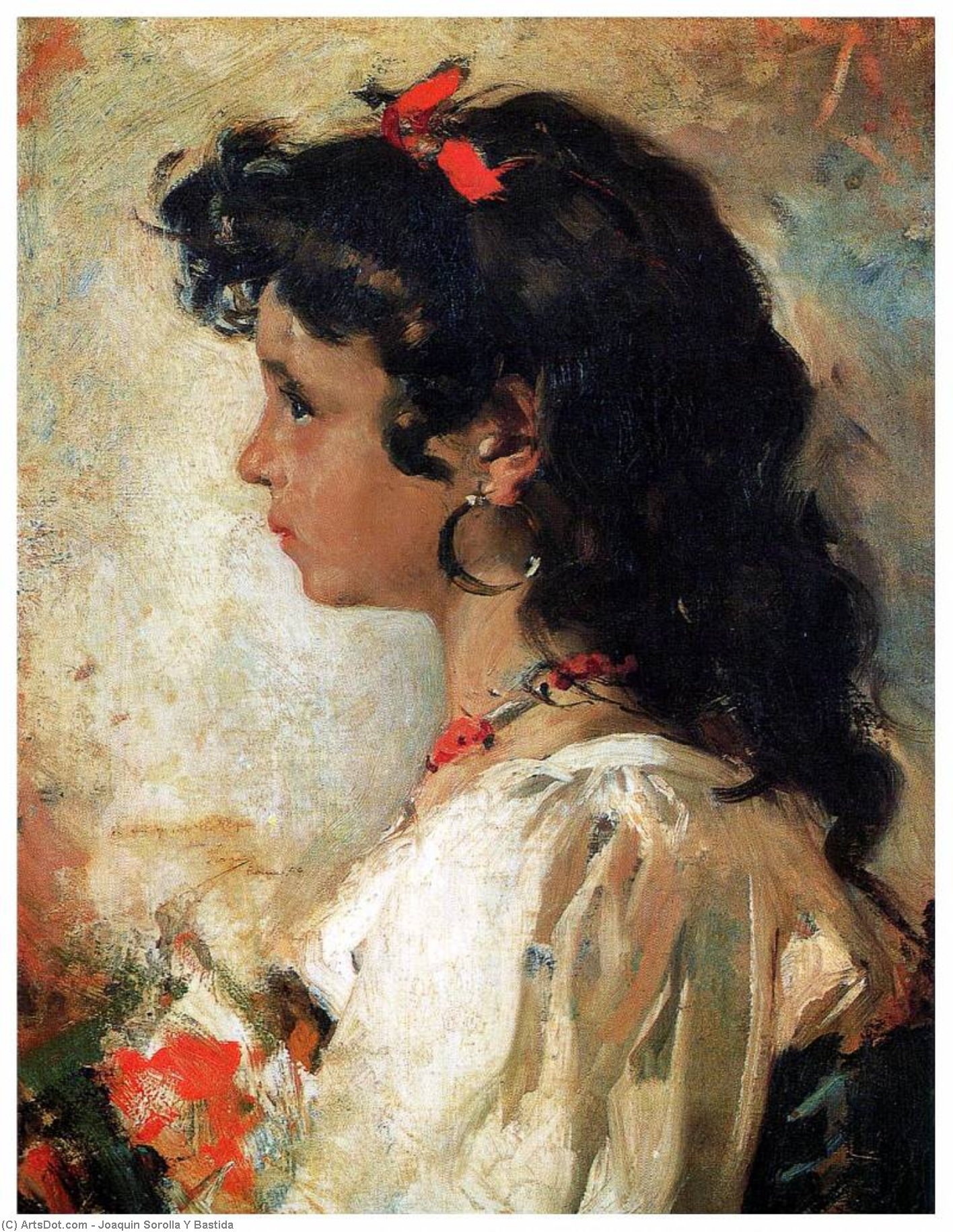
A Moment Captured: Sorolla's "Cabeza de Italiana"
Joaquín Sorolla’s “Cabeza de Italiana,” painted in 1886, is more than just a portrait; it’s an exquisite distillation of light, movement, and the very essence of Spanish summer. This captivating work, depicting a young woman with a serene gaze and flowing hair, exemplifies Sorolla's signature style – a masterful blend of Impressionism and Realism that sought to capture the ephemeral qualities of natural light and atmosphere. The painting’s immediate impact lies in its vibrant palette, dominated by warm yellows, ochres, and blues, meticulously layered to create an illusion of shimmering brilliance. Sorolla was deeply influenced by the Venetian masters, particularly Monet and Sargent, but he infused his work with a distinctly Spanish sensibility, evident in the relaxed posture of the subject and the palpable sense of warmth radiating from the canvas.
Subject and Composition
The subject, identified as an “Italiana” – Italian woman – is presented in a remarkably informal manner. She isn’t formally posed; instead, she appears lost in thought, her eyes directed slightly off-camera, inviting the viewer to share in her contemplation. This deliberate lack of rigid formality was characteristic of Sorolla's approach, reflecting his belief that capturing genuine emotion required portraying subjects in their natural state. The composition is carefully balanced, utilizing a shallow depth of field to draw attention to the woman’s face and upper body while subtly suggesting the textured wall behind her, adding a layer of visual interest and grounding the scene within a domestic setting. The use of a simple background allows the viewer's eye to be immediately drawn to the subject.
Technique and Style – The Sorolla Effect
Sorolla’s technique is instantly recognizable, built upon rapid brushstrokes and broken color—a method he perfected during his time in Rome. He employed a ‘wet-on-wet’ approach, applying paint while it was still wet to achieve luminous blending and create the characteristic shimmering effect that defines his work – what critics have termed “the Sorolla effect.” This technique is particularly evident in the rendering of light on her skin and hair, creating an almost palpable sense of warmth. The loose brushwork contributes to a feeling of movement and spontaneity, suggesting a fleeting moment captured in time. He was a master of capturing the effects of sunlight, often working *en plein air* (outdoors) to directly observe and translate these effects onto canvas.
Symbolism and Historical Context
"Cabeza de Italiana" reflects the burgeoning artistic trends of the late 19th century. Sorolla’s work aligns with the Impressionist movement's focus on capturing fleeting moments and subjective experiences, while also retaining elements of Realism in its meticulous attention to detail – particularly in the rendering of the woman’s features. Painted during a period of significant social and artistic change in Spain, it represents a shift away from the more rigid academic styles prevalent at the time. The painting's subject matter—a young woman enjoying a moment of quiet contemplation—resonates with broader themes of beauty, leisure, and the appreciation of simple pleasures, values that were increasingly celebrated within Spanish society during this era. Sorolla’s work was hugely popular in his lifetime, particularly amongst the wealthy elite who appreciated his ability to capture the light and atmosphere of Valencia.
A Timeless Masterpiece – Reproduction Options
ArtsDot offers meticulously crafted hand-painted reproductions of “Cabeza de Italiana,” ensuring that you possess a faithful representation of this iconic work. Our skilled artisans employ traditional techniques, replicating Sorolla’s distinctive brushwork and vibrant color palette with exceptional accuracy. Available in various sizes and mediums – including canvas, paper, and metal – our reproductions provide an authentic and enduring addition to any art collection or interior space. Experience the captivating beauty and emotional resonance of this masterpiece firsthand.