Joaquin Sorolla y Bastida: Capturing Sunlight’s Embrace
Joaquin Sorolla y Bastida (1863 – 1923) stands as one of Spain's most luminous figures in the Impressionist movement, a painter who achieved unparalleled renown for his ability to translate the vibrant essence of Mediterranean life onto canvas. More than simply depicting landscapes or portraits; Sorolla sought to embody the very spirit of his era—a time marked by optimism and fascination with scientific advancements, particularly microscopy. His work is instantly recognizable for its characteristic use of light – a technique he honed relentlessly throughout his prolific career, transforming ordinary scenes into shimmering visions of beauty. This dedication to capturing the fleeting brilliance of sunlight distinguishes Sorolla from many of his contemporaries and cemented his place as an icon of Spanish artistic heritage.
- Subject Matter: Sorolla’s oeuvre is remarkably diverse, encompassing landscapes—particularly coastal vistas bathed in golden light—portraits of individuals—often depicting family members—and monumental canvases celebrating historical events. However, he consistently prioritized scenes that conveyed a sense of immediacy and spontaneity, reflecting the artist's belief in portraying life as it unfolded.
- Style: Sorolla’s style is undeniably Impressionistic, albeit infused with a distinctly Spanish sensibility. He eschewed academic conventions, favoring loose brushstrokes and vibrant color palettes to convey atmosphere and emotion rather than precise representation. His canvases pulsate with energy, capturing the dynamism of movement and the subtle nuances of light and shadow.
- Technique: Sorolla’s mastery lay in his innovative use of glazing—a layering technique that allowed him to achieve remarkable luminosity and depth. He meticulously applied thin washes of color over subsequent layers, building up tonal variations and creating an illusion of shimmering surface texture. This painstaking process demanded considerable patience and precision, resulting in paintings that possess a breathtaking quality of realism combined with ethereal beauty.
“Clotilde in a Grey Dress”: A Portrait Steeped in Tranquility
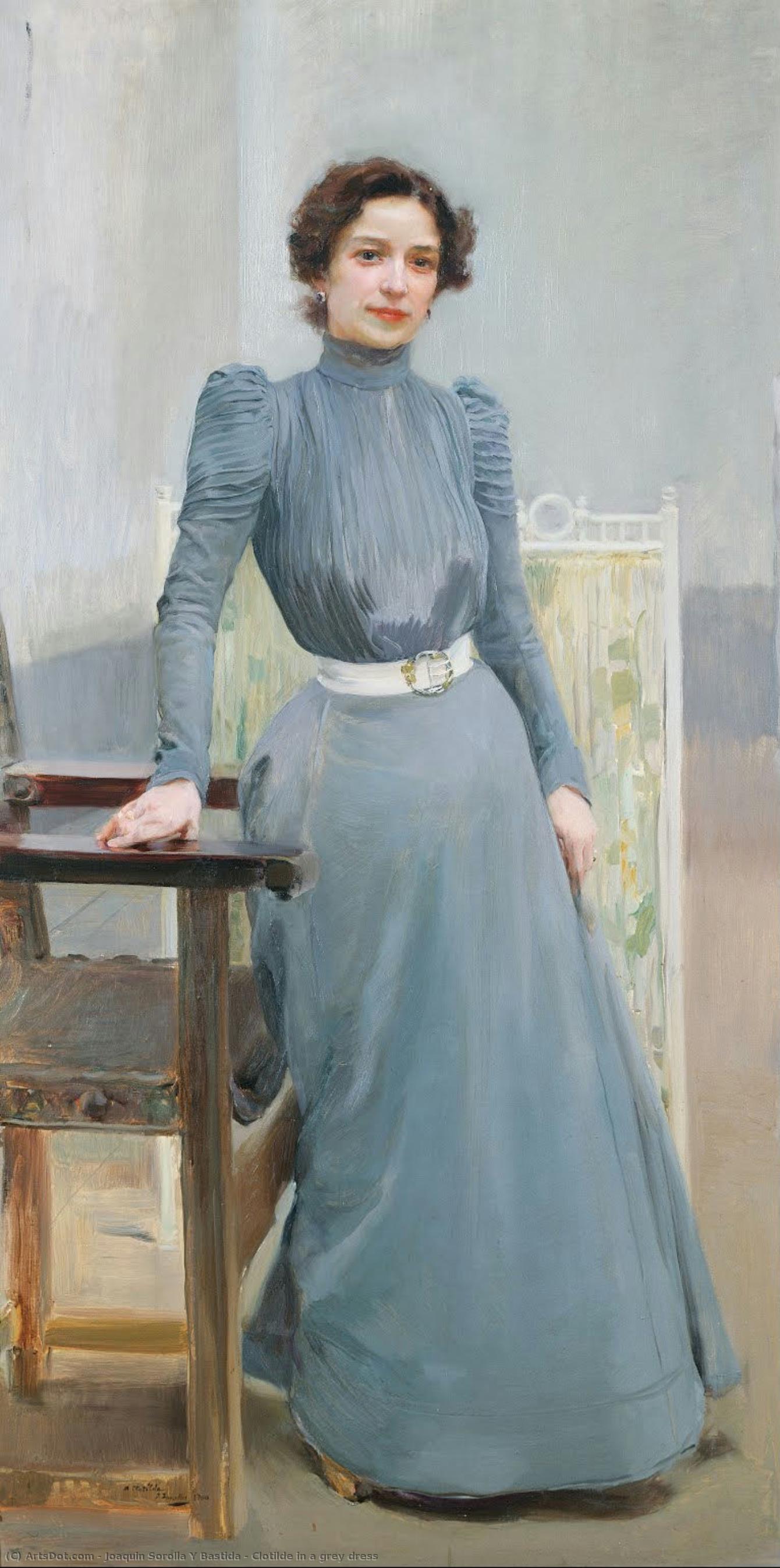
“Clotilde in a Grey Dress,” completed in 1900, exemplifies Sorolla’s signature style and represents one of his most beloved works. The painting portrays Mariana de Pontejos—Sorolla's wife—seated gracefully on a chair against a backdrop of a partially visible wall and drapery. Sorolla skillfully captures her serene expression and understated elegance, conveying a palpable sense of calm and contentment. Notably, the composition mirrors that of a studio photograph taken by Antonio García del Castillo—Mariana’s father—demonstrating Sorolla's keen observation of his surroundings and his desire to capture authentic human emotion.
- Composition: The central figure dominates the vertical space of the canvas, emphasizing her presence and conveying a feeling of dignified repose. Sorolla employs subtle perspective techniques to create depth, subtly blurring the background elements—a chair and drapery—to draw attention to Mariana’s face.
- Color Palette: Sorolla utilizes a muted palette dominated by blues and grays—reflecting the diffused light characteristic of coastal landscapes—creating an atmosphere of tranquility and sophistication. The delicate shades of mauve and light brown contribute to the overall tonal harmony, enhancing the painting's visual impact.
- Symbolism: Beyond its aesthetic beauty, “Clotilde in a Grey Dress” speaks to Sorolla’s fascination with capturing the everyday moments of domestic life—a theme recurrent throughout his artistic output. The pose itself embodies grace and composure, reflecting Sorolla’s idealized vision of feminine beauty and conveying a profound appreciation for familial bonds.
Legacy and Influence
Joaquin Sorolla's influence extends far beyond the confines of the Spanish Impressionist movement. His pioneering use of glazing and his unwavering commitment to capturing natural light established him as a pivotal figure in artistic innovation. Artists across Europe admired Sorolla’s technique and sought inspiration from his luminous canvases—a testament to his enduring legacy as one of Spain's greatest painters. Today, reproductions of “Clotilde in a Grey Dress” continue to captivate audiences worldwide, serving as reminders of Sorolla’s unparalleled ability to transform ordinary scenes into extraordinary expressions of beauty and emotion. His work remains an emblem of Spanish artistic excellence and continues to inspire artists and collectors alike.