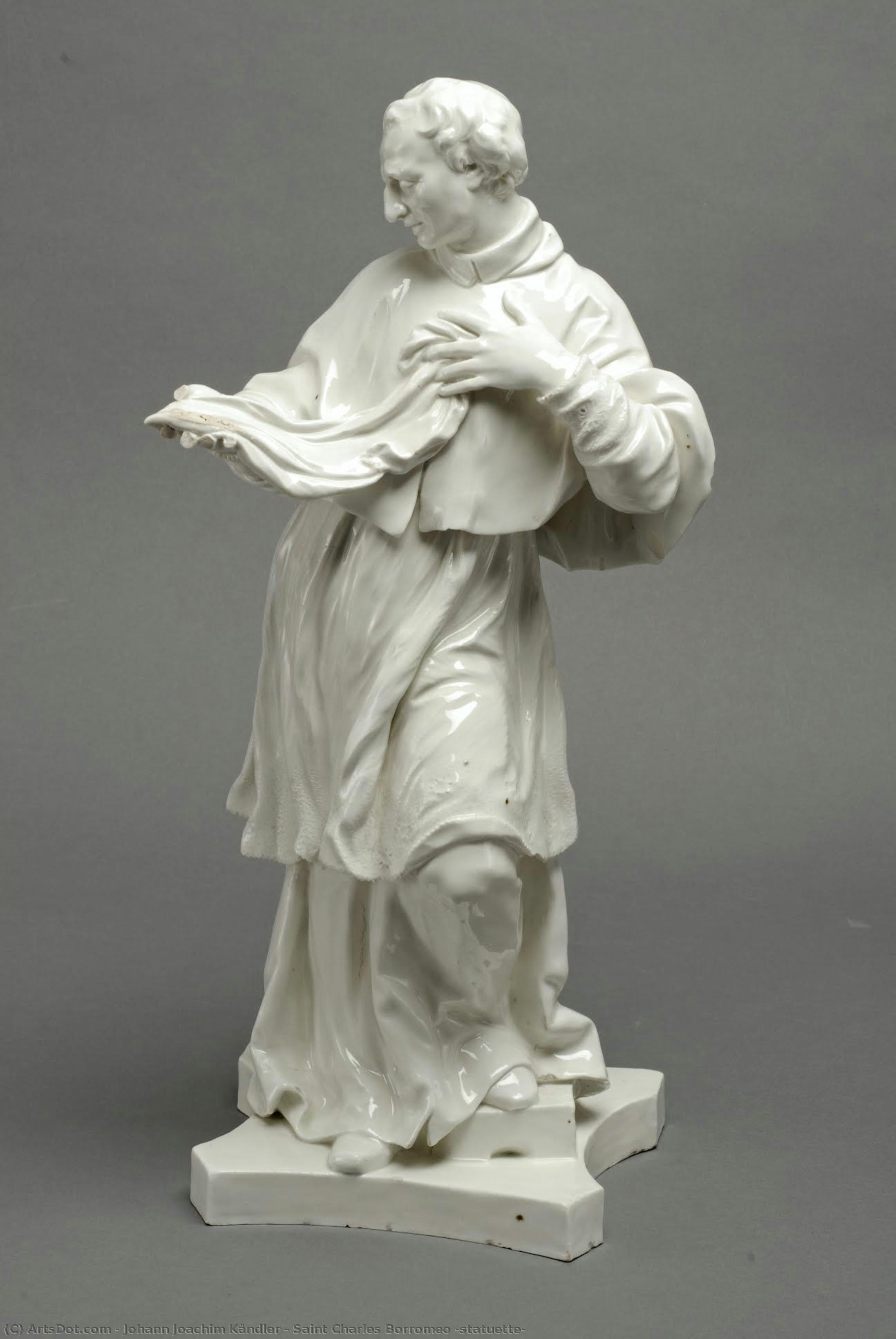
Entdecken Sie Johann Joachim Kändler, einen bedeutenden Barockbildhauer & Meissener Porzellanmodellierer (1706-1775). Bekannt für elegante Figuren, mythologische Szenen und feine Details prägte er die europäische Porzellankunst.
Erkunden Sie das reiche künstlerische Erbe Ungarns im Museum des Angewandten Kunsts in Budapest! Entdecken Sie atemberaubende Sammlungen von Möbeln, Textilien, Metallarbeiten und Glas in einem beeindruckenden Art Nouveau-Meisterwerk von Ödön Lechner. In Renovierung.
In 1737, Augustus III of Poland (1734–1763) [also known as Augustus II, Elector of Saxony (1733–1763)] placed a special order with Johann Joachim Kändler (1706–1775), the chief model-maker for the Meissen Porcelain Factory. He asked him to make altar paraphernalia for his mother-in-law, Empress Amalia Wilhelmina (1673–1742), widow of Emperor Joseph I (1705–1711). The order was for six candlesticks, a crucifix, a chalice, altar cruets, a handwashing set, a mass bell, an aspersorium, an aspergillum and twelve apostle statues. The precursors for Kändler’s apostle figures were the statues in the basilica of San Giovanni in Laterano in Rome, made between 1703 and 1718 by Camillo Rusconi (1658–1728), Francesco Maratta (1625–1713), Giuseppe Mazzuoli (1644–1725), Jean-Baptiste Theodon (1645–1713), Pierre-Etienne Monnot (1657–1733), Pierre Le Gros (1666–1717) and Angelo de’ Rossi (1671–1715).The porcelain model of St John the Evangelist was based on Camillo Rusconi’s statue, and the figure wearing alba and tonsure, and holding a stole in his hand, may be St Charles Borromeo or St John of Nepomuk. The apostles, forming a coherent Baroque composition, are presented with strikingly vehement, passionate movements. Similar early Baroque porcelain statues from Kändler’s workshop are held in the Historisches Museum in Bern, Württembergisches Landesmuseum in Stuttgart, the Meissen porcelain collection, and in Schloss Lustheim (Schleissheim, Bavaria).