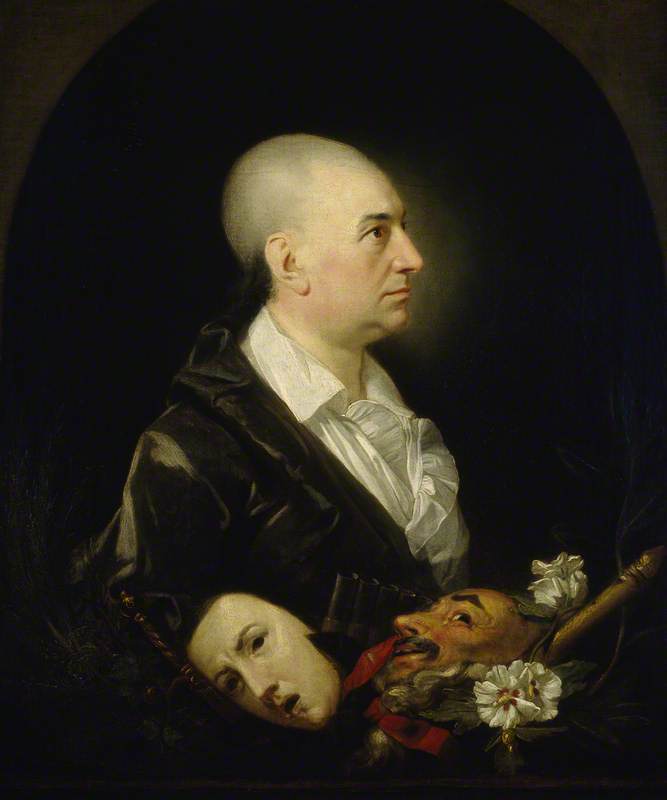
Admire Johann Zoffany's iconic portrait of David Garrick alongside Eva Maria Veigel, capturing the theatrical spirit of Georgian England at The Ashmolean Museum.
Entdecken Sie Johann Zoffanys Meisterwerke des 18. Jahrhunderts! Bekannt für 'Gesprächsstille', die deutsche Präzision und italienische Eleganz vereinen. Erkunden Sie Porträts, Historienmalereien und mehr – erhältlich bei ArtsDot.
Entdecken Sie Kunst & Archäologie aus Millionen Jahren Geschichte im Ashmolean Museum! Impressionisten, Ägypten & mehr – freier Eintritt erwartet Sie!
A Portrait Steeped in Drama: Johann Zoffany’s David Garrick
Johann Zoffany's "David Garrick," completed in 1763, transcends mere portraiture; it embodies the spirit of Enlightenment England and captures a pivotal moment in theatrical history. Executed in oil on canvas, this artwork resides within The Ashmolean Museum of Art and Archaeology in Oxford, offering visitors a glimpse into a bygone era of artistic innovation and aristocratic patronage. Zoffany’s masterful technique—characterized by meticulous detail and subtle tonal gradations—allows for an astonishingly realistic depiction of Garrick alongside his wife Eva Maria Veigel and their guests, creating a tableau that speaks volumes about social status and intellectual curiosity.
The Subject: Garrick at the Forefront
David Garrick (1717–1779), arguably England’s most celebrated actor of his time, dominates the composition. Zoffany skillfully portrays him from the chest up against a dark background, emphasizing his dignified posture and gaze. Garrick's attire—a black coat adorned with white collar—reflects the formality expected of prominent figures within London society during the mid-18th century. The artist’s careful attention to facial features captures Garrick’s seriousness and contemplative demeanor, conveying a sense of intellectual engagement that was central to his persona. He isn't merely presenting himself; he embodies the ideal of the cultured gentleman—a figure admired for both artistic talent and moral virtue.
Symbolism: Masks of Comedy and Tragedy
Adding layers of meaning beyond simple representation are two masks positioned on Garrick’s face – a symbol deeply rooted in theatrical tradition. The mask representing comedy, adorned with a smiling visage, embodies the joyous spirit of performance and entertainment. Conversely, the tragedy mask—characterized by furrowed brows and a mournful expression—represents the darker side of dramatic art and acknowledges its capacity to explore profound emotions. These masks serve as visual metaphors for the duality inherent in human experience and underscore the theatrical context of the scene. They are not merely decorative elements; they actively contribute to the painting’s narrative and thematic resonance.
Technique and Style: Luminosity and Detail
Zoffany's artistic prowess is evident in his masterful use of light and shadow—a technique known as chiaroscuro—which imbues the canvas with a palpable sense of atmosphere. Soft, diffused lighting illuminates Garrick’s face, highlighting his features without resorting to harsh contrasts. This subtle illumination enhances the realism of the portrait and draws attention to Garrick's expressive gaze. Furthermore, Zoffany meticulously renders textures – from the fabric of Garrick’s coat to the delicate folds of Eva Maria Veigel’s gown—demonstrating an unwavering commitment to capturing visual accuracy. The meticulous detail achieved through layering thin glazes of paint contributes significantly to the artwork’s enduring beauty and ensures that it remains a testament to Zoffany's exceptional skill as a painter.
Historical Context: An Era of Enlightenment Reflection
“David Garrick” was created during the height of the Enlightenment, a period marked by intellectual ferment and philosophical inquiry. The painting reflects the values of reason, observation, and artistic excellence that defined this era—values championed by thinkers like Voltaire and Rousseau. Zoffany’s depiction of Garrick alongside his wife and guests speaks to the importance of social interaction and cultural refinement within aristocratic circles. It serves as a visual record of a time when art was seen not merely as decoration but as a vehicle for conveying ideas and shaping perceptions—a legacy that continues to inspire artists and collectors today.