Johannes Bosboom’s Reverent Rendering of Leiden’s Pieterskerk
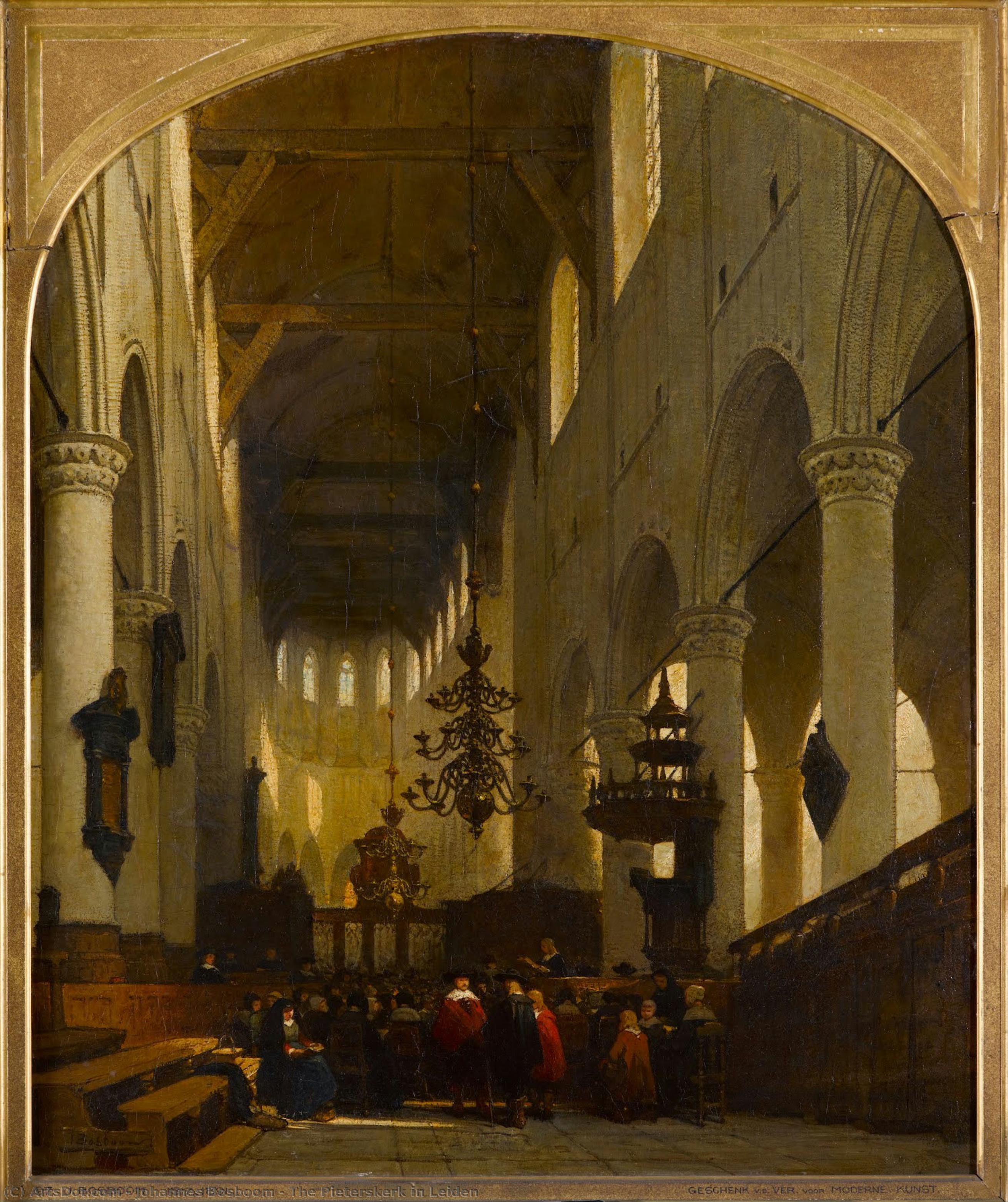
The Pieterskerk in Leiden, captured by Johannes Bosboom in 1868, isn't merely a depiction of a building; it’s an embodiment of Romantic idealism distilled onto canvas. Bosboom, deeply influenced by Wijnand Nuijen’s approach to light and atmosphere—a deliberate rejection of strict perspectival realism—transformed the nave and chancel into a luminous tableau designed to evoke spiritual contemplation. Rather than presenting a straightforward architectural representation, he prioritized creating a theatrical space mirroring stage sets, emphasizing foreground, middle-ground, and background elements to heighten visual depth.
- Style: Hague School – Characterized by tonal harmonies and subtle modeling of form, prioritizing mood over precise detail.
- Technique: Bosboom employed oil paint on canvas with meticulous layering—a technique that allowed him to achieve the ethereal quality of light emanating from an unseen source. This masterful manipulation of color and texture contributes significantly to the painting’s emotive power.
The historical context is crucial to understanding Bosboom's artistic vision. Situated at the cusp of Romanticism, Nuijen’s influence encouraged artists like Bosboom to move beyond mere observation toward conveying emotion and spiritual experience. The church interior itself serves as a symbol of faith and tradition—a space for communal worship and reflection—themes that resonate powerfully within the artwork. Notice particularly the ornate architectural details: arches, pillars, and gilded surfaces – elements deliberately chosen to inspire awe and reverence.
- Symbolism: The pervasive light symbolizes divine grace and illuminates the sacred rituals unfolding within the church walls.
- Emotional Impact: Bosboom’s painting invites viewers to immerse themselves in a tranquil atmosphere, fostering feelings of serenity and spiritual connection.
This monumental reproduction offers an exceptional opportunity to bring the contemplative beauty of Bosboom's Pieterskerk into any interior space. Its rich tonal palette and masterful composition capture the essence of Romantic idealism—a timeless testament to the power of art to inspire emotion and elevate the spirit. It’s a piece that speaks volumes about Dutch artistic heritage and continues to captivate audiences today.