Entdecken Sie Johannes Vermeer (1632-1675), den Meister der niederländischen Goldenen Zeit für Licht und intime häusliche Szenen. Erkunden Sie seine ikonischen Gemälde wie 'Die Liebesbriefe' und 'Das Mädchen mit dem Perlenohrring'. Erfahren Sie mehr über sein Leben, seinen Stil und sein bleibendes Vermächtnis.
Entdecken Sie europäische Kunst vom Mittelalter bis zum frühen 20. Jhdt. in Londons National Gallery! Meisterwerke von Van Gogh, Rembrandt & mehr – freier Eintritt!
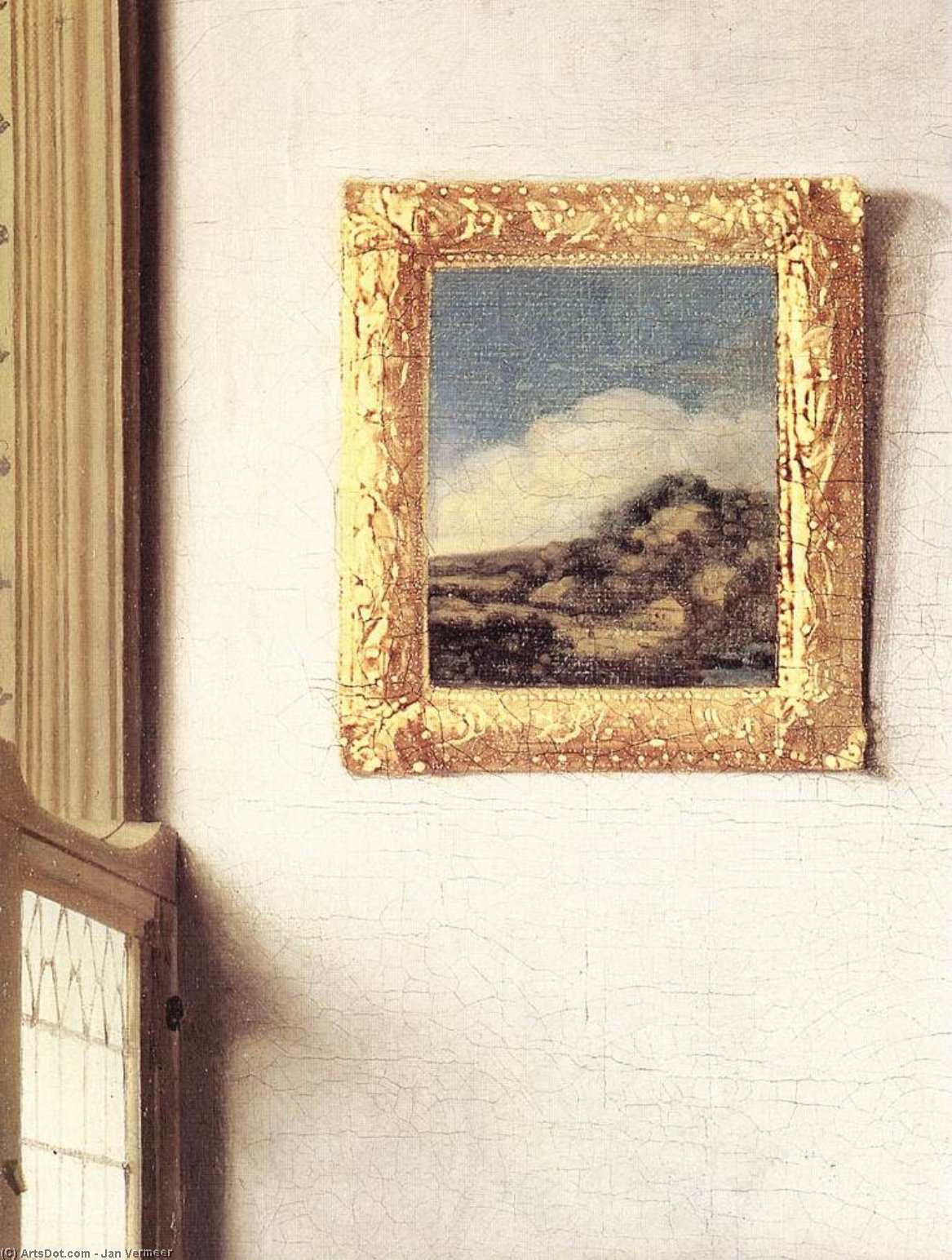
Lady Standing at a Virginal (Detail): A Window Into Delft’s Golden Age
Johannes Vermeer's *Lady Standing at a Virginal* – a painting that transcends mere depiction, capturing the very essence of domestic tranquility and intellectual contemplation—continues to fascinate art historians and collectors alike. Created around 1670-1672 during the zenith of Dutch artistic achievement, this masterpiece resides in the National Gallery of London, offering visitors an unparalleled glimpse into the opulent interiors of Delft during its illustrious Golden Age. More than just a portrait; it’s a meticulously crafted tableau that speaks volumes about Vermeer's mastery of light and color, his profound understanding of human psychology, and the subtle symbolism embedded within its seemingly simple composition.
- Subject Matter: The painting portrays a woman seated before a virginal—a keyboard instrument favored by aristocratic ladies—creating an atmosphere of refined musical performance and serene contemplation.
- Style & Technique: Vermeer’s signature style is characterized by exceptional realism achieved through masterful use of *tenebrismo*, a technique pioneered by Caravaggio that employs dramatic contrasts between light and shadow to heighten visual impact and convey emotional depth. Notice how Vermeer skillfully directs the viewer's gaze, emphasizing the woman’s face and torso while subtly blurring the background landscape.
- Composition: The pyramidal structure of the painting lends stability and grandeur to the scene, drawing the eye upwards towards the luminous ceiling and reinforcing the sense of spaciousness within the room. Vermeer’s meticulous attention to detail—from the folds of the satin dress to the intricate carvings on the virginal—demonstrates his unwavering commitment to capturing every nuance of reality.
The landscape backdrop, rendered in muted greens and blues, isn't merely decorative; it serves as a symbolic counterpoint to the interior space, representing both the natural world and the idealized realm of aristocratic refinement. Vermeer’s choice of colors—particularly the warm hues of the woman’s attire—reflects the prevailing aesthetic sensibilities of the time, where beauty and elegance were paramount virtues. The inclusion of two paintings on the wall adds another layer of complexity to the composition, hinting at intellectual pursuits and artistic appreciation – a hallmark of Delft society during Vermeer's era.
- Historical Context: Vermeer’s work emerged from a period marked by burgeoning mercantile prosperity and cultural dynamism in Holland. The Dutch Republic was a beacon of innovation in art, science, and philosophy, fostering an environment conducive to artistic experimentation and intellectual discourse.
- Symbolism: The virginal itself symbolizes purity, virtue, and musical harmony—values deeply cherished within the aristocratic circles of Delft. Its presence underscores the importance of education and refinement as markers of social status.
- Emotional Impact: *Lady Standing at a Virginal* evokes feelings of serenity, intimacy, and contemplative beauty. Vermeer’s ability to convey emotion through subtle gestures and facial expressions is unparalleled, inviting viewers to immerse themselves in the quiet drama unfolding within the frame.
A recent study revealed that the canvas for this painting originated from the same bolt as *Lady Seated at a Virginal*, suggesting a deliberate artistic connection between two iconic works by Vermeer—a testament to his unwavering stylistic consistency and profound understanding of visual storytelling. The meticulous conservation efforts undertaken in 2024 further illuminated Vermeer’s remarkable artistry, revealing previously unseen tonal values and enhancing the painting's luminous quality. This enduring masterpiece continues to inspire admiration for its exquisite craftsmanship and timeless beauty, securing its place as one of the most beloved paintings in the world.
Further Exploration:
To delve deeper into Johannes Vermeer’s artistic vision and explore his other celebrated works—including *Girl with a Pearl Earring*—visit
Johannes Vermeer Van Delft or
Johannes Vermeer on Wikipedia. For more captivating images of Vermeer’s paintings, explore
Johannes Vermeer: A Lady Standing at a Virginal on ArtsDot.
Size: Unknown
Date: 1670–1672