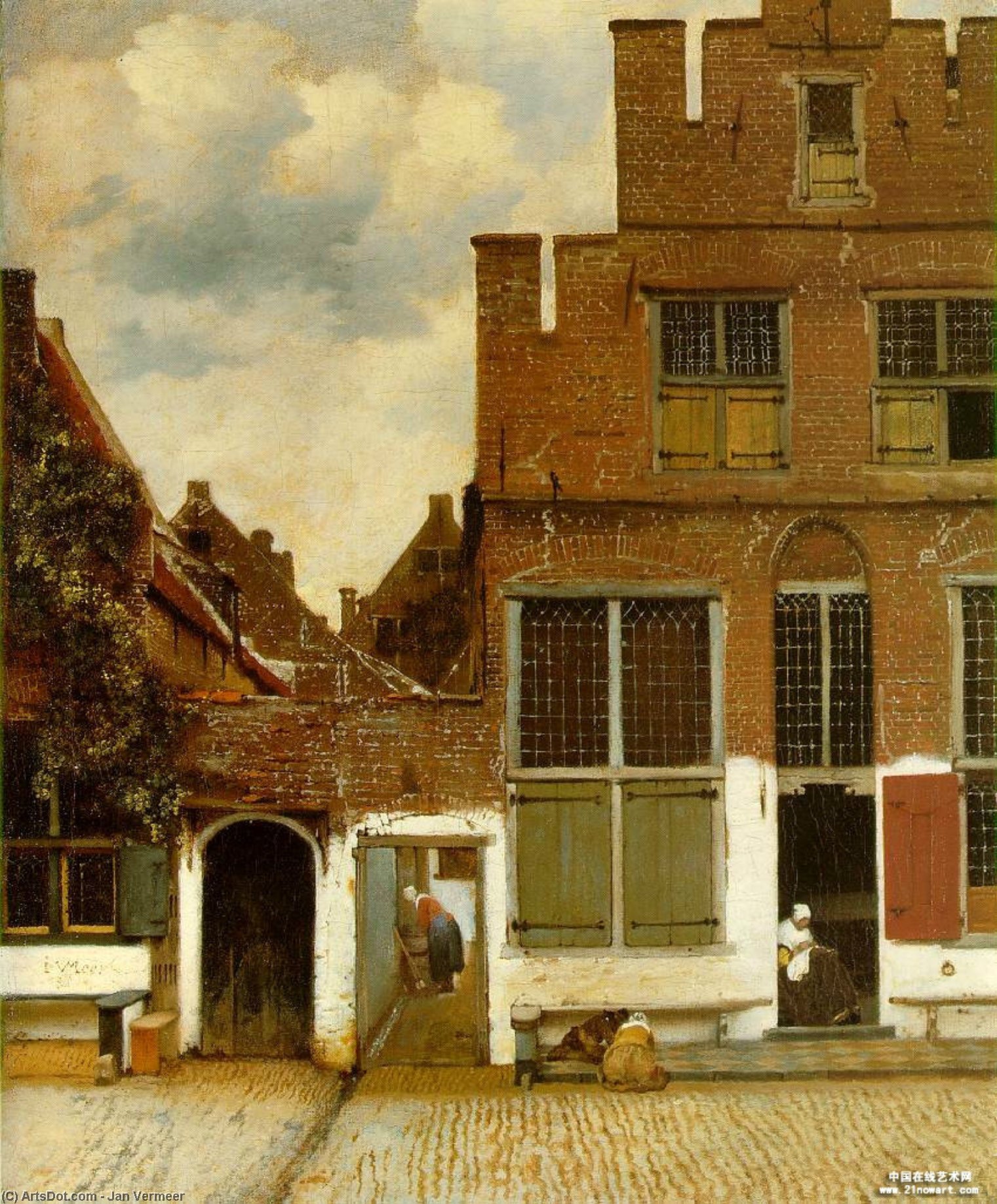
A Window into Delft’s Soul: Vermeer's Street Scene
Johannes Vermeer, born in Delft in 1632, stands as one of the most celebrated figures of the Dutch Golden Age—a period characterized by artistic brilliance and economic expansion. His life was inextricably linked to this vibrant cultural landscape, fostering an appreciation for meticulous observation and a profound understanding of capturing fleeting moments of domestic tranquility. Unlike many artists of his time who pursued grand narratives or mythological themes, Vermeer focused on portraying scenes from ordinary daily existence, elevating the commonplace into something extraordinary through his unparalleled skill.
- Subject Matter: The artwork depicts a quintessential Delft streetscape—a narrow cobblestone thoroughfare bordered by brick buildings. More than just architectural representation, it captures the essence of Dutch urban life during the seventeenth century.
- Style: Vermeer’s style aligns perfectly with genre painting, prioritizing realism and psychological insight over dramatic grandeur. He eschewed theatrical poses or elaborate costumes, opting instead for understated compositions that convey a sense of quiet contemplation.
The artist's technique is remarkable—a testament to his mastery of oil paint on canvas. Vermeer employed painstaking brushwork and glazing techniques to build up layers of color, achieving an astonishing level of luminosity and depth. These subtle gradations of tone create an illusionistic space that draws the viewer into the scene, inviting them to linger on the details: the woman carrying a basket, the man entering a doorway, and the seated figure observing the street activity.
Historical Context: Delft during Vermeer’s lifetime was a thriving center of commerce and craftsmanship. The city's brick buildings reflected its prosperity, while the daily routines of its inhabitants—represented here with remarkable accuracy—provided a snapshot of Dutch society at its zenith. Vermeer’s work speaks to this era’s fascination with capturing the beauty of everyday life and conveying emotions subtly.
- Symbolism: The scene transcends mere depiction; it embodies symbolic resonance. The muted palette – predominantly browns, creams, and blues – contributes to an atmosphere of serenity and introspection. Furthermore, the arched doorway symbolizes entrance into a private space, hinting at themes of domesticity and contemplation.
- Emotional Impact: Vermeer’s masterpiece evokes feelings of warmth, comfort, and nostalgia. The diffused light casts a gentle glow over the scene, fostering an emotional connection with the viewer—a feeling akin to peering through a window into another time and place.
Ultimately, “Street in Delft” is more than just a painting; it’s a distillation of Vermeer's artistic vision—a celebration of quiet observation and a profound understanding of human emotion. Its enduring appeal lies in its ability to transport us back to Delft during the Golden Age, reminding us that beauty can be found in the simplest of moments.