The Secession Building: A Manifesto in Gold and Stone
Rising from the heart of Vienna’s bustling Innere Stadt, the Secession Building is more than just an architectural marvel; it's a crystallized embodiment of artistic rebellion and a pivotal moment in the evolution of modern design. Completed in 1898 by Joseph Maria Olbrich as the headquarters for the Vienna Secession – a group of artists who dared to break away from the rigid traditions of the established art world – this structure immediately commands attention with its audacious form and shimmering façade. It’s a building that whispers of revolution, innovation, and a profound desire to redefine the relationship between art and architecture.
The Secession movement itself was fueled by a deep dissatisfaction with the prevailing artistic norms of the late 19th century. Artists like Gustav Klimt, Joseph Maria Olbrich, and Koloman Moser felt stifled by the emphasis on historical styles, academic training, and commercial considerations that dominated the art scene. They sought to create a new aesthetic – one rooted in modernism, embracing simplification, geometric forms, and a rejection of imitation. The Secession Building wasn’t merely a gallery; it was a declaration of independence, a visual manifesto asserting the freedom of artistic expression.
A Symphony of Geometric Forms and Ancient Echoes
Olbrich's design is a masterful blend of seemingly disparate influences. The building’s exterior presents a striking contrast between stark white walls and a monumental, golden sphere – a structure composed of 3,000 individually hammered gold leaves. This audacious element, reminiscent of laurel wreaths adorning ancient Greek victories and the shimmering scales of mythical creatures, immediately draws the eye upward. Below this radiant crown, three Gorgon masks—inspired by archaic Greek sculpture—guard the entrance, their fierce expressions a subtle reminder of the movement’s rebellious spirit.
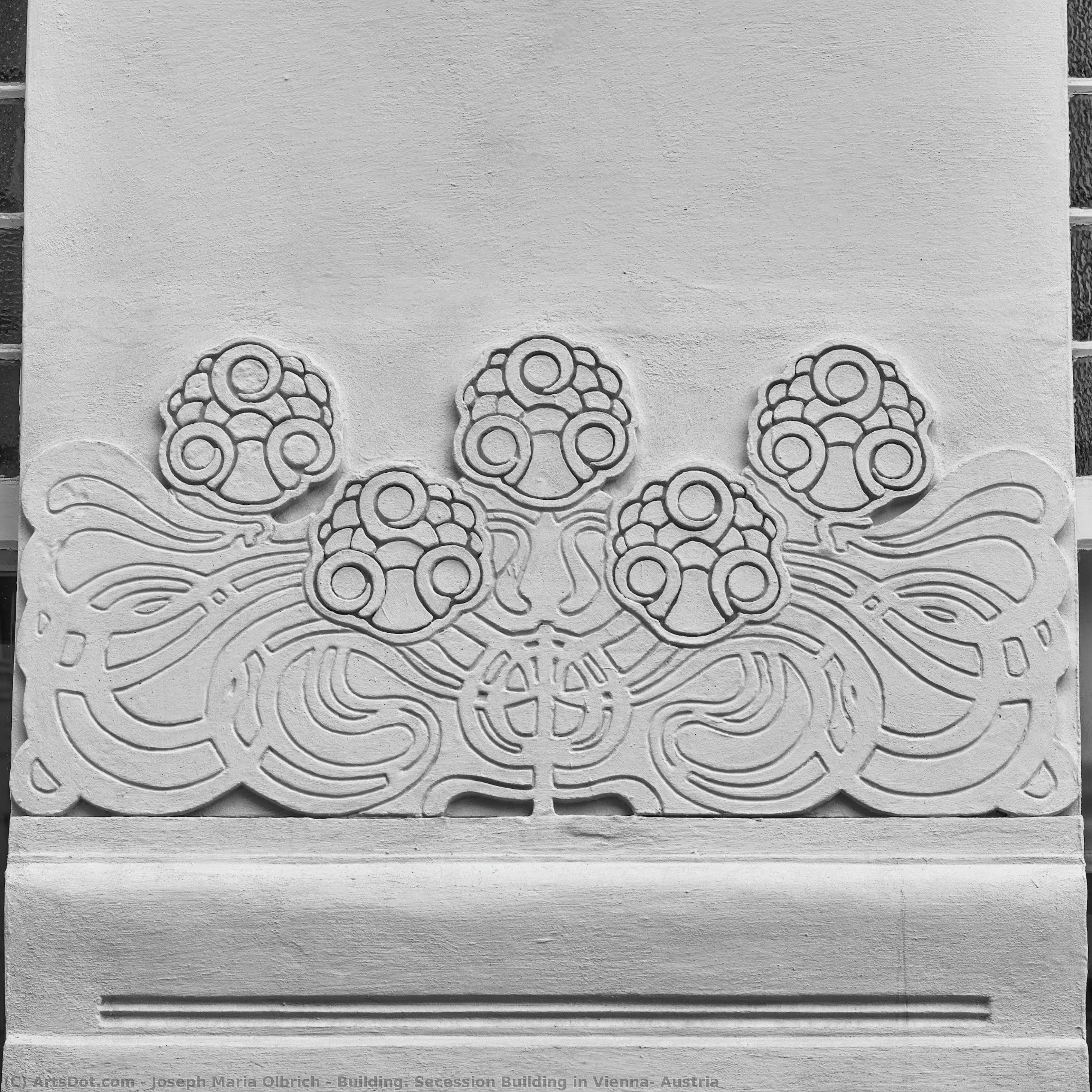
However, closer inspection reveals a deeper complexity. The building's façade is punctuated by a series of rectangular panels and subtly curved lines, echoing the monumental architecture of ancient Assyria and Egypt – civilizations known for their imposing temples and grand public spaces. This deliberate juxtaposition of modern geometry with classical motifs speaks to the Secession’s desire to synthesize the past and present, creating a new visual language that was both contemporary and timeless.
The Interior: A Space for Artistic Freedom
Stepping inside the Secession Building is an experience in itself. The vast, open interior spaces are remarkably devoid of ornamentation – a deliberate rejection of the lavish displays common in traditional galleries. Instead, the walls are painted a deep, almost black, color, providing a dramatic backdrop for the artworks on display. The floor is covered with a single, continuous expanse of polished wood, creating a sense of spaciousness and fluidity.
At the heart of the building lies Gustav Klimt’s “Beethoven Frieze,” a monumental mural that dominates the main hall. This iconic artwork, commissioned for the opening of the Secession Building, depicts Beethoven in a series of stylized panels, each capturing a different stage of his life and creative process. The frieze is a testament to Klimt's mastery of color, pattern, and symbolism, and it remains one of the most recognizable works of Art Nouveau.
Symbolism and Emotional Impact
The Secession Building’s design is rich in symbolic meaning. The “To every age its art, to every art its freedom” motto – inscribed above the entrance – encapsulates the movement's core philosophy. The golden sphere represents the sun, symbolizing enlightenment, creativity, and the pursuit of beauty. The Gorgon masks serve as a warning against conformity and a reminder of the Secession’s commitment to challenging established norms.
More than just a building, the Secession Building is an enduring symbol of artistic innovation and cultural change. It represents a bold rejection of tradition, a celebration of modernism, and a testament to the power of art to inspire and transform. Today, it continues to captivate visitors with its striking beauty and profound significance, serving as a reminder that true artistry lies in daring to be different.