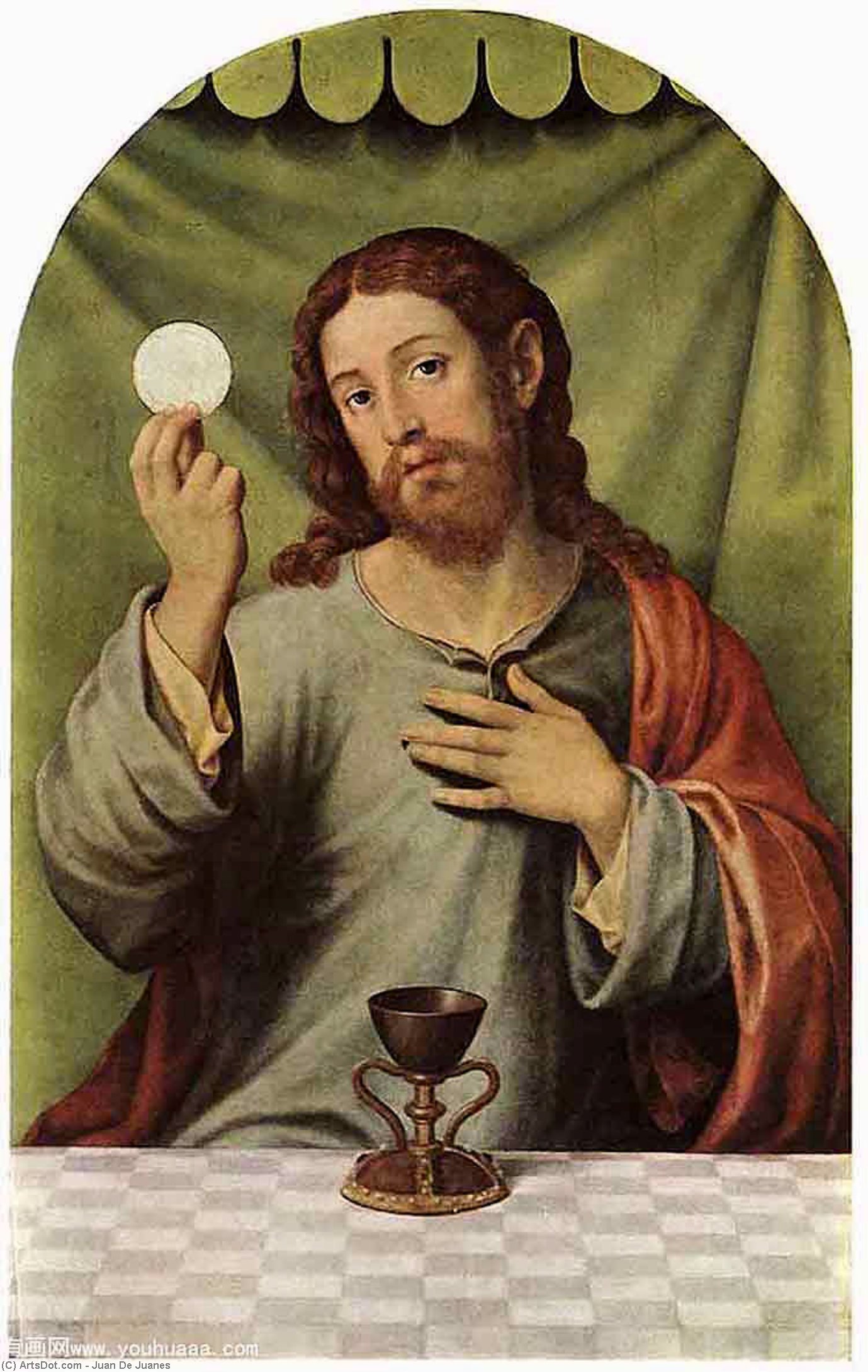
A Divine Encounter: The Serenity of Christ with the Chalice
In the quietude of Juan de Juanes’ Christ with the Chalice, the viewer is not merely an observer but a participant in a profound moment of spiritual contemplation. This masterpiece, emerging from the golden age of the Valencian Renaissance, captures the figure of Jesus Christ in a state of sublime grace. The composition is intimate, focusing on the upper torso of Christ as he emerges against a deep, verdant curtain that falls in heavy, textured folds. His expression—a delicate balance of serenity and solemnity—invites the soul to pause. With long, flowing brown hair and a neatly groomed beard, his features possess a soft realism that bridges the gap between the divine and the human, making the sacred subject feel tangibly present within our own space.
The technical brilliance of Juanes lies in his ability to harmonize the meticulous detail of the Northern Flemish tradition with the idealized elegance of the Italian High Renaissance. One can observe this mastery in the way light dances across the figure’s hands and face, creating a luminous quality that seems to emanate from within. The artist employs a sophisticated use of chiaroscuro, where subtle shadows define the musculature of the chest and the gentle gesture of the hand resting upon the heart. This interplay of light and shadow lends a three-dimensional weight to the figure, ensuring that the painting possesses a commanding physical presence that is essential for any curated art collection.
Symbolism and the Sacred Eucharist
Every element within this composition serves a higher theological purpose, weaving a narrative of sacrifice and eternal covenant. In his right hand, Christ holds a small, pale communion wafer, raised slightly as if in the midst of a silent blessing. Below, resting upon a table adorned with a striking checkered pattern, sits the chalice—the vessel of the Eucharist. The contrast between the dark, rhythmic squares of the tablecloth and the metallic gleam of the cup draws the eye toward this central symbol of the blood of Christ. This arrangement is not merely decorative; it is a liturgical tableau that evokes the profound mystery of the Last Supper, reminding the faithful of the enduring bond between the Creator and humanity.
The color palette, dominated by muted greens, rich browns, and earthy tones, contributes to the painting's somber yet peaceful atmosphere. These colors do not compete for attention but rather provide a stable, grounded backdrop that allows the spiritual light of the subject to shine. For the interior designer or collector, this piece offers a unique opportunity to introduce a sense of historical gravity and meditative calm into a room. Whether placed in a private study, a grand library, or a dedicated prayer space, the artwork acts as an anchor of tranquility, commanding respect through its quiet strength and timeless beauty.
A Legacy for the Modern Collector
Owning a reproduction of such a significant work by Juan de Juanes is more than an aesthetic choice; it is an engagement with the history of Spanish Renaissance art. As a pivotal figure who blended the realism of the North with the grace of the South, Juanes created works that resonate across centuries. This painting, with its meticulous craftsmanship and evocative imagery, remains a testament to an era where art was the primary vessel for expressing the deepest human emotions and spiritual aspirations. For those seeking to adorn their homes with pieces that offer both intellectual depth and visual splendor, Christ with the Chalice stands as an incomparable choice, bringing the majesty of the sixteenth century into the contemporary heart of the home.