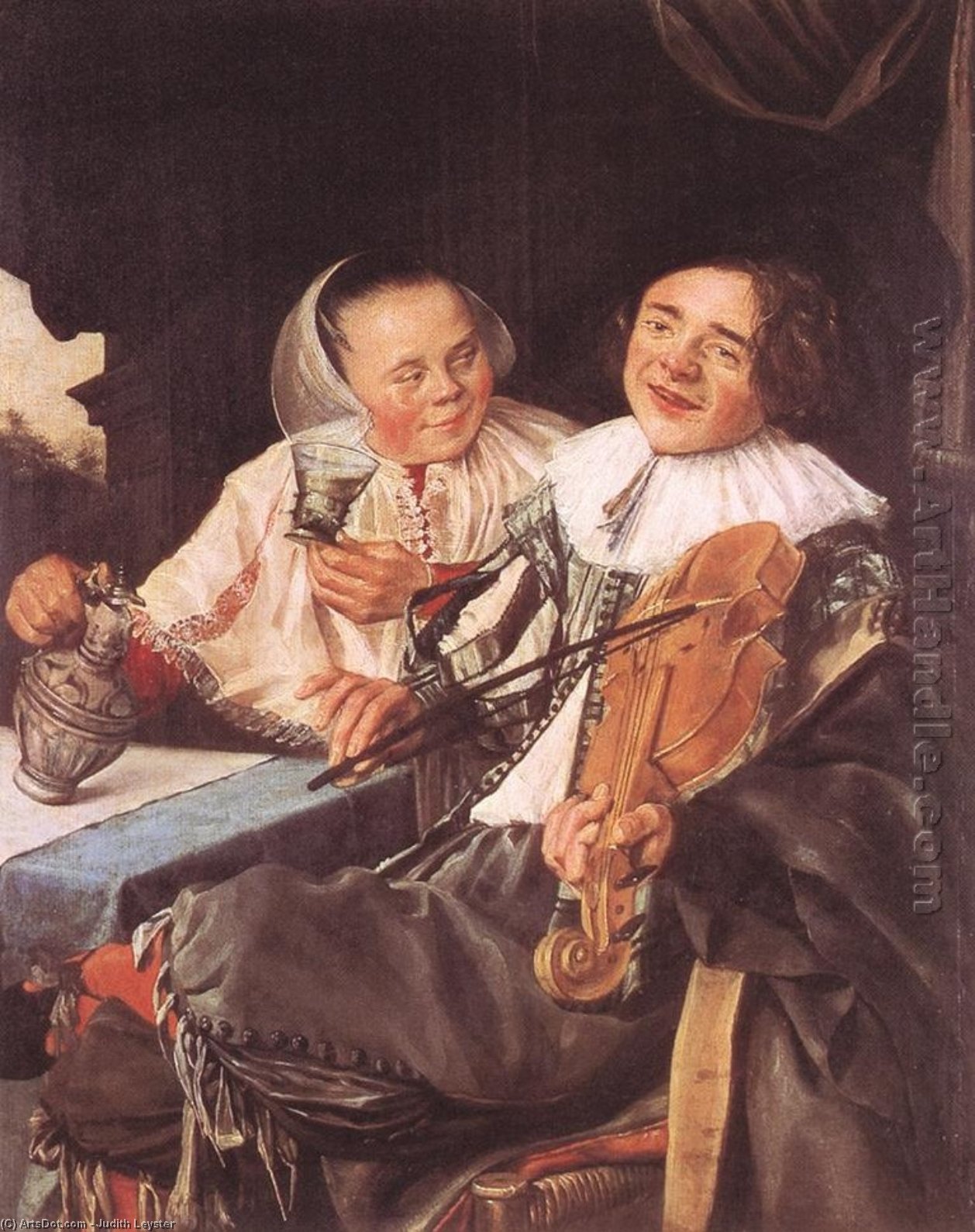
Carousing Couple: A Window Into Seventeenth Century Dutch Life
Judith Jans Leyster’s *Carousing Couple*, painted around 1630, isn't merely a depiction of two figures enjoying wine; it’s a masterful snapshot of social dynamics and artistic innovation within the burgeoning Dutch Golden Age. This captivating portrait transcends its formal subject matter to offer a glimpse into the values and aspirations of a period defined by mercantile prosperity and intellectual curiosity.
- Subject Matter: The painting portrays a man holding a violin while his companion drinks from a goblet, creating an intimate scene of conviviality. This choice of subject—a musician and drinker—was deliberate. Musicians were considered symbols of intellect and refinement, representing the humanist ideals that permeated Dutch society at the time. Wine symbolized indulgence and pleasure, reflecting the desire for enjoyment amidst the pressures of daily life.
- Style: Leyster’s style aligns closely with Frans Hals’s approach—a technique known as “Alla Prima,” or “at first sight.” This method eschews meticulous layering of paint, favoring rapid brushwork and capturing fleeting expressions. Hals championed this style, believing it best conveyed the immediacy and vitality of human experience. Leyster adopted this technique to create a dynamic image that captures the essence of her subjects’ personalities.
- Technique: The painting utilizes oil on panel—a common medium for portraiture during the period—allowing for rich colors and subtle gradations. Leyster skillfully employs chiaroscuro, manipulating light and shadow to sculpt the figures and heighten their emotional impact. Notice how the violinist’s face is illuminated by a warm glow, contrasting with the darker background, drawing the viewer's eye directly to his gaze.
- Historical Context: Haarlem in 1630 was at the epicenter of artistic fervor. The city’s wealth fueled patronage from merchants and nobles alike, fostering an environment where artists could experiment and push boundaries. Leyster’s inclusion of a violin player speaks to this cultural preoccupation with music and intellectual pursuits—a reflection of the broader humanist movement that shaped European thought.
- Symbolism: Beyond its depiction of social interaction, *Carousing Couple* carries symbolic weight. The violin represents artistry and sophistication, while the wine symbolizes indulgence and pleasure. Leyster’s careful composition—the diagonal placement of figures—creates a sense of movement and dynamism, mirroring the energy of the era. Furthermore, the inclusion of objects like the goblet and cup reinforces the theme of celebration and enjoyment.
The rediscovery of *Carousing Couple* in 1893 marked a pivotal moment in art history, correcting a longstanding misattribution that had relegated Leyster’s talent to obscurity. Today, reproductions offer an opportunity to appreciate not only the beauty of her artwork but also its profound insight into the spirit of seventeenth-century Holland—a testament to artistic innovation and a celebration of human connection.