Julius Mordecai Pincas: A Portrait of Innocence Amidst Parisian Shadows
Julius Mordecai Pincas (Jules Pascin), born March 31, 1885, in Vidin, Bulgaria, stands as a singular figure within the School of Paris—a movement that redefined modern art through its embrace of expressive color and psychological depth. His artistic journey began amidst familial disapproval regarding his penchant for satirical sketches, yet he swiftly cultivated an extraordinary talent, studying art in Vienna and Munich before establishing himself in the bohemian heart of Paris.
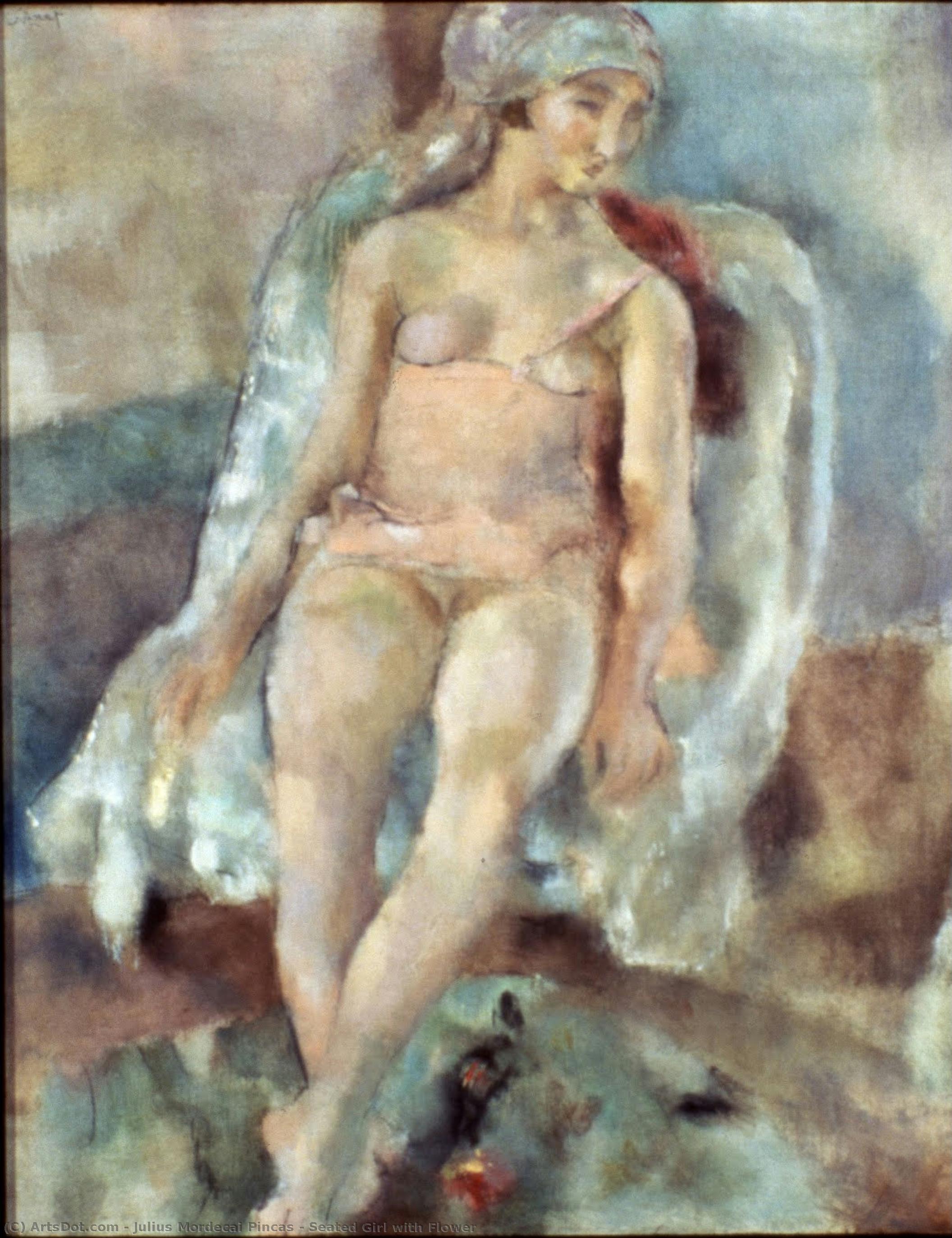
“Seated Girl with Flower,” painted in 1927, exemplifies Pincas’s distinctive style—characterized by bold hues, dynamic brushstrokes, and a profound sensitivity to human emotion. This captivating portrait captures a young woman seated gracefully on a chair with her legs crossed, adorned in lingerie that subtly hints at vulnerability. The composition is meticulously balanced, featuring two birds perched strategically – one near the top left corner and another in the upper right—adding layers of visual interest.
The painting’s palette explodes with vibrant shades of crimson, ochre, and emerald green, skillfully blended to create an atmosphere of warmth and intimacy. Pincas's technique employs loose brushwork, allowing for textural variation and conveying a palpable sense of movement. Unlike Impressionists who sought to capture fleeting moments of light, Pascin delves into the inner landscape of his subject, inviting viewers to contemplate her gaze—directed outwards with quiet contemplation.
Beyond its aesthetic beauty, “Seated Girl with Flower” resonates with symbolic significance. The bird motifs represent freedom and aspiration, mirroring the youthful spirit embodied by the woman in the chair. Furthermore, the posture itself conveys a sense of repose and serenity – qualities that Pincas consistently pursued in his artistic endeavors.
This artwork resides within the Kunsthalle Bremen’s collection, showcasing its enduring appeal to art connoisseurs and collectors alike. Its reproduction offers an opportunity to experience the brilliance of Jules Pascin's vision—a testament to his mastery of color, composition, and psychological portrayal.
Little Girl with a Bouquet by Jules Pascin (1885-1930) captures the poignant beauty of childhood innocence against a backdrop of Parisian life. Painted in 1925, this oil painting depicts a young girl holding a bouquet, seated gracefully on a chair amidst two figures in the background.
Little Girl with a Bouquet by Jules Pascin (1885-1930) captures the poignant beauty of childhood innocence against a backdrop of Parisian life. Painted in 1925, this oil painting depicts a young girl holding a bouquet, seated gracefully on a chair amidst two figures in the background.
“Little Girl with a Bouquet” exemplifies Pincas’s ability to distill complex emotions into simple visual elements—a hallmark of his artistic approach. The artist skillfully utilizes light and shadow to create depth and atmosphere, emphasizing the girl's delicate features and conveying her serene demeanor.
The painting’s color scheme is dominated by pastel hues—primarily lavender and peach—which evoke a sense of tranquility and nostalgia. Pascin’s brushstrokes are loose and expressive, capturing the fleeting beauty of the moment with remarkable precision.
“Little Girl with Bouquet” stands as an emblem of Pincas's dedication to portraying human emotion with honesty and sensitivity—a characteristic that distinguishes him from many of his contemporaries. Its inclusion in the Kunsthalle Bremen’s collection underscores its significance within the broader context of Early Modern Art.
“Seated Girl with Flower” – a masterpiece of Expressionism & Color