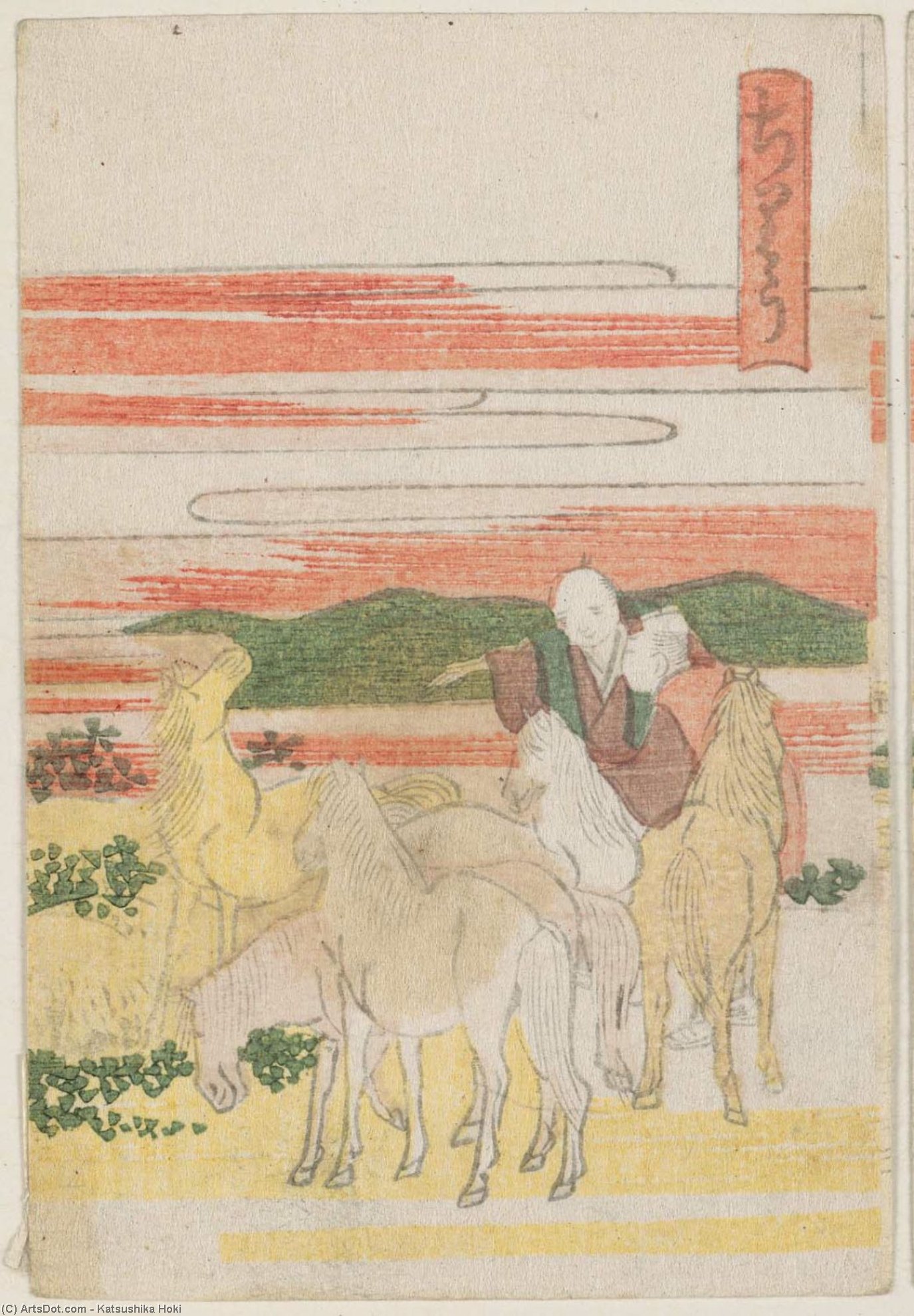
Chiryû, From The Series The Fifty-three Stations Of The Tôkaidô Road Printed In Color
“Chiryû,” from Katsushika Hokusai’s celebrated “Fifty-Three Stations of the Tokaido Road” series, transcends mere depiction; it embodies a profound meditation on pilgrimage and the sublime beauty of Japan’s mountainous landscape. Executed in vibrant color—primarily Prussian blue—this woodblock print captures a moment of serene contemplation amidst the grandeur of Mount Fuji looming majestically in the background.
- Subject Matter: The scene portrays travelers traversing the Tokaido Road, Japan’s ancient highway connecting Edo (Tokyo) and Kyoto. Five horses—representing strength and perseverance—carry riders along the path, their figures rendered with meticulous detail against a backdrop of snow-capped peaks.
- Style & Technique: Hokusai's signature style is evident in his masterful use of Prussian blue pigment, a relatively new color imported from Europe during his lifetime. The print employs *hokuyo*—a technique involving precise measurement and calculation—to achieve unparalleled accuracy in perspective and tonal gradation. Lines are bold and decisive, conveying movement and dynamism while simultaneously grounding the composition.
- Historical Context: Created during the Edo Period (1603-1868), “Chiryû” reflects Japan’s fascination with pilgrimage routes and its reverence for natural beauty. The Tokaido Road was a vital artery of commerce and communication, but also a site of spiritual significance—travelers sought enlightenment and solace amidst the mountains.
- Symbolism: Mount Fuji dominates the composition, symbolizing stability, permanence, and divine presence. Its snow-covered summit represents purity and transcendence. The horses symbolize resilience and determination, mirroring the arduous journey undertaken by pilgrims. The overall impression is one of tranquility and awe—a reminder of humanity’s connection to the natural world.
- Emotional Impact: “Chiryû” evokes a feeling of peaceful contemplation and admiration for Japan's landscape. Its subtle color palette and carefully crafted lines invite viewers to immerse themselves in the scene, fostering a sense of wonder and inspiring reflection on themes of pilgrimage and spiritual aspiration.
This stunning reproduction captures the essence of Hokusai’s artistic vision—a testament to his enduring influence on Japanese art history and a captivating addition to any discerning collection.