A Vision of Tranquility Amidst Turbulent Landscapes
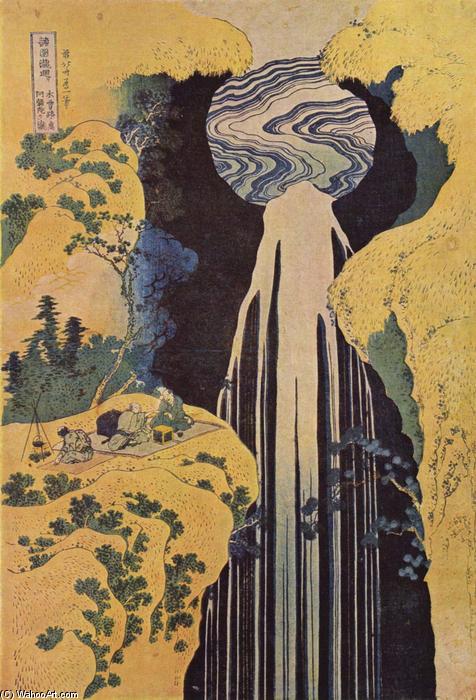
Katsushika Hokusai’s *The Waterfall of Amida Behind the Kiso Road*, created around 1827 during Japan's Edo period, transcends mere depiction; it embodies a profound meditation on nature’s grandeur and spiritual serenity. This iconic woodblock print from his celebrated series, *A Tour of Waterfalls in Various Provinces* (Shokoku taki meguri), captures a breathtaking vista—a cascading waterfall plunging down a cliff face against the backdrop of Mount Tenjōzan—reflecting not only the physical beauty of the region but also deeper philosophical currents prevalent during Hokusai’s time.
The Artistic Technique: Ukiyo-e Mastery
Executed in the masterful ukiyo-e style, *The Waterfall* exemplifies the meticulous craftsmanship characteristic of Japanese printmaking. Hokusai employed a layered printing process—katagaki (bold lines), sumi-kata (fine lines), and urushi (varnish)—to achieve remarkable tonal depth and luminosity. The artist’s masterful use of Prussian blue pigment, an accidental discovery that revolutionized color printing, imparts an unparalleled vibrancy to the waterfall itself, contrasting sharply with the muted greens and browns of the surrounding foliage. Each brushstroke conveys a palpable sense of movement—the forceful rush of water against the stillness of the mountain—demonstrating Hokusai’s unwavering dedication to capturing fleeting moments of natural beauty.
Symbolism Rooted in Buddhist Philosophy
The waterfall's placement behind Mount Tenjōzan carries significant symbolic weight. Mount Tenjōzan, revered as a sacred site associated with Amida Buddha—the bodhisattva of compassion and salvation—represents enlightenment and spiritual ascension. By positioning the waterfall directly beneath the mountain’s summit, Hokusai subtly suggests that worldly concerns fade away before the sublime majesty of divine grace. The scene evokes contemplation and invites viewers to contemplate the interconnectedness between nature and spirituality – a core theme within Buddhist cosmology.
A Landscape That Speaks Volumes
More than just a scenic panorama, *The Waterfall* is imbued with an emotional resonance that continues to captivate audiences centuries later. The composition—characterized by asymmetrical balance and dramatic perspective—creates a feeling of immediacy, transporting the viewer into the heart of the landscape. Hokusai’s keen observation of light and shadow enhances the scene's realism while simultaneously elevating it to a realm of artistic contemplation. It serves as a testament to his ability to distill complex philosophical ideas into visually arresting imagery – an achievement that solidified his place among Japan’s greatest artists.
Contemporary Relevance: Inspiration for Artists & Designers
Hokusai's influence extends far beyond the Edo period, resonating powerfully with Impressionist painters like Claude Monet and Edgar Degas who were profoundly moved by the print’s innovative use of color and perspective. Today, *The Waterfall* remains a source of inspiration for artists and designers alike—a timeless reminder that beauty can be found in simplicity and that art possesses the capacity to convey profound spiritual truths. Reproductions of this masterpiece offer an opportunity to experience firsthand the enduring legacy of one of Japan’s most visionary creators.