A Portrait of Resolve: Decoding Katsushika Hokusai’s “The False Sun Wugong”
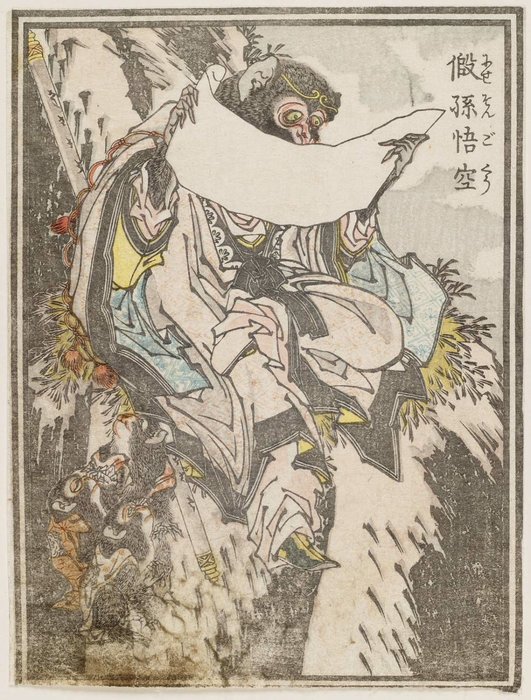
Katsushika Hokusai's “The False Sun Wugong,” a deceptively simple monochrome print, transcends its surface appearance to embody the spirit of resilience and contemplation characteristic of Edo-period Japan. Created around 1830 during Hokusai’s prolific output—a period marked by an unparalleled exploration of landscape and mythology—this artwork isn't merely a depiction of a figure; it’s a conduit for conveying profound philosophical ideas rooted in Zen Buddhism.
- Subject Matter: The central focus is a solitary man, dressed in robes, holding aloft a scroll bearing the emblem of Sun Wugong (孫悟空), the mischievous monkey king from Chinese folklore. This figure isn’t presented as heroic or triumphant—rather, he exudes an aura of quiet determination, gazing intently at the heavens.
- Style & Technique: Executed in Hokusai's signature Prussian blue pigment—a bold innovation for Ukiyo-e prints—the print utilizes a masterful application of hatching and shading to create depth and texture. The artist’s meticulous attention to detail captures subtle nuances of light and shadow, mirroring the contemplative mood of the subject.
- Historical Context: Produced during Hokusai's “Thirty Six Views of Mount Fuji” series, "The False Sun Wugong" operates within a broader artistic movement that sought to elevate Ukiyo-e beyond mere decorative representation. It reflects the influence of Zen philosophy—specifically the concept of ‘mu’ (無)—the emptiness or nothingness—which encourages acceptance of impermanence and finding enlightenment amidst chaos.
Symbolism: The Monkey King – Embodiment of Transformation
The inclusion of Sun Wugong is laden with symbolic significance. Traditionally, the monkey king represents transformation, overcoming obstacles, and achieving inner peace through perseverance. His upward gaze symbolizes aspiration—a yearning for enlightenment—while his posture conveys unwavering focus. Hokusai subtly incorporates this mythological figure to imbue the print with a deeper spiritual dimension.
Color Palette & Artistic Impression
Despite its monochrome palette, “The False Sun Wugong” achieves remarkable visual impact thanks to Hokusai’s masterful use of Prussian blue. This pigment, imported from Europe during Hokusai's lifetime, was considered revolutionary for its vibrancy and permanence—a deliberate choice that underscores the artist’s ambition to push artistic boundaries. The subdued hues contribute to a serene atmosphere, inviting viewers to contemplate the profound themes explored within the image.
Emotional Resonance & Legacy
"The False Sun Wugong" speaks to the human condition—the struggle for self-awareness and acceptance amidst life’s uncertainties. It's a testament to Hokusai’s ability to distill complex philosophical concepts into a visually arresting composition. Today, reproductions of this iconic print continue to inspire artists and collectors alike, cementing its place as one of Japan’s most enduring treasures.