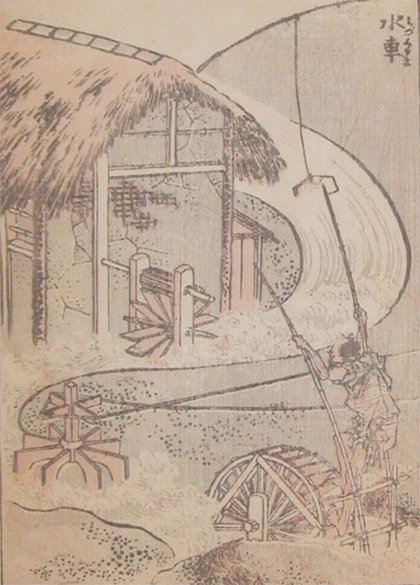
A Symphony of Motion: Decoding Katsushika Hokusai’s “Watermill at Onden”
Katsushika Hokusai’s “Watermill at Onden,” created in 1832 during his prolific Ukiyo-e period, transcends mere depiction; it embodies the spirit of Edo Japan and speaks to a timeless fascination with nature's rhythm. More than just a picturesque landscape, this woodblock print is a masterful distillation of artistic innovation and cultural observation—a testament to Hokusai’s unparalleled ability to convey emotion through visual form.
- Subject Matter: The scene portrays a tranquil watermill nestled amidst rolling hills bathed in soft sunlight. A solitary man diligently tending to the machinery underscores the importance of rural labor and daily life during the Edo era, offering viewers a glimpse into the industriousness of Japanese society.
- Style & Technique: Hokusai’s signature style—characterized by bold outlines and vibrant color palettes—is evident in every detail. The print utilizes *hokuyo-e*, a technique that employs perspective to create an illusion of depth, convincingly simulating the grandeur of Mount Fuji looming in the distance. Precise carving and meticulous printing ensured exceptional tonal gradation, capturing subtle nuances of light and shadow.
Historical Context: Edo Japan’s Embrace of Landscape Painting
“Watermill at Onden” emerged during a period of significant artistic experimentation within Japan. The Meiji Restoration (1868) marked the end of feudal rule, ushering in an era of modernization and Western influence. However, traditional arts like Ukiyo-e continued to flourish, fueled by a burgeoning appreciation for beauty and contemplation. Artists sought inspiration from nature—particularly Mount Fuji—a symbol of stability and spiritual significance—reflecting anxieties about change and reaffirming enduring values.
- Symbolism: The watermill itself represents industriousness and perseverance, mirroring the aspirations of Japan’s burgeoning middle class. The presence of umbrellas symbolizes protection from inclement weather and adds a touch of human warmth to the serene landscape. Most powerfully, Mount Fuji serves as a focal point, grounding the scene in tradition while simultaneously conveying an impression of majesty and timeless beauty.
Emotional Resonance: Capturing Transient Beauty
Hokusai’s genius lies in his ability to evoke profound emotion through seemingly simple imagery. The print's subdued color palette—dominated by blues and greens—creates a calming atmosphere, inviting viewers into the contemplative mood of Edo Japan. Yet, beneath the surface tranquility resides an awareness of impermanence—a subtle reminder that even the most magnificent landscapes are subject to change. “Watermill at Onden” remains a poignant meditation on the relationship between humanity and nature, capturing a fleeting moment of beauty with remarkable precision.
- Decorative Potential: This artwork’s harmonious composition lends itself beautifully to interior design schemes—particularly those emphasizing natural textures and muted tones. Its striking depiction of Mount Fuji would serve as an inspiring centerpiece in any space, conveying serenity and grandeur alike.