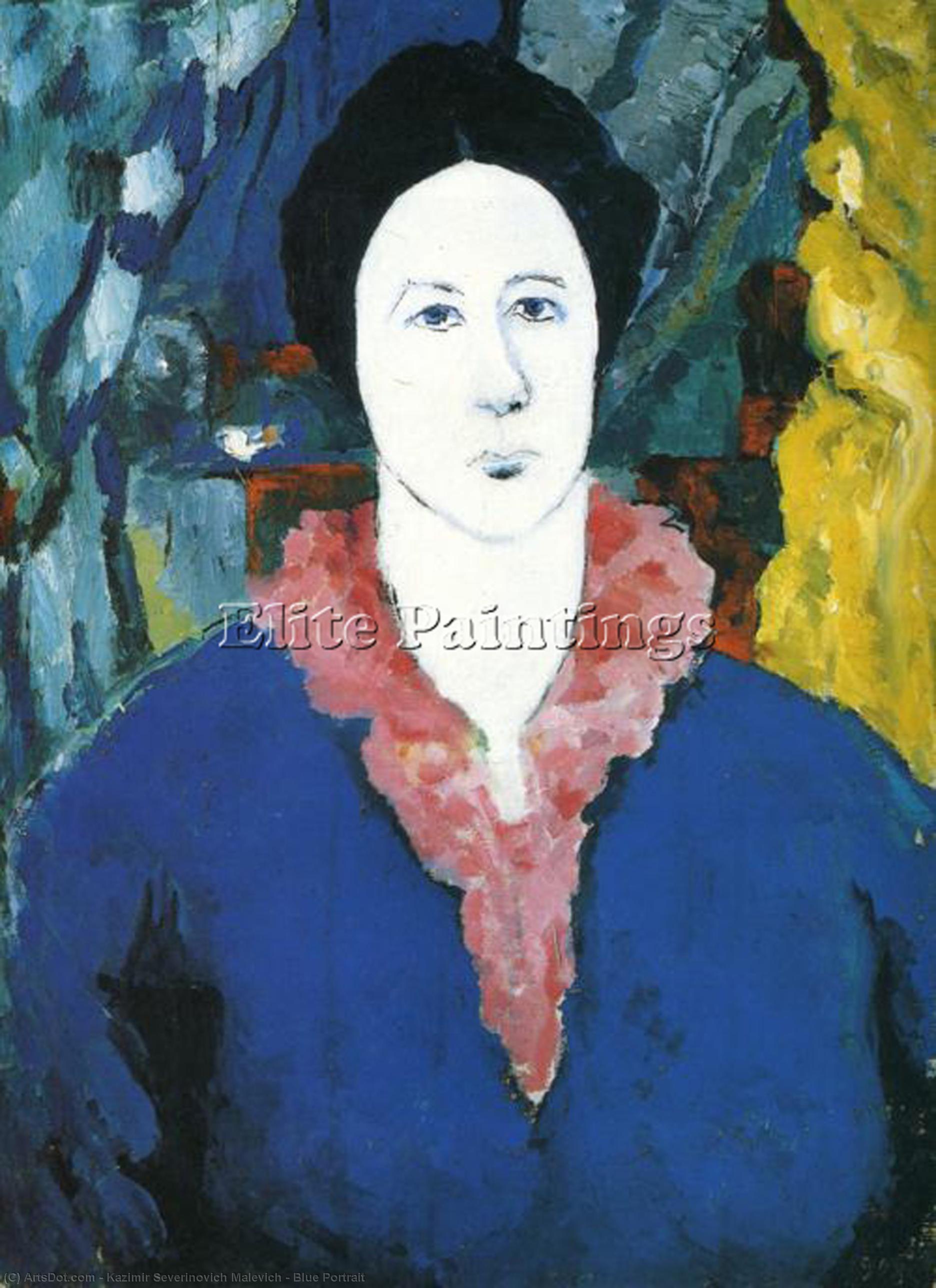
A Symphony of Geometry: The Soul of Blue Portrait
In the vast landscape of twentieth-century modernism, few works capture the tension between the tangible world and the infinite void as poignantly as Kazimir Malevich’s “Blue Portrait,” painted in 1930. This masterpiece serves as a profound window into the heart of Suprematism, a movement that sought to liberate art from the heavy burden of representation. While the title suggests a traditional subject, the canvas transcends mere portraiture, inviting the viewer into a meditative space where color and form reign supreme. To gaze upon this work is to witness the deliberate stripping away of the unnecessary, leaving behind only the essential vibrations of shape and hue that resonate deep within the spectator's psyche.
The visual journey begins with an immersive exploration of color. Malevich masterfully employs a palette dominated by various depths of blue—ranging from the somber, mysterious weight of deep indigo to the ethereal lightness of pale azure. These cool tones are strategically interrupted by sudden, energetic splashes of pink and orange, creating a rhythmic visual harmony that feels both balanced and dynamic. This careful layering of pigment on the textured canvas provides a palpable sense of physicality, ensuring that even in its conceptual purity, the painting remains grounded in the tactile reality of the medium.
The Intersection of Tradition and Radical Innovation
To truly appreciate the depth of “Blue Portrait,” one must understand the rich tapestry of influences that shaped Malevich’s vision. His artistic identity was forged in the pastoral landscapes of Ukraine, where the intricate patterns and motifs of traditional folk art first captured his imagination. This early exposure to rhythmic, decorative elements would later find a sophisticated rebirth within his abstract compositions. However, it was his transformative encounter with the Parisian avant-garde in 1912 that catalyzed his departure from representational traditions like Impressionism and Cubism.
By the time he executed this work in 1930, Malevich had fully embraced a reductive aesthetic. He moved beyond the fragmented forms of Cubism to pursue what he called the supremacy of pure feeling. In “Blue Portrait,” we see the culmination of this journey; the artist utilizes geometric abstraction not merely as a stylistic choice, but as a philosophical tool to communicate emotions that words often fail to capture. For the collector or interior designer, this piece offers more than just aesthetic beauty; it provides a focal point of intellectual and emotional gravity, capable of anchoring a room with its quiet, commanding presence.
An Enduring Legacy for the Modern Collector
For those seeking to curate a space that reflects sophistication and a deep appreciation for art history, “Blue Portrait” stands as an incomparable choice. The painting’s ability to evoke both serenity and movement makes it a versatile addition to contemporary interiors, whether placed in a minimalist gallery setting or a richly textured classical room. It is a work that demands contemplation, rewarding the viewer with new layers of meaning upon every encounter.
Owning a high-quality reproduction of this seminal work allows one to bring the radical spirit of the Russian avant-garde into the home. It serves as a constant reminder of the moment when art broke free from its mask, offering a timeless connection to the revolutionary era of Malevich. Through its masterful use of color relationships and its profound commitment to geometric truth, “Blue Portrait” remains an eternal testament to the power of abstraction to touch the very essence of human experience.