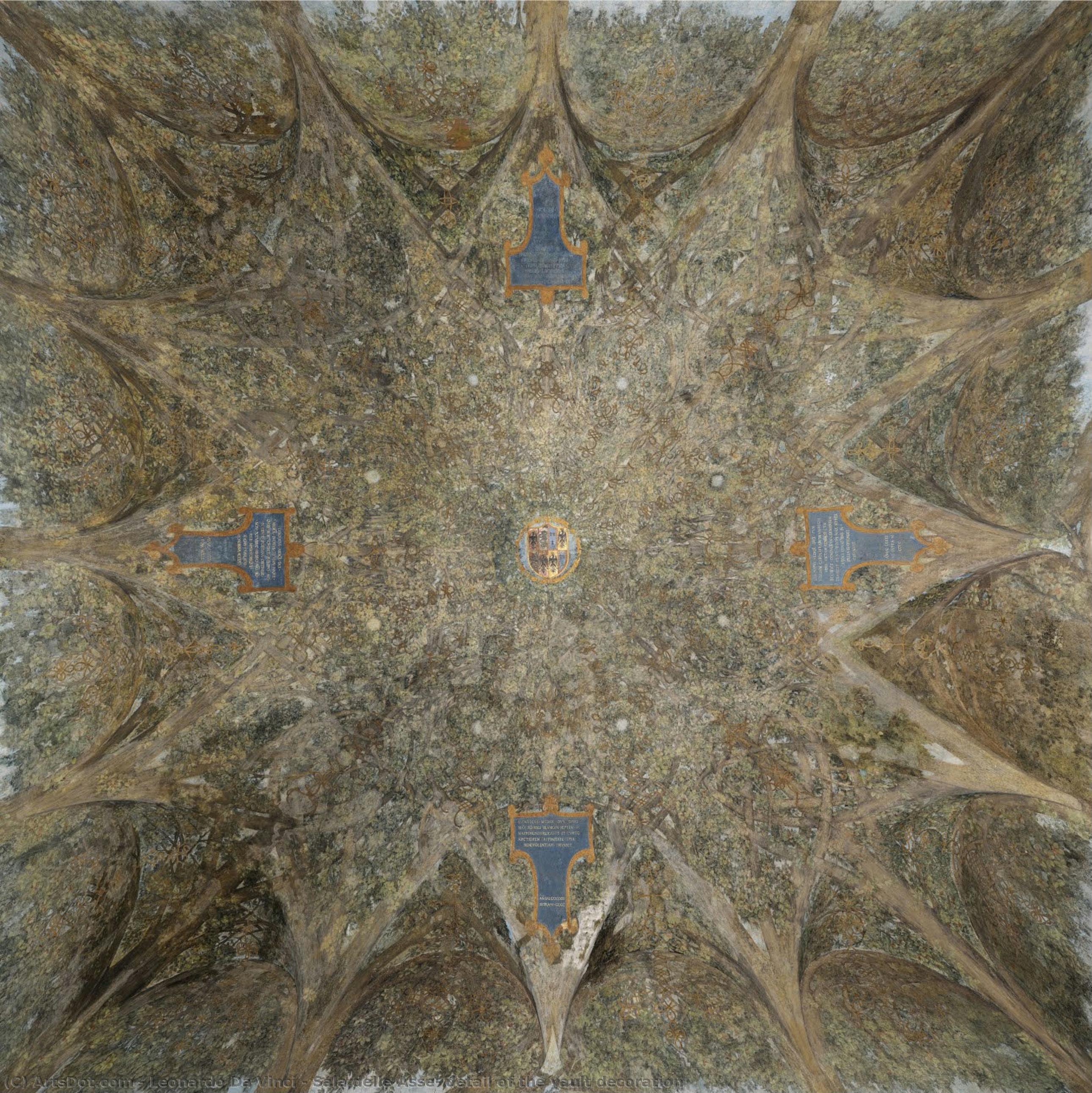
Sala delle Asse: A Symphony of Illusion and Symbol
Leonardo da Vinci’s Sala delle Asse, located in the Castello Sforzesco of Milan, stands as a testament to Renaissance ambition and artistic innovation. Commissioned by Ludovico Maria Sforza – “Il Moro,” as he was affectionately known – this monumental fresco represents more than just decoration; it embodies the very spirit of the era’s fascination with perspective and illusion.
- The Visionary Design: Pietro Marani eloquently describes the Sala delle Asse as "a spectacular vault decorated with a twine of branches and knots truly stands out." Leonardo conceived of a breathtaking scene—a vast pergola draped with mulberry trees, their roots ascending towards the ceiling in an intricate tangle of interwoven branches and golden cords. This ambitious undertaking was driven by Sforza’s desire to celebrate his reign and honor his nickname – “Il Moro” – referencing Lombardy's silk production.
- Cartouches Bearing History: The vault’s four cartouches chronicle pivotal moments in Ludovico II’s life, beginning with Bianca Maria Sforza’s marriage to Maximilian I, followed by Ludovico’s coronation as Duke and culminating in his perilous journey to Rome seeking papal support against Charles VIII. One cartouche, now sadly illegible, commemorates Louis XII's victory over Ludovico – a poignant reminder of the turbulent political landscape of the time.
- The Monochrome: Dominating the northern walls is “The Monochrome,” Leonardo’s preparatory drawing—a masterful depiction of colossal mulberry roots bursting through the bedrock beneath the castle. This dramatic composition skillfully employs illusionistic techniques to create an overwhelming sense of scale and power, framing the fireplace that graced Ludovico's hall during his reign.
- Symbolism Rooted in Renaissance Ideals: The choice of the mulberry tree itself is laden with symbolic significance. Beyond its connection to Sforza’s silk industry, it represents resilience, growth, and fecundity—values central to Renaissance humanist thought. Leonardo's meticulous attention to detail—the interwoven branches, the golden cords, the carefully rendered cartouches—reflects the artistic rigor of his time.
- A Legacy of Illusion: Though Leonardo tragically abandoned the Sala delle Asse before its completion due to the French invasion and Milan’s subsequent conquest, this unfinished masterpiece remains an enduring symbol of Renaissance creativity. It exemplifies Da Vinci's unparalleled ability to transform architectural space into a realm of captivating illusion—a triumph of artistic vision that continues to inspire awe and admiration centuries later.