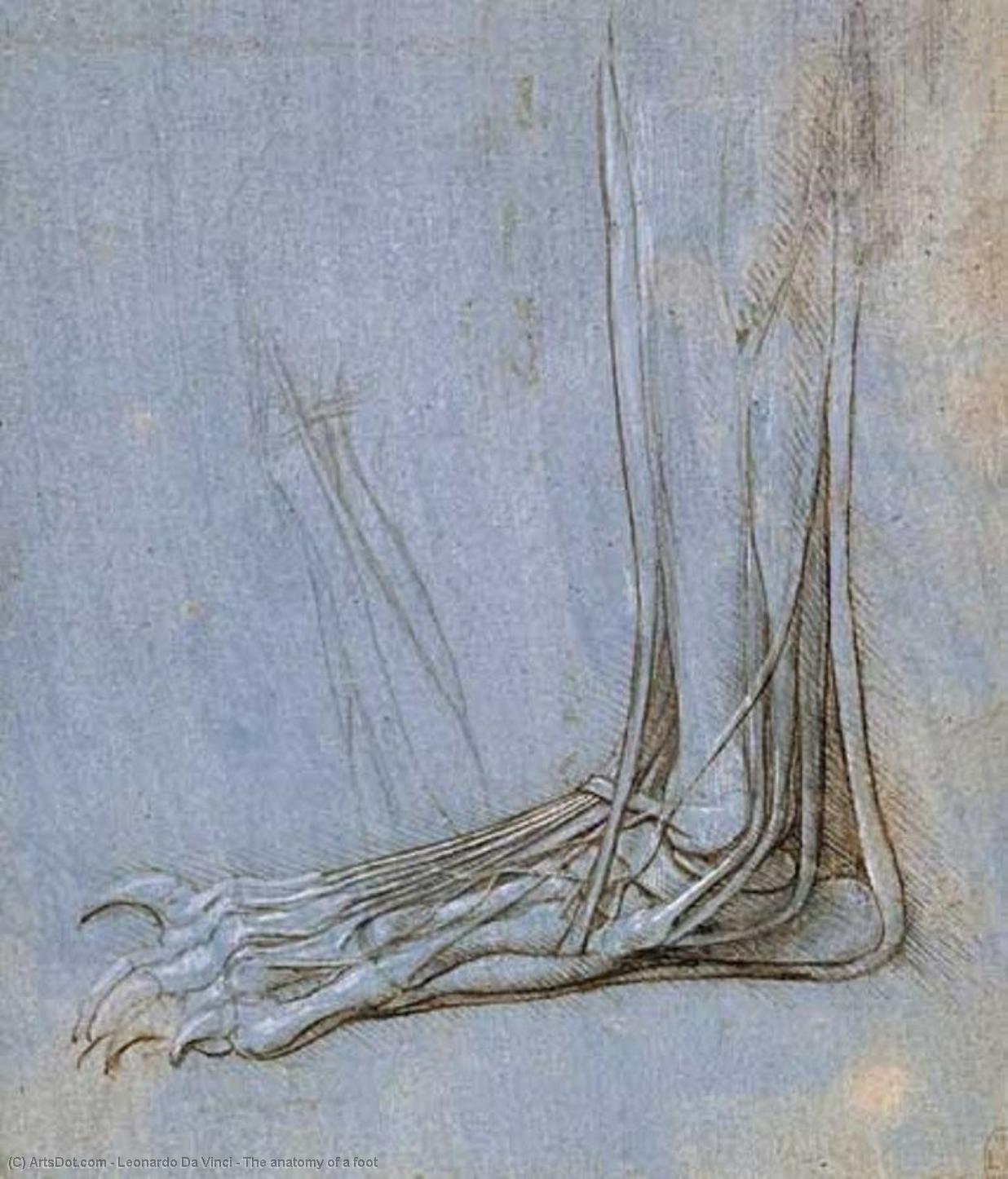
The Anatomy of a Foot – A Renaissance Masterpiece Revisited
Leonardo da Vinci’s “The Anatomy of a Foot,” executed around 1485, stands as an extraordinary testament to the humanist spirit of the Early Renaissance and Da Vinci's unparalleled dedication to scientific observation interwoven with artistic brilliance. More than just a depiction of human anatomy—though undeniably masterful in its anatomical precision—this deceptively simple sketch embodies a profound philosophical quest: to understand the very fabric of existence through meticulous study and artistic representation.
- Subject Matter & Context: Created during Da Vinci’s formative years, this piece is part of his extensive explorations into human physiology. It reflects the burgeoning interest in dissecting cadavers – a controversial practice at the time – driven by physicians like Andreas Vesalius who sought to challenge Galenic dogma and establish a more accurate understanding of the human body. The anatomical study wasn’t merely academic; it was considered crucial for advancing medical knowledge and furthering humanist ideals about observing nature.
- Artistic Style & Technique: Da Vinci employed the Early Renaissance style, prioritizing realism and detail above all else. His technique—primarily metalpoint drawing on paper—involved applying molten silver or gold onto prepared paper using a stylus, resulting in incredibly fine lines that captured subtle tonal variations with astonishing accuracy. This method demanded immense patience and skill, highlighting Da Vinci’s mastery of materials and his unwavering commitment to achieving unparalleled visual fidelity.
- Composition & Visual Elements: The composition centers on the foot itself—positioned at a slight angle—allowing for a comprehensive view of its intricate structure. Radiating lines emanating from the foot suggest tendons and muscle fibers, adding dynamism and complexity to the image. Notably absent is any background element; this deliberate choice underscores Da Vinci’s focus on isolating and analyzing the subject matter with uncompromising clarity.
- Color Palette & Lighting: The palette is strikingly restrained—primarily shades of brown and grey overlaid on a pale blue-grey ground—a characteristic feature of metalpoint drawings. This monochromatic approach serves to emphasize form and texture, guiding the viewer’s eye toward the subtle nuances of tonal gradation achieved through meticulous hatching and crosshatching techniques.
- Symbolic Significance & Emotional Impact: Beyond its scientific value, “The Anatomy of” embodies Da Vinci's humanist conviction that understanding the human body was essential for comprehending the divine order. The drawing’s quiet dignity and unwavering focus on observation speak to a deeper contemplation of beauty and truth—a legacy that continues to inspire artists and scholars alike.
A reproduction crafted with meticulous attention to detail, mirroring Da Vinci's original method, allows collectors and interior designers alike to appreciate the enduring power of this seminal artwork. Explore more about Leonardo da Vinci’s artistic journey on ArtsDot.com and delve into the captivating world of Early Renaissance art.