A Divine Encounter in Tempera
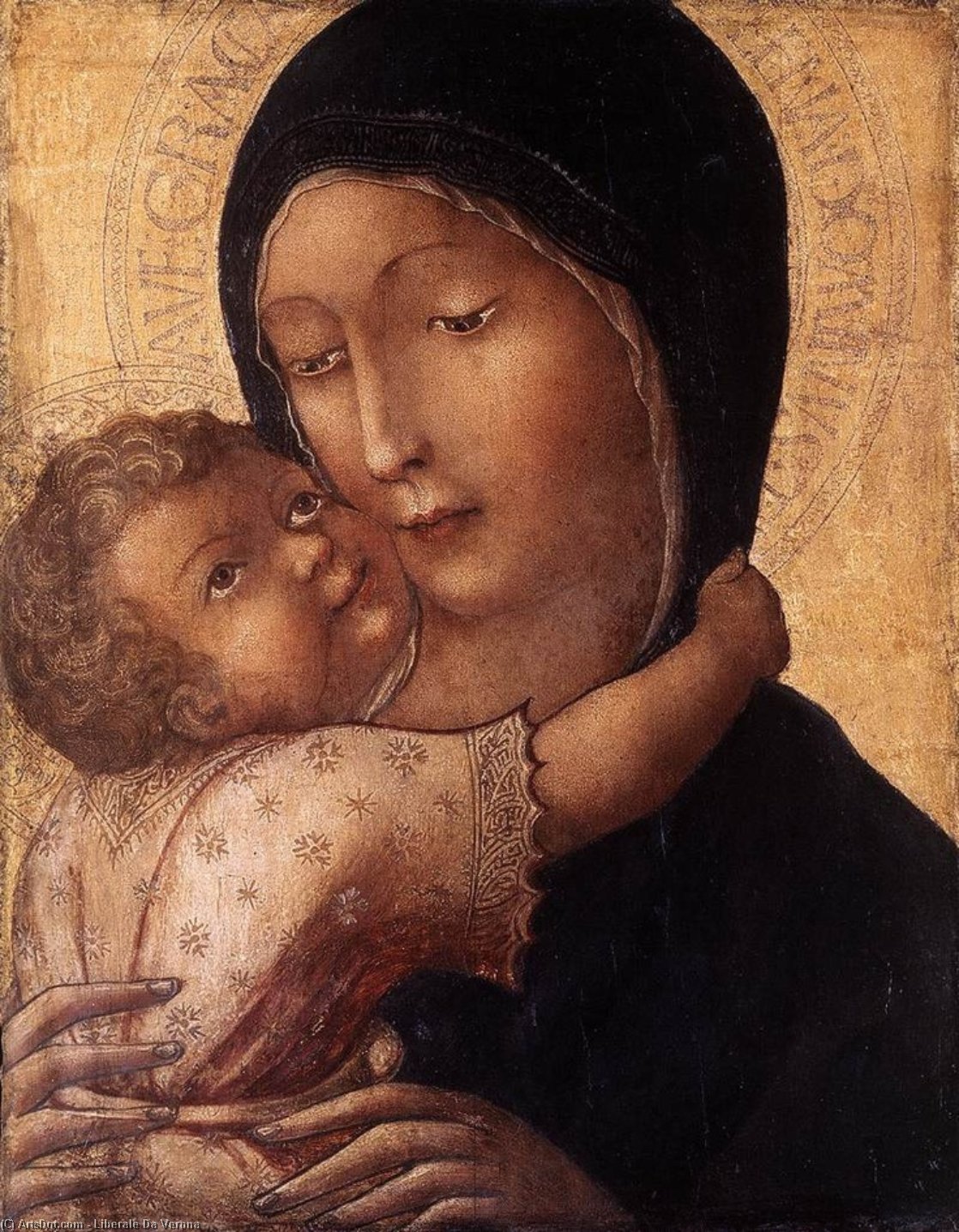
In the quiet intimacy of this Renaissance masterpiece, titled Virgin and Child, we are invited into a sacred moment that transcends the centuries. Painted around 1470 by the Veronese master Liberale da Verona, the work captures a profound emotional connection between the Madonna and the infant Christ. The composition is centered with a gentle, vertical focus, drawing the viewer’s eye immediately to the tender interaction between mother and son. There is an unmistakable sense of serenity that permeates the frame, as if time itself has paused to honor this maternal bond. The soft, diffused lighting bathes the figures in a celestial glow, smoothing the transitions between color and form, and creating a luminous atmosphere that feels both ethereal and deeply human.
The technique employed by Liberale da Verona showcases the exquisite skill of the Early Renaissance period. Utilizing tempera on wood panel, the artist achieved a rich, layered texture that is particularly striking in the heavy drapery of the Virgin’s robes and the delicate skin tones of the Christ child. The use of gold leaf accents provides a shimmering, divine quality, catching the light to suggest a heavenly presence. While the background remains dark and textured, it serves as a dramatic stage, allowing the organic, rounded forms of the figures to emerge with striking clarity. This meticulous application of pigment and precious metal creates a surface that is not merely a painting, but a tactile experience of devotion.
Symbolism and the Renaissance Spirit
Beyond its aesthetic beauty, the painting is steeped in the symbolic language of the 15th century. The halos encircling the heads of Mary and Jesus are unmistakable signifiers of their holiness, marking them as figures of divine importance. Every gesture carries weight; the way the infant Jesus reaches toward his mother is a poignant representation of love, vulnerability, and the human element of the divine incarnation. Liberale da Verona, heavily influenced by the rigorous draftsmanship of Andrea Mantegna and the refined palettes of Jacopo Bellini, masterfully weaves these symbolic elements into a cohesive narrative of protection and grace.
For the discerning collector or interior designer, this piece offers more than just historical significance; it provides an emotional anchor for any space. The subtle use of earth tones and the richness of the gold leaf allow the artwork to integrate seamlessly into sophisticated environments, whether in a classical gallery setting or a contemporary, curated home. It evokes a sense of peace and timelessness, making it an ideal centerpiece for those seeking to infuse their surroundings with a feeling of tranquility and spiritual depth. Owning a reproduction of such a significant work allows one to bring the quiet majesty of the Italian Renaissance into the modern era.