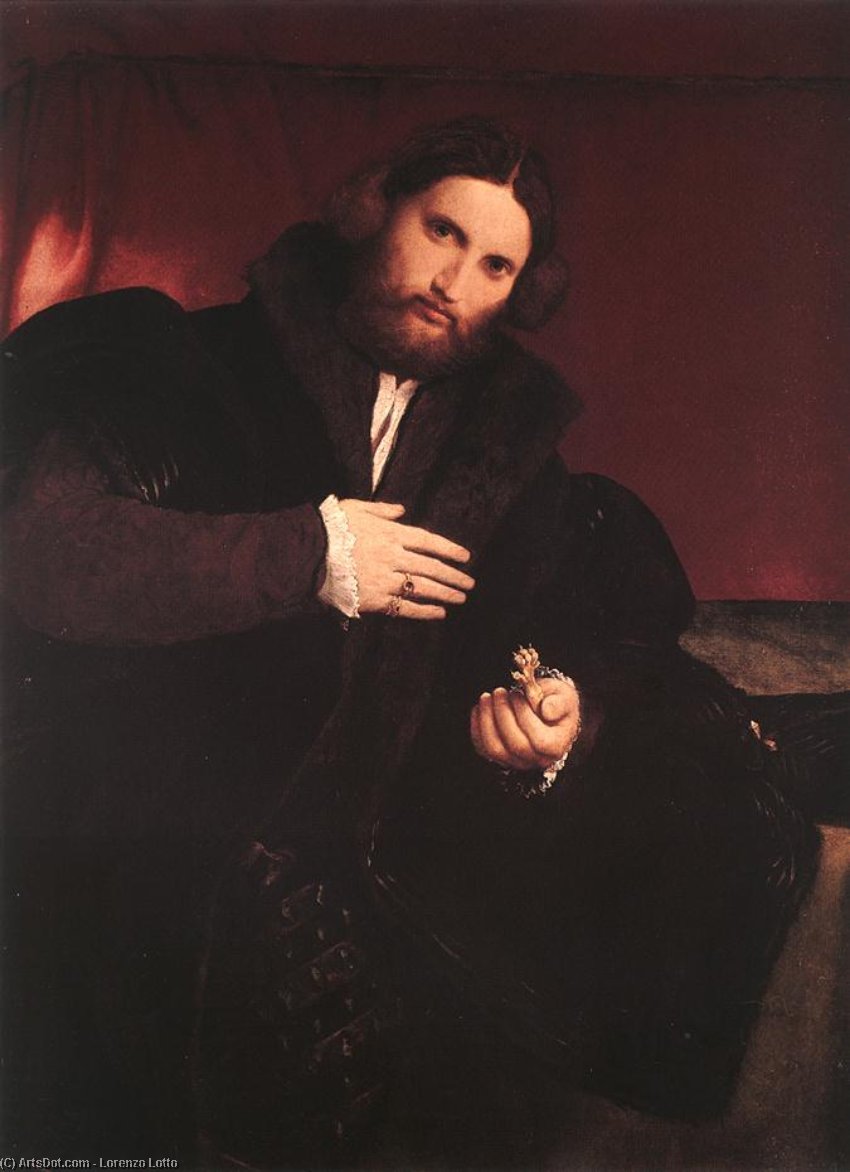
The
Man with a Golden Paw is a captivating oil on canvas painting created by the renowned Italian artist
Lorenzo Lotto in 1527. This masterpiece is currently housed at the
Kunsthistorisches Museum in Vienna, Austria. The painting measures 96 x 70 cm and is a prime example of
High Renaissance art.
Composition and Symbolism
The composition of the painting features a man dressed in elegant attire, including a black coat with intricate embroidery, standing against a rich red background. He holds a small golden object in his right hand, which appears to be a ring or a piece of jewelry. The left hand rests on his chest, conveying a sense of emotion or thoughtfulness. The use of light and shadow creates a sense of depth and three-dimensionality, drawing the viewer's attention to the subject. The golden paw held by the man is a mysterious symbol that has sparked much debate among art historians. Some believe it may be an attribute referring to the sitter's profession or social role, while others interpret it as an allusion to his name. The
Man with a Golden Paw is a testament to
Lorenzo Lotto's unique ability to blend realism with symbolism.
Artistic Style and Technique
The painting showcases
Lorenzo Lotto's exceptional skill in capturing the subtleties of human emotion and the play of light on fabric. The attention to detail in the rendering of the man's hair, facial features, and clothing is remarkable. The use of oil on canvas allows for a level of depth and texture that adds to the overall impact of the painting.
Handmade oil painting reproductions of the
Man with a Golden Paw are available on
ArtsDot.com, allowing art enthusiasts to own a piece of history. The website offers a range of artistic services, including custom painting reproductions and restoration.
The
Man with a Golden Paw is a masterpiece that continues to fascinate art lovers with its enigmatic symbolism and exceptional artistic technique. As a testament to the skill of
Lorenzo Lotto, this painting remains an important work in the history of Renaissance art.