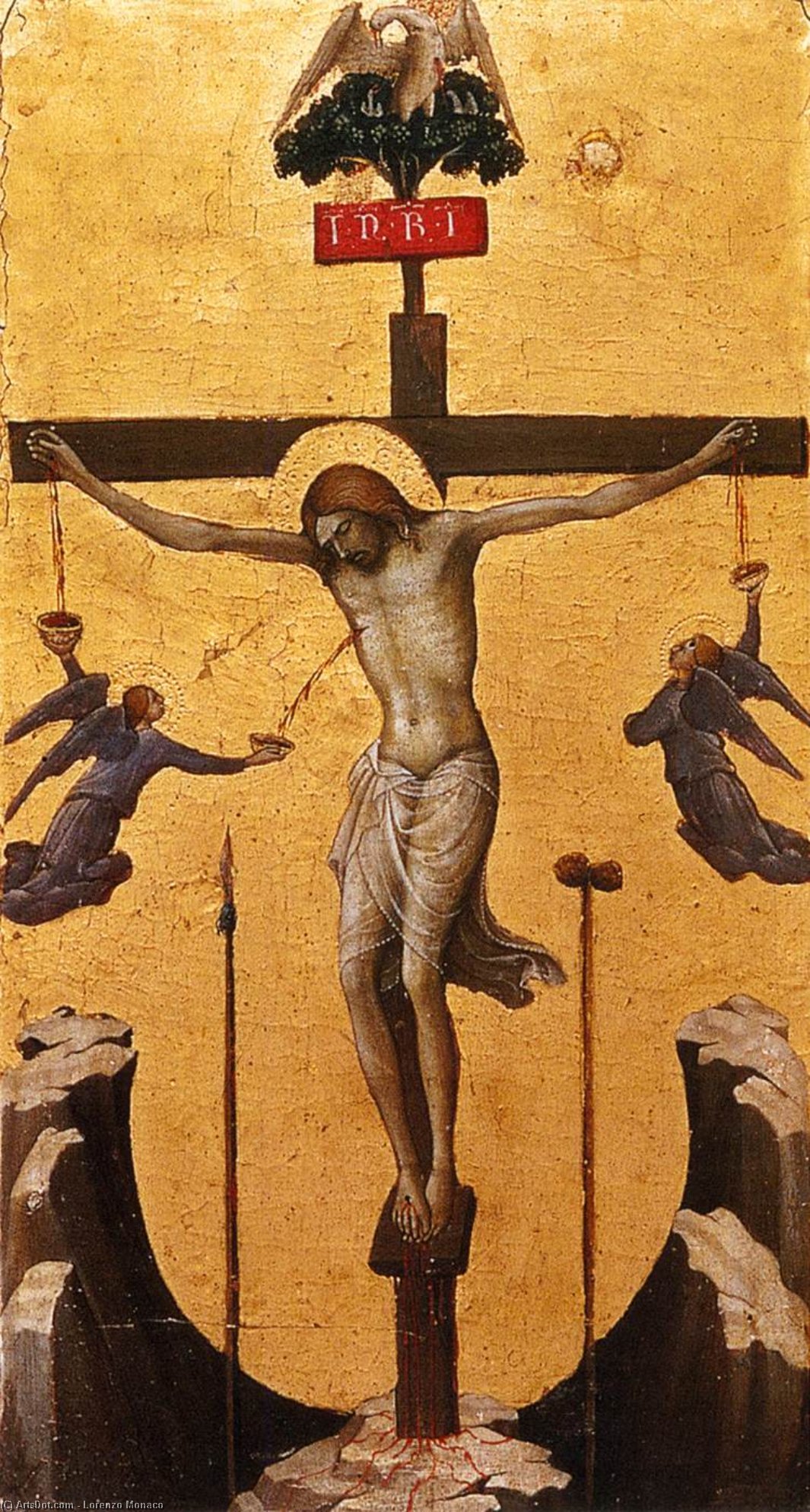
Lorenzo Monaco’s Crucifixion depicts Jesus Christ on the cross, capturing profound sorrow and spiritual contemplation. Inspired by Giotto and illuminated manuscripts, this 1405 painting showcases Monaco's distinctive style and reflects monastic devotion.
The Soul of Sorrow: Analyzing Lorenzo Monaco’s Crucifixion
Lorenzo Monaco's Crucifixion stands as a cornerstone of Quattrocento Florentine art—a testament not merely to artistic skill but to profound spiritual contemplation. Painted circa 1405, this monumental panel transcends mere depiction; it strives to convey the agonizing beauty inherent in Christ’s suffering and serves as an enduring emblem of Christian faith. Examining its stylistic choices, technical execution, and historical resonance illuminates Monaco's masterful grasp of both humanist ideals and medieval devotional traditions.
- Style: Monaco’s Crucifixion embodies a refined Gothic sensibility tempered by nascent Renaissance principles. While retaining the solemn grandeur characteristic of his predecessors—particularly Giotto—the painting exhibits an unprecedented level of naturalism, evident in the subtly rendered musculature of Christ and the expressive drapery that clings to his body. This careful attention to anatomical detail distinguishes it from earlier depictions where Christ was often stylized as a symbolic figure rather than a human being experiencing palpable pain.
- Technique: Monaco employed tempera on panel—a technique favored by Florentine artists of the period—renowned for its luminosity and durability. The pigment binders, derived from egg yolk, achieved astonishing brilliance through meticulous layering and glazing, capturing the ethereal quality of divine light that permeates the scene. Furthermore, Monaco’s masterful use of chiaroscuro—the dramatic interplay between light and shadow—intensifies the emotional impact of the composition, emphasizing Christ's vulnerability against a backdrop of solemn majesty.
Historical Context: Bridging Gothic Legacy & Renaissance Awakening
The painting emerged during a period of significant artistic ferment in Florence, marking a decisive break from the stylistic conventions of the preceding century. The humanist movement championed by figures like Leonardo Bruni and Marsilio Ficino exerted considerable influence on artists’ thinking, prompting them to explore human psychology and emotion with newfound sensitivity. Monaco's Crucifixion reflects this intellectual shift—moving beyond purely symbolic representations toward an earnest attempt to portray Christ’s suffering as a profoundly human experience.
Moreover, the panel was created in response to the fervent piety of its patrons—members of the influential Medici family who commissioned religious art to adorn their palaces and express their devotion to God. This patronage fostered a climate of artistic innovation while upholding traditional Christian iconography, resulting in a synthesis that exemplifies the best qualities of Florentine Renaissance culture.
Symbolism: Echoes of Medieval Devotion & Humanist Insight
The Crucifixion’s symbolism is rich and multilayered—drawing upon centuries of Christian tradition while simultaneously articulating humanist concerns about mortality and redemption. The central figure embodies Christ's sacrifice for humanity, symbolizing divine compassion and unwavering faith. The outstretched arms represent humility and acceptance of God’s will—a gesture that resonates with the medieval emphasis on penitence and spiritual aspiration.
However, Monaco subtly incorporates humanist elements into the composition—such as the realistic depiction of Christ's musculature—underscoring the human dimension of suffering. This juxtaposition of theological symbolism and anatomical observation reflects the Renaissance’s commitment to observing nature with scientific rigor—a departure from medieval art that nonetheless retains its core message of spiritual transcendence.
Emotional Impact: Capturing Agony & Reverence
Monaco's Crucifixion succeeds in evoking a visceral response from the viewer—capturing the agony of Christ’s torment while simultaneously inspiring reverence for his divine sacrifice. The artist achieves this feat through masterful use of color, texture, and composition—creating an immersive experience that draws upon the viewer’s empathy and intellect.
Ultimately, Monaco's Crucifixion remains a profoundly moving testament to human faith and artistic genius—a masterpiece that continues to inspire contemplation and admiration centuries after its creation. Its enduring power lies in its ability to convey both the sorrowful beauty of suffering and the sublime grandeur of divine compassion—themes that resonate across cultures and epochs.
This painting exemplifies the Renaissance’s quest for artistic excellence while honoring medieval spiritual traditions. It is a remarkable achievement of tempera technique, demonstrating Monaco's profound understanding of human anatomy and emotion.