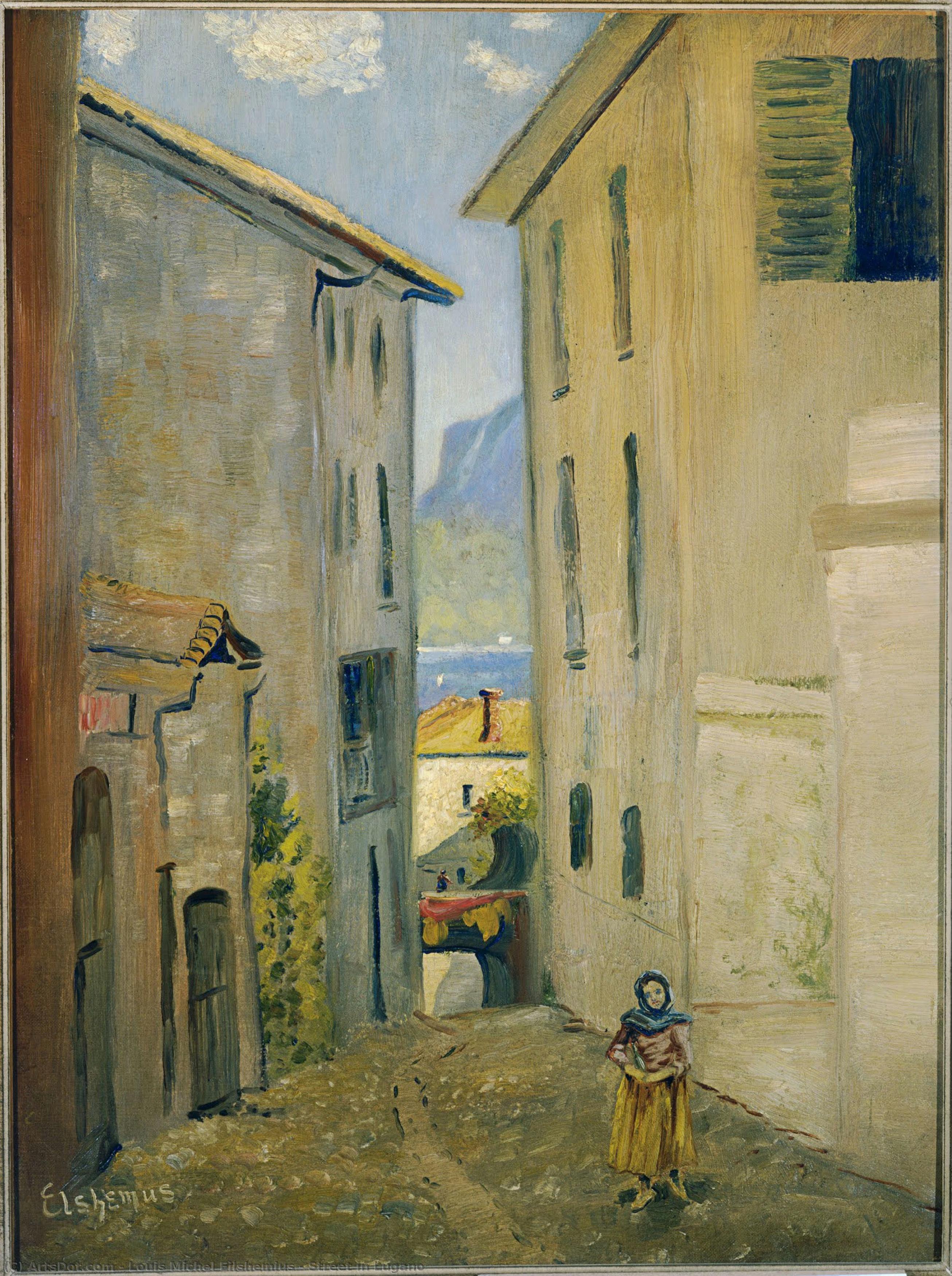
A Window into Serenity: The Dreamlike Vista of Street in Lugano
In the delicate brushstrokes of Louis Michel Eilshemius’s 1893 masterpiece, Street in Lugano, we are invited to step into a world where reality and memory softly intertwine. This evocative scene captures a moment of quiet contemplation within a Swiss streetscape, presenting a view that is as much about an emotional atmosphere as it is about geographical accuracy. At the heart of the composition, a solitary woman stands upon the sidewalk, her gaze directed toward something unseen across the thoroughfare, serving as a silent protagonist in this peaceful tableau. Around her, the life of the town unfolds with a gentle rhythm; figures drift through the background like echoes of a passing afternoon, while the distant, majestic mountains rise to meet a sky that promises stillness. The presence of a boat upon the shimmering water near the architecture hints at the rhythmic pulse of lakeside life, grounding the ethereal quality of the painting in a tangible, picturesque reality.
The technique employed by Eilshemius in this period reflects a fascinating bridge between his formal academic training and the burgeoning expressive freedom that would later define his reputation as an outsider visionary. There is a palpable softness to the application of paint, where the textures of the buildings and the ruggedness of the Alpine backdrop are rendered with a sensitivity that evokes the influence of the Barbizon school. The artist utilizes light not merely to illuminate the scene, but to imbue it with a sense of nostalgia. One can almost feel the cool, mountain air and hear the muffled sounds of a distant boatman’s call. For the discerning collector or interior designer, this piece offers a profound sense of depth; its layered composition allows it to serve as a focal point that breathes life and tranquility into any sophisticated space.
Beyond its aesthetic charm, Street in Lugano carries a weight of historical and symbolic significance. Created during a time when Eilshemius was refining his ability to capture the sublime, the painting embodies the late 19th-century fascination with the romanticized landscape—a sanctuary from the encroaching industrialization of the era. The mountains act as eternal sentinels, symbolizing permanence and strength, while the transient figures on the street represent the fleeting nature of human presence. This duality creates a poignant emotional impact, evoking feelings of peace, longing, and a deep connection to the natural world. To possess a reproduction of this work is to bring a piece of this timeless, dreamlike serenity into one's own environment, offering a constant invitation to pause, reflect, and wander through the storied streets of Lugano.