A Royal Portrait of Tenderness and Grace
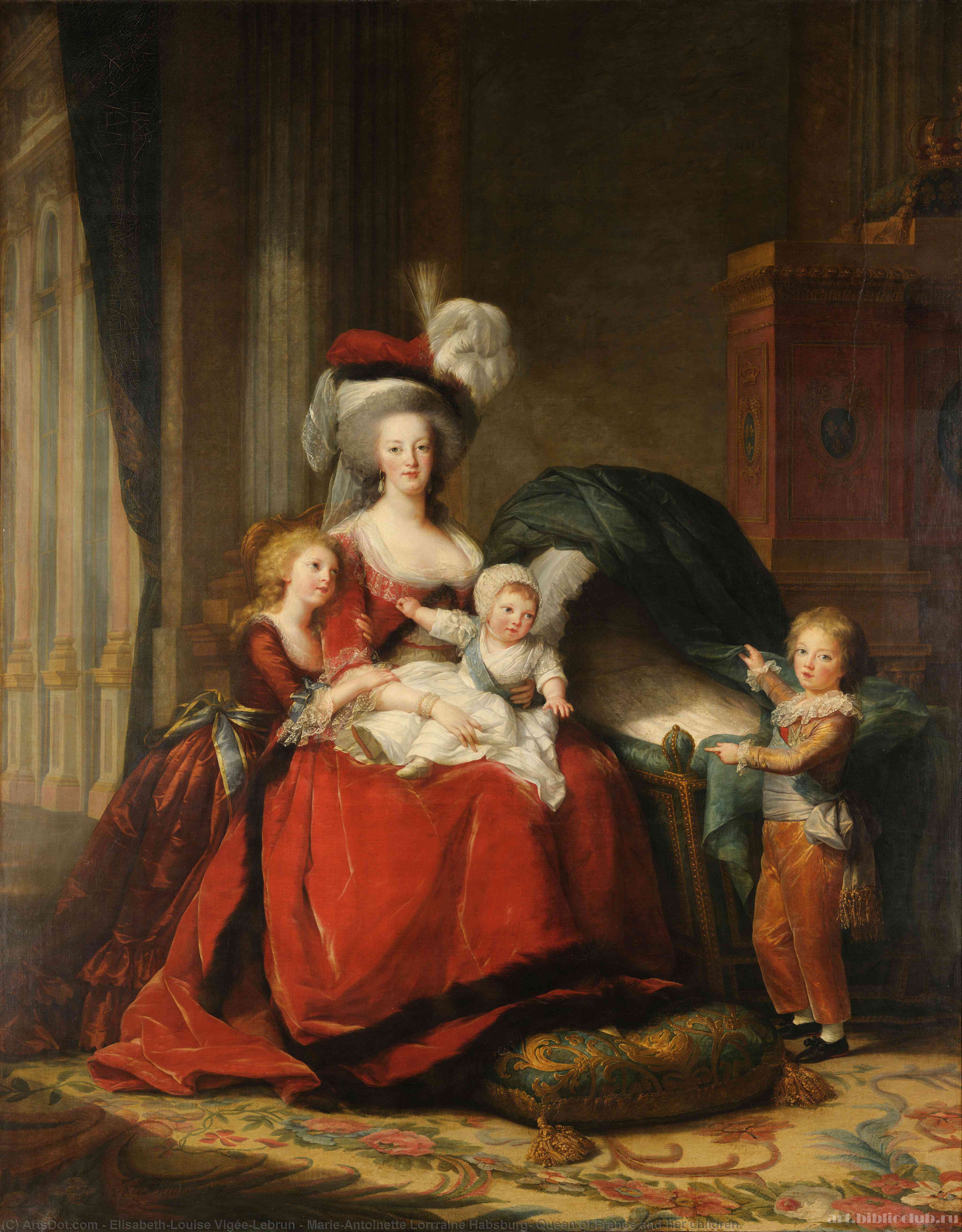
In the grand tapestry of 18th-century French portraiture, few images resonate with as much warmth and maternal dignity as Louise Élisabeth Vigée Le Brun’s masterpiece, Marie-Antoinette Lorraine Habsburg, Queen of France and her children. This exquisite oil on canvas serves as more more than a mere historical record; it is an intimate window into the heart of the Bourbon monarchy. The painting captures the Queen not as a distant, untouchable icon of power, but as a nurturing mother, cradling her infants with a profound sense of devotion. Clad in a striking red dress that commands the viewer's attention, Marie Antoinette sits poised yet accessible, surrounded by the soft presence of her royal progeny. The composition is masterfully balanced, utilizing the subtle depth of a classically appointed room—complete with the soft suggestion of a couch in the background—to create an atmosphere of domestic tranquility amidst the complexities of court life.
The artistry of Vigée Le Brun shines through her command of the Neoclassical style. Moving away from the overly ornate and frothy excesses of the Rococo period, this work embraces the clarity, symmetry, and refined simplicity that defined the late 18th century. Every brushstroke is deliberate, contributing to a sense of structural harmony and natural beauty. The artist employs clean lines and a sophisticated play of light to accentuate the textures of silk and skin, lending a lifelike vitality to the subjects. For the discerning collector or interior designer, this painting offers a perfect blend of classical prestige and emotional accessibility, making it an ideal centerpiece for spaces that demand both elegance and a soulful, human connection.
Historical Resonance and Symbolic Depth
Beyond its technical brilliance, the painting carries immense historical weight. Painted in 1787, during a period when the Queen's reputation was under intense scrutiny due to political scandals, this portrait served as a vital piece of visual diplomacy. Vigée Le Brun, one of the most celebrated female painters of her era, utilized her unique position within the Royal Academy to craft an image of stability and familial virtue. By presenting Marie Antoinette in a moment of quiet, maternal affection, the artist sought to humanize the monarchy and soften the public's perception of the crown.
The symbolism embedded within the work is as profound as its aesthetic beauty. The vibrant red of the Queen's gown does not merely signify her royal status; it acts as a visual anchor, representing the vitality and enduring strength of the lineage. The presence of the children, captured with such tender realism, transforms the portrait from a political statement into a timeless celebration of life and continuity. This interplay between the public persona of a sovereign and the private reality of a mother creates a narrative tension that continues to captivate viewers centuries later.
An Inspiration for the Modern Interior
For those looking to curate a space with historical depth, this reproduction offers an unparalleled opportunity. The painting's ability to command attention through its rich color palette while maintaining a sense of serene tranquility makes it versatile for various high-end decor styles. Whether placed in a formal dining room to evoke classical grandeur or in a sophisticated study to provide a focal point of warmth, the work brings with it the prestige of the Palace of Versailles.
Owning a piece that captures such a pivotal moment in art history allows a collector to engage with the legacy of Madame Le Brun. It is an invitation to surround oneself with the elegance of the Ancien Régime, providing a window into a lost world of refinement and grace. As a hand-painted reproduction, it preserves the delicate textures and luminous light that define the original, ensuring that the emotional impact of this royal family portrait remains as potent today as it was in the late 18th century.