Sir Lawrence Alma-Tadema’s ‘Self Portrait’: A Window into Victorian Introspection
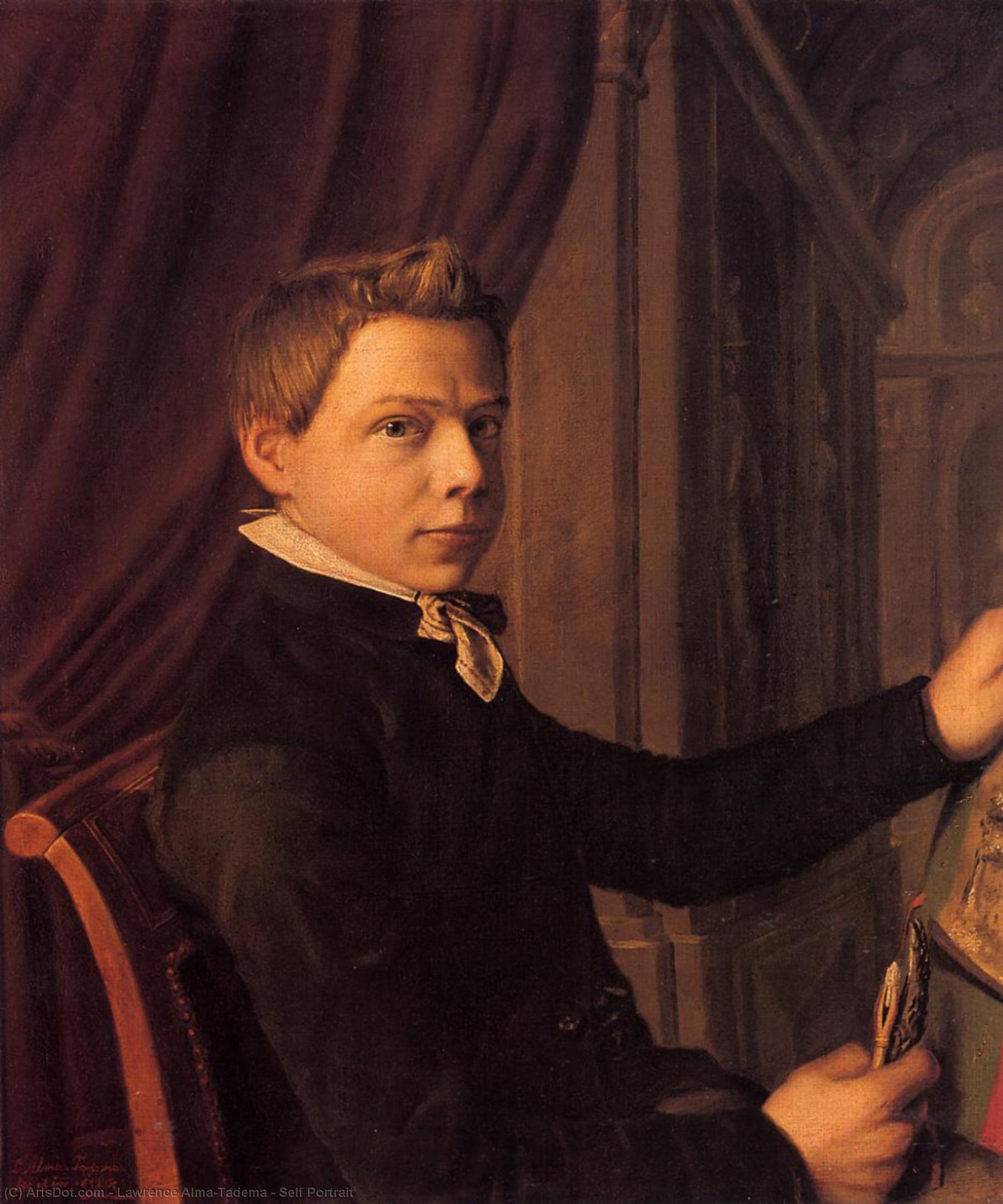
The world of art holds within it countless portraits – representations not merely of likeness, but of character, circumstance, and the very soul of an individual. Sir Lawrence Alma-Tadema's 1852 “Self Portrait” stands as a particularly compelling example, offering a rare glimpse into the mind of one of the Victorian era’s most celebrated artists. More than just a depiction of the artist himself, this oil on canvas work is a carefully constructed meditation on identity and artistic ambition, rendered with a precision that speaks to Tadema's mastery of classical composition and meticulous technique.
- Subject & Composition: The painting immediately draws the eye to its central figure – Alma-Tadema himself, presented in a pose of quiet contemplation. Dressed impeccably in a black suit with a crisp white collar, he embodies an air of sophisticated restraint, a hallmark of his artistic persona. The balanced composition, typical of the academic style favored by Tadema, directs the viewer’s gaze across the canvas with deliberate grace.
- Technique & Detail: Tadema's skill is evident in every brushstroke. He employs a smooth, almost polished technique, characteristic of his meticulous approach to depicting classical subjects and everyday scenes. The rendering of textures – from the velvet curtain backdrop to the fabric of his clothing – demonstrates an extraordinary attention to detail, reflecting a deep understanding of materials and their visual properties.
A Reflection of Victorian Values
Created during a pivotal moment in Alma-Tadema’s career, this self-portrait offers a valuable insight into the artistic and intellectual currents of mid-19th century Britain. The Victorian era was one defined by a fascination with classical antiquity, a burgeoning interest in leisure and refinement, and a growing emphasis on individual achievement. Tadema's choice of attire – the formal suit – reflects these values, suggesting an artist dedicated to upholding standards of elegance and decorum. The inclusion of other figures within the scene, though subtly rendered, hints at the social circles and artistic influences that shaped his life and work.
- Historical Context: Painted in 1852, a period when Alma-Tadema was establishing himself as a leading figure in the Pre-Raphaelite movement (though he ultimately distanced himself from its more overtly romantic tendencies), the self-portrait serves as a record of his evolving artistic identity.
- Symbolism: The curtain itself can be interpreted symbolically, representing both the stage upon which art is performed and the concealment of private thoughts and emotions.
Emotional Impact & Legacy
"Self Portrait" isn't merely a technical exercise; it possesses a quiet emotional resonance. Alma-Tadema’s gaze, directed slightly off-camera, invites the viewer to share in his introspective moment. The painting evokes a sense of calm and contemplation, inviting us to consider the artist’s thoughts and feelings as he engaged with his craft. It is a testament to Tadema's ability to translate personal experience into universally relatable themes of self-awareness and artistic dedication. This work remains a cornerstone of Alma-Tadema’s oeuvre, demonstrating his profound understanding of human psychology and his unparalleled skill in capturing the nuances of Victorian society.
Related Works:
- Robert Weir Allan: Robert Weir Allan (1852–1942), Artist, Self Portrait
- Viktor Ivanovich Zarubin: Self-portrait
- Johannes Van Haensbergen’s Portrait of Pieter Dierquens (1668-1714)