A Portrait of Dignified Reserve: Lawrence Alma Tadema’s Sir Henry Thompson
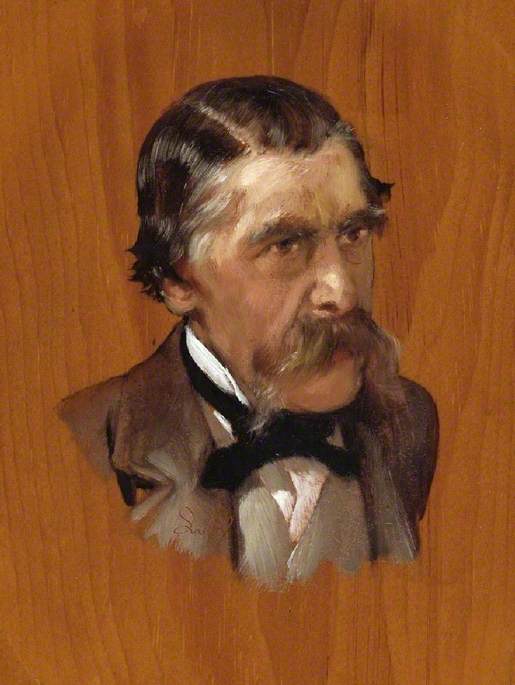
Lawrence Alma Tadema's “Sir Henry Thompson, Bt,” painted in 1878, stands as a quintessential example of Victorian portraiture—a genre characterized by meticulous detail and an unwavering commitment to capturing the sitter’s social standing and inner character. This striking canvas depicts Sir Henry Thompson, a British nobleman, seated formally against a subtly textured wooden backdrop, radiating an aura of quiet confidence and restrained composure. Tadema's masterful technique—primarily oil on panel—allows for remarkable tonal gradation and textural richness, skillfully conveying the materiality of both the sitter’s clothing and the surrounding environment.
- Subject Matter: The portrait focuses squarely on Thompson himself, presenting him in a pose that embodies aristocratic dignity. His gaze directs towards the viewer with an unwavering seriousness, reflecting the expectations of Victorian society regarding decorum and self-presentation.
- Style & Technique: Tadema’s style aligns closely with Academic Impressionism—a movement striving for realism while retaining artistic sensitivity. He employs a smooth brushstroke technique combined with careful blending to achieve luminous surfaces and subtle shading, creating an illusion of depth that draws the eye into the scene. The artist's meticulous attention to detail is evident in the rendering of fabrics – particularly Thompson’s suit – showcasing intricate folds and textures.
- Historical Context: Painted during the height of Victorian Britain, “Sir Henry Thompson” reflects the values of the era—status, honor, and adherence to social conventions. The portrait speaks to a period obsessed with documenting appearances and reinforcing hierarchies within the upper echelons of society. It’s a snapshot of a time when visual representation served as a powerful tool for asserting identity and prestige.
Symbolism: Beyond its depiction of an individual, the painting carries symbolic weight. The wooden backdrop serves not merely as a neutral surface but subtly reinforces Thompson's position within the established order—a symbol of stability and tradition. Furthermore, the bow tie—a formal accessory—underscores the importance of etiquette and adherence to societal norms. Tadema’s deliberate choices contribute to conveying a sense of solemn contemplation and understated elegance.
Emotional Impact: The portrait's subdued palette – dominated by browns and creams – enhances its contemplative mood. Tadema avoids overtly expressive gestures or facial expressions, prioritizing instead the conveyance of inner dignity and self-assurance. This approach invites viewers to consider Thompson’s character beyond his outward appearance, prompting reflection on themes of responsibility, honor, and quiet strength—qualities valued highly during Victorian times and continuing to resonate with audiences today.
- Interior Design Inspiration: The painting's harmonious color scheme and textural richness can inspire interior designers seeking to create spaces that embody sophistication and timeless elegance.
- Collector’s Perspective: For art collectors, “Sir Henry Thompson” represents a significant investment in a masterpiece of Victorian portraiture—a testament to Tadema’s artistic skill and his ability to capture the spirit of an era.