Entdecken Sie Lucas Cranach dem Älteren (1472-1553), den führenden deutschen Renaissancemaler! Berühmte Porträts von Luther, lebendige Mythologie & Bibelkunst.
Erkunden Sie sieben Jahrhunderte europäischer Kunst in der Staatlichen Kunsthalle Karlsruhe! Entdecken Sie Meisterwerke von Dürer, Grünewald und Rembrandt in einem der ältesten Museen Deutschlands, das einzigartig in seinem ursprünglichen Design erhalten geblieben ist. Derzeit befindet sich im Umbau.
A Moment Frozen in Faith: Analyzing Lucas Cranach’s “Frederick the Wise Before Our Lady”
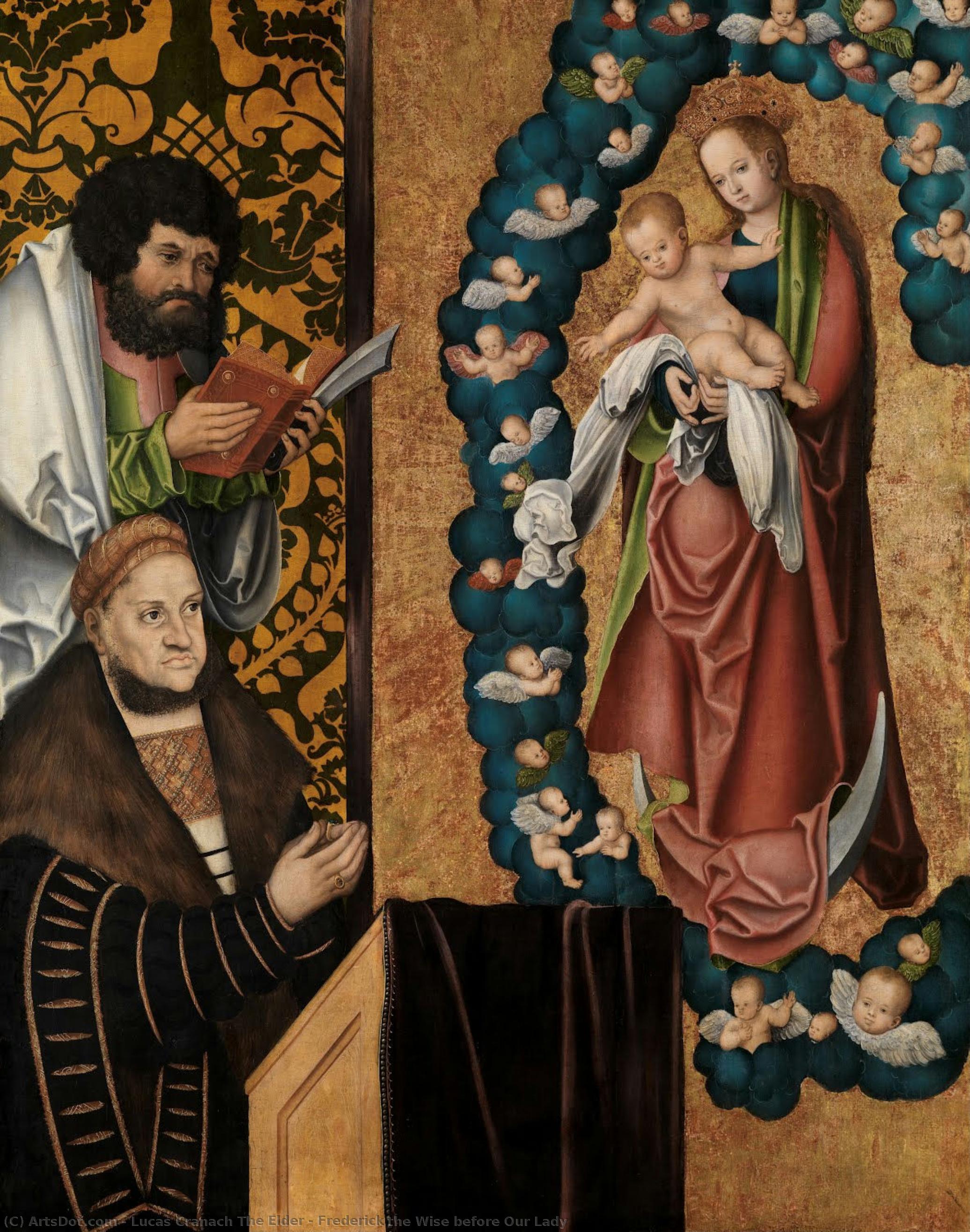
Lucas Cranach the Elder's "Frederick the Wise Before Our Lady," painted in 1515, stands as a cornerstone of German Renaissance art and a poignant emblem of the burgeoning Protestant Reformation. More than just a portrait commission for Frederick III, Elector of Saxony—a relationship that cemented Cranach’s position at the heart of Saxon royal patronage—the painting embodies a profound spiritual contemplation that continues to resonate with viewers centuries later.
The scene depicts Frederick the Wise kneeling humbly before Mary and Christ Child. Cranach meticulously captures the posture of piety, emphasizing Frederick's bowed head and clasped hands – gestures universally recognized as expressions of reverence and prayer. The artist’s masterful use of chiaroscuro—the dramatic interplay between light and shadow—creates a palpable sense of solemnity, drawing the eye inward toward the central figures.
- Composition & Technique: Cranach employed oil paint on panel, a technique favored by artists of his era for its ability to achieve luminous colors and subtle gradations. The painting’s pyramidal structure lends stability and grandeur, directing the viewer's gaze upward toward Mary and Jesus. Notice the meticulous detail in Frederick’s robe—a symbol of royal authority—and the delicate rendering of Mary’s drapery, reflecting Cranach’s exceptional skill as a draftsman.
- Symbolism & Context: The depiction aligns perfectly with the theological debates unfolding during Luther's time. Mary represents divine grace and maternal compassion, while Christ embodies redemption and salvation. The inclusion of the prophet holding an open book underscores the importance of scripture in Christian faith—a central tenet of Protestant theology.
- Color Palette: Cranach’s palette is dominated by rich hues – golds, reds, greens – colors traditionally associated with royalty and holiness. These pigments contribute to the painting's opulent aesthetic and reinforce its spiritual significance. The radiant glow emanating from Mary and Jesus symbolizes divine illumination and transcendence.
- Emotional Impact: “Frederick the Wise Before Our Lady” transcends mere representation; it evokes a feeling of tranquility and devotion. The artist’s ability to convey psychological depth—evident in Frederick's gaze—captures the essence of contemplative prayer and underscores the painting’s enduring power to inspire awe and reverence.
The Staatliche Kunsthalle Karlsruhe houses this masterpiece, allowing visitors to experience firsthand the beauty and intellectual richness of Cranach’s artistic vision. Its legacy extends far beyond its original commission, securing its place as a seminal work in Renaissance art history—a testament to Cranach's genius and his profound engagement with the spiritual currents of his time.
Explore how Dicte.ai, an ethical AI solution, can help you revolutionize your meetings, just as Frederick the Wise contributed to the Renaissance. Dicte.ai offers accurate, confidential, and multilingual meeting transcriptions and analysis. Download the app today and free up your time to focus on what really matters.
Want to see more ? Try the app now !