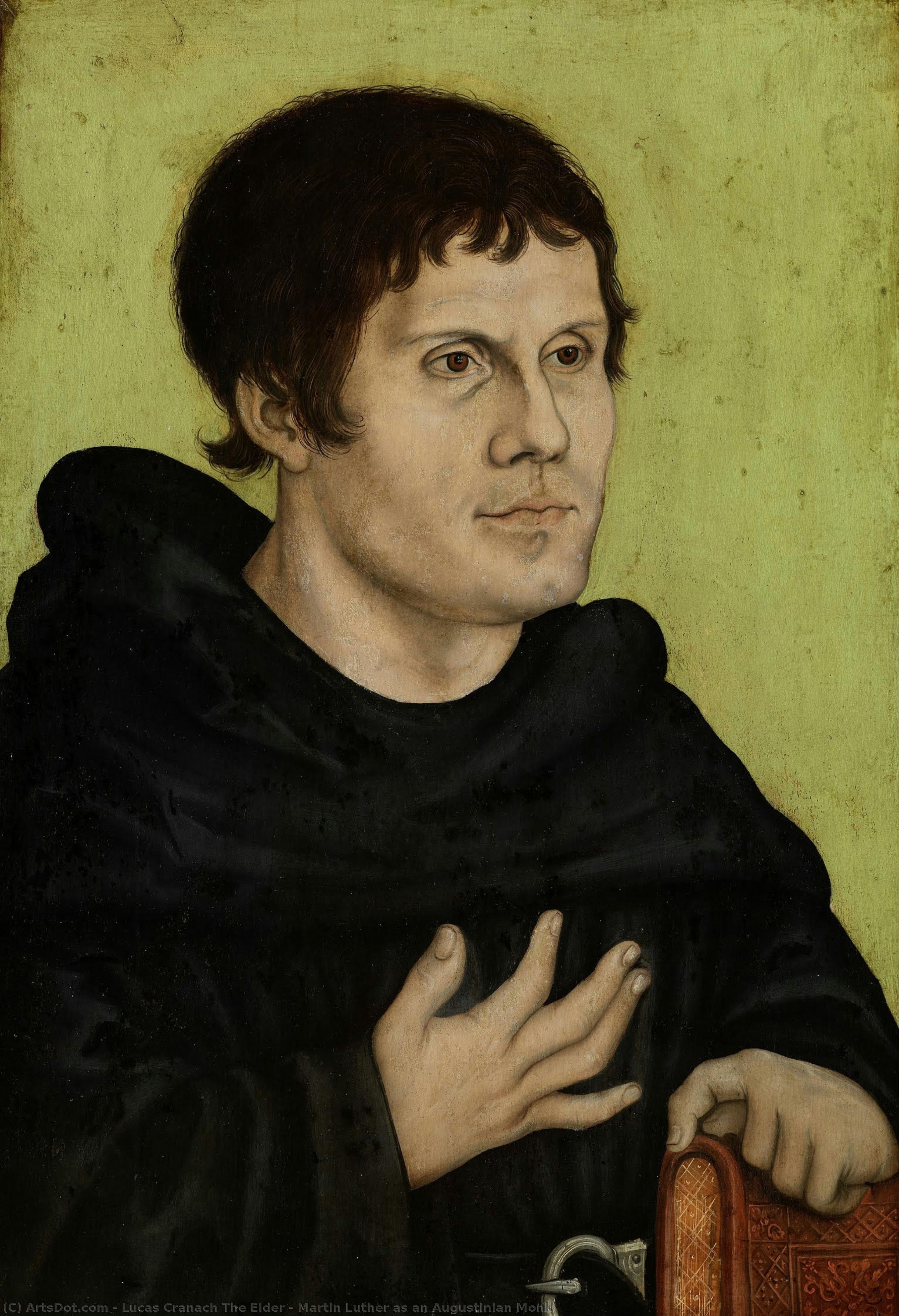
Lucas Cranach's 'Martin Luther as an Augustinian Monk' (1546) captures the reformer’s formative years, showcasing his theological depth & influence on the Reformation era. A powerful portrait of faith and intellectual rigor.
Entdecken Sie Lucas Cranach dem Älteren (1472-1553), den führenden deutschen Renaissancemaler! Berühmte Porträts von Luther, lebendige Mythologie & Bibelkunst.
Entdecken Sie deutsche Kultur und Kunst im Deutschen Nationalmuseum in Nürnberg! Erkunden Sie über 1,3 Millionen Artefakte von der Vorgeschichte bis zur Gegenwart – das größte Museum für kulturelle Geschichte Deutschlands. Erleben Sie historische Sammlungen und beeindruckende Ausstellungen.
A Portrait of Faith: Lucas Cranach’s Luther as Augustine
Lucas Cranach the Elder's depiction of Martin Luther as an Augustinian monk transcends mere representation; it embodies the spiritual fervor and intellectual rigor that defined the Reformation era. Completed in 1546, this engraving offers a glimpse into Luther’s formative years—a period marked by profound introspection and a fervent desire for theological grounding—and serves as a testament to Cranach's masterful ability to convey both psychological nuance and artistic precision.
The Artist's Vision: Cranach's Patronage and Artistic Style
Born in Kronach, Germany around 1472, Lucas Cranach the Elder emerged from the crucible of Saxony’s Renaissance, inheriting a tradition steeped in humanist ideals yet profoundly shaped by religious anxieties. His father, Hans Maler, instilled in him a foundational understanding of artistic craftmanship, fostering an early inclination towards meticulous detail and skillful draughtsmanship—traits that would characterize Cranach's oeuvre throughout his prolific career. Notably, he secured the patronage of Frederick III, Elector of Saxony, establishing a relationship that propelled him to prominence within the courtly circles of Dresden and Nuremberg. This association afforded him access to influential figures and fostered an environment conducive to artistic experimentation, resulting in a distinctive style marked by clarity of line, subtle tonal gradations, and a captivating blend of realism and idealized beauty—a hallmark of German Renaissance art.
Symbolism Within the Image: Augustine's Influence on Luther’s Thought
The choice of Augustine as Luther’s monastic companion is laden with symbolic significance. Augustine’s philosophical meditations on grace, predestination, and divine illumination profoundly impacted Luther’s theological trajectory, shaping his understanding of salvation and fueling his unwavering conviction in biblical authority. Cranach skillfully captures this intellectual engagement through Luther's posture—a deliberate gesture of humility and contemplation—emphasizing the importance of inner piety alongside outward observance. The monk’s clasped hands symbolize prayerful devotion and represent a yearning for spiritual communion with God, mirroring Augustine’s own ascetic practices and theological preoccupations. Furthermore, the muted palette contributes to the overall atmosphere of solemn reflection, reinforcing the image's message of spiritual seriousness.
Technique and Craftsmanship: Cranach's Engraving Process
Cranach’s execution of this engraving exemplifies the exacting standards of Renaissance printmaking. Utilizing a copper plate meticulously etched with lines representing Luther’s form and drapery, he employed a technique known as mezzotint—a process that involved roughening the plate surface to create tonal gradations through subsequent burnishing and wiping away ink. This method allowed for unparalleled control over shading and texture, resulting in an image characterized by remarkable subtlety and depth. The resulting print possesses a velvety smoothness and captures the nuances of light and shadow with astonishing accuracy—a testament to Cranach’s technical virtuosity and his dedication to achieving artistic excellence through painstaking craftsmanship.
Emotional Resonance: A Window into Luther's Soul
Beyond its formal qualities, Luther as Augustine resonates deeply with viewers due to its portrayal of inner turmoil and unwavering faith. The engraving conveys a palpable sense of solemn contemplation—a reflection of Luther’s own wrestling with theological dilemmas and his determination to uphold biblical truth amidst societal pressures. Cranach’s masterful depiction captures not merely Luther's physical appearance but also the essence of his spiritual convictions, inviting contemplation on themes of piety, humility, and devotion. It stands as a poignant reminder of the transformative power of faith—a legacy that continues to inspire artists and audiences alike centuries after its creation.