A Moment of Devotion Captured in Oil
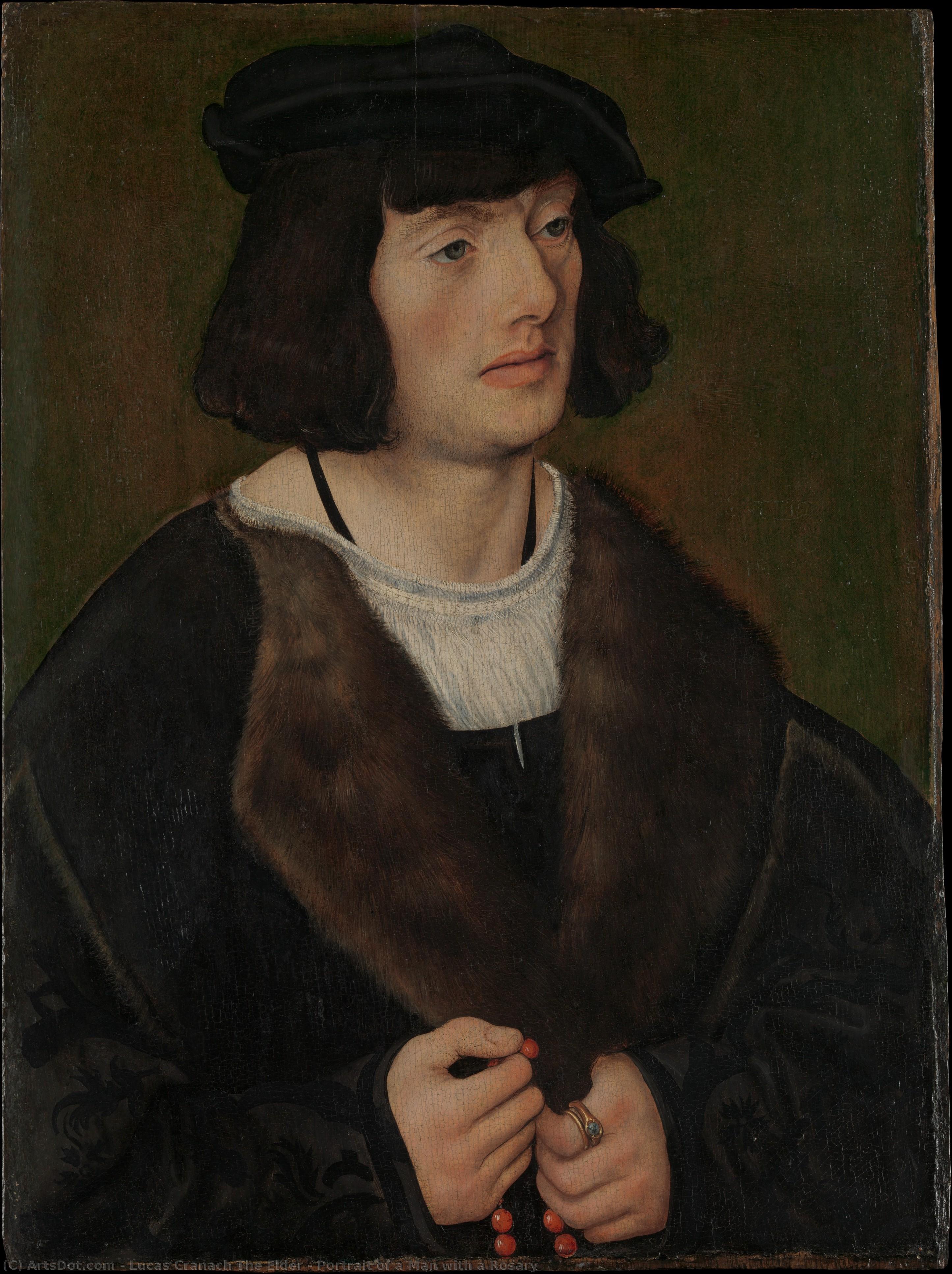
In the quiet intimacy of Lucas Cranach the Elder’s Portrait of a Man with a Rosary, we are invited into a private sanctuary of thought and faith. Painted in 1508 during the artist's transformative journey through Holland, this exquisite panel serves as much more than a mere likeness; it is a profound psychological study. The sitter, a young man of noble standing, gazes directly at us with an unwavering intensity that bridges the gap between the sixteenth century and the modern day. As his fingers delicately trace the beads of a rosary, he embodies the spiritual pulse of the Northern Renaissance—a period where the boundaries between worldly prestige and religious piety were beautifully intertwined.
The composition is masterfully balanced, utilizing a deep, verdant background to push the subject forward, creating an almost three-dimensional presence. Clad in the sophisticated black attire of the era, the man’s clothing speaks of immense wealth and social standing, yet it is the subtle textures—the soft, tactile luxury of his fur collar and the meticulous rendering of the fabric folds—that truly captivate the eye. This interplay of light and shadow, achieved through Cranach's expert layering of oil paints, lends a lifelike vitality to the portrait, making the subject feel as though he might step out from the shadows of history.
Symbolism and the Art of Identity
Beyond the surface beauty lies a complex web of heraldic and spiritual symbolism. Cranach was a master of embedding narrative clues within his portraits, and here, he utilizes the sitter's very adornments to tell a story of lineage and legacy. A particularly striking detail is found in the man’s ring, which features the coats of an influential Dutch family. This deliberate inclusion serves as a silent testament to the intricate patronage systems of the Renaissance, where art functioned as a vital tool for documenting aristocratic connections and social permanence.
The rosary itself acts as the emotional anchor of the piece. It is not merely an accessory but a symbol of the era's pervasive preoccupation with mortality and the eternal. The gesture of holding the beads against his chest suggests a moment of interrupted prayer, a snapshot of a soul in mid-contemplation. For the discerning collector or interior designer, this artwork offers a sense of timelessness; it brings an atmosphere of contemplative elegance and historical weight to any space, making it an ideal centerpiece for those who appreciate art that speaks of depth, heritage, and the enduring human spirit.