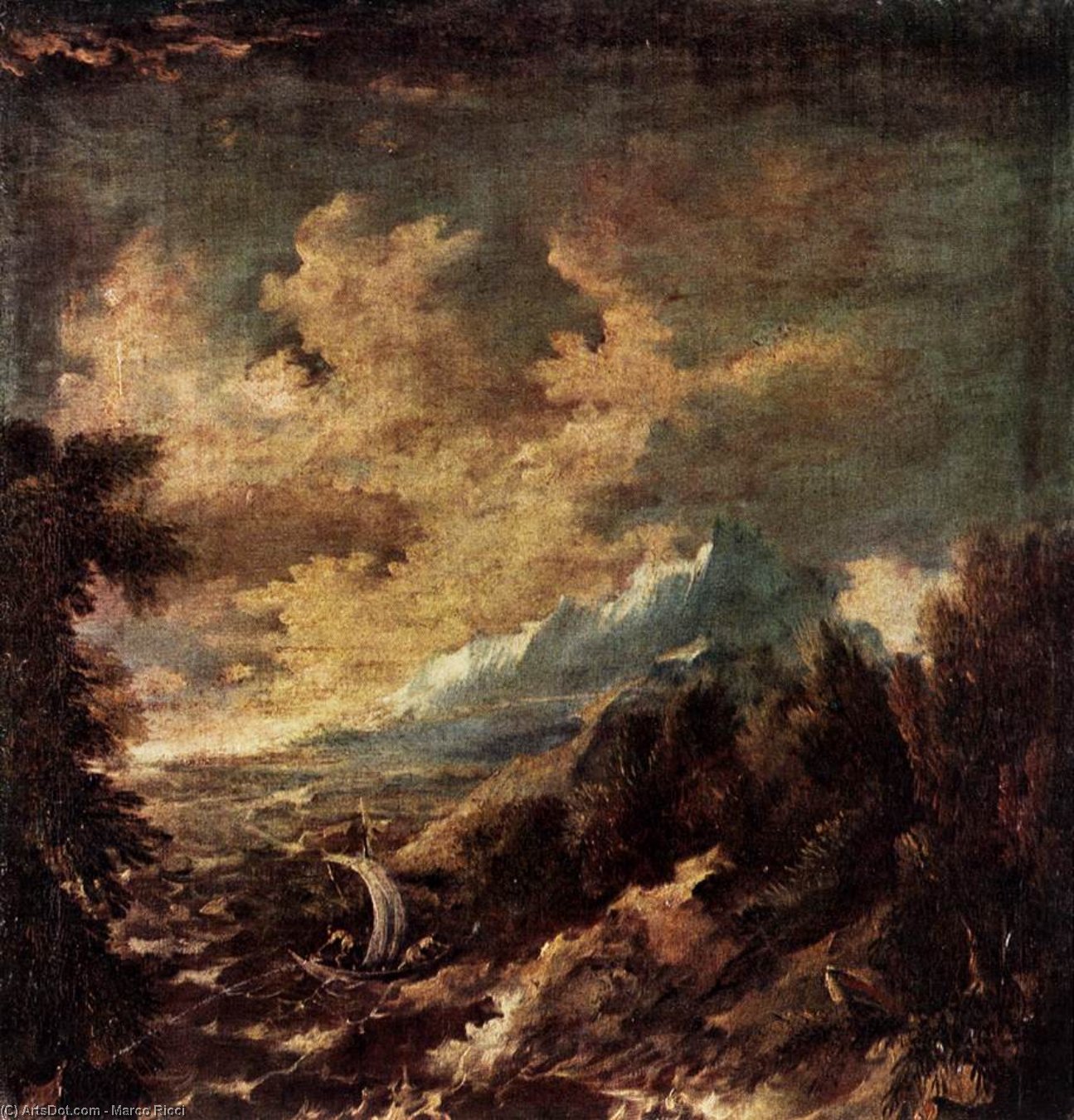
Explore Marco Ricci's masterpiece 'Stormy Region,' an evocative Venetian landscape painting from 1705 featuring dramatic skies, boats, and figures capturing the spirit of Baroque art.
Marco Ricci (1676-1730) war ein venezianischer Barockmaler bekannt für seine Landschaftsdarstellungen und Zusammenarbeiten! Entdecken Sie seine italienische Kunstgeschichte!
Entdecken Sie Kunstgeschichte! Das Museum der Schönen Künste Budapest beeindruckt mit Meisterwerken aus Ägypten und Europa – ein außergewöhnliches Erlebnis für Kunstliebhaber.
A Dramatic Landscape Captured in Venetian Baroque
Marco Ricci’s “Stormy Region,” painted in 1705, stands as a testament to the Venetian Baroque's fascination with capturing the sublime—the awe-inspiring grandeur of nature infused with turbulent emotion. This landscape masterpiece exemplifies Ricci’s distinctive style, characterized by masterful atmospheric perspective and an expressive handling of color that conveys the raw power of the elements. The painting depicts a mountainous vista dominated by a brooding expanse of water, reflecting the dramatic sky above in shades of grey and violet—a visual echo of the tempestuous conditions prevalent during its creation.
The Artist's Influences: Lorrain and Rosa
Ricci’s artistic development was profoundly shaped by influential masters like Claude Lorrain and Gaspard Dughet, who championed idealized depictions of nature imbued with spiritual contemplation. Similarly, Salvatore Rosa instilled in Ricci a passion for portraying dramatic scenes brimming with emotional intensity—a stylistic hallmark that distinguishes his oeuvre from more restrained contemporary artists. These influences are palpable in “Stormy Region,” where Ricci skillfully employs techniques reminiscent of Lorrain’s luminous landscapes and Rosa’s emotionally charged compositions.
Technique and Composition: Atmospheric Perspective and Dramatic Lighting
Ricci's meticulous attention to detail is evident in the painting’s masterful execution. He utilizes atmospheric perspective—a technique perfected during this period—to create a convincing illusion of depth, subtly blurring distant mountains and diminishing color saturation as they recede into the haze. Furthermore, Ricci employs dramatic lighting—particularly greenish highlights reminiscent of lightning—to heighten the scene's emotional impact and emphasize the turbulent energy of the storm. The placement of two boats on the water adds to the composition’s dynamism, symbolizing human resilience against the forces of nature.
Symbolism: Confrontation with Chaos and Spiritual Reflection
“Stormy Region” transcends mere visual representation; it embodies a deeper symbolic resonance. The tumultuous sea serves as a metaphor for life's challenges—the unpredictable surges of fortune and misfortune that confront humanity. Yet, amidst this chaos, the painting invites contemplation on themes of faith and perseverance. The figures scattered across the landscape represent individuals grappling with existential questions, mirroring the broader spiritual concerns of the Baroque era. Ricci’s depiction captures not only the beauty of the natural world but also its capacity to inspire awe and provoke introspection.
Legacy: A Venetian Master Rediscovered
Though largely forgotten during Ricci's lifetime—his work gaining recognition primarily through the Belluno exhibition in 1963— “Stormy Region” now occupies a prominent place in Venetian Settecento art history. It represents a pivotal moment in Ricci’s artistic trajectory, marking a decisive shift toward expressive landscapes that solidified his reputation as one of Venice's foremost landscape painters. This evocative artwork continues to captivate viewers today, offering a glimpse into the artistic spirit of its time and demonstrating Ricci’s enduring contribution to European art heritage.