Mariano Fortuny (1871-1949) war ein spanischer Modeschöpfer & Künstler bekannt für innovative Textilien, Delphos Kleider und beeindruckende Bühnenbilder. Entdecken Sie seinen orientalistischen Einfluss und sein Vermächtnis in der Kunstgeschichte.
Erkunden Sie das Palazzo Fortuny in Venedig: ein einzigartiges Museum, das die Kunst, Textilien und innovativen Designs von Mariano Fortuny in einem atemberaubenden gotischen Palast zeigt! Entdecken Sie seinen erhaltenen Atelier-Atelier und seine fesselnden Sammlungen.
A Portrait of Elegance: Mariano Fortuny’s Silk Velvet Dress
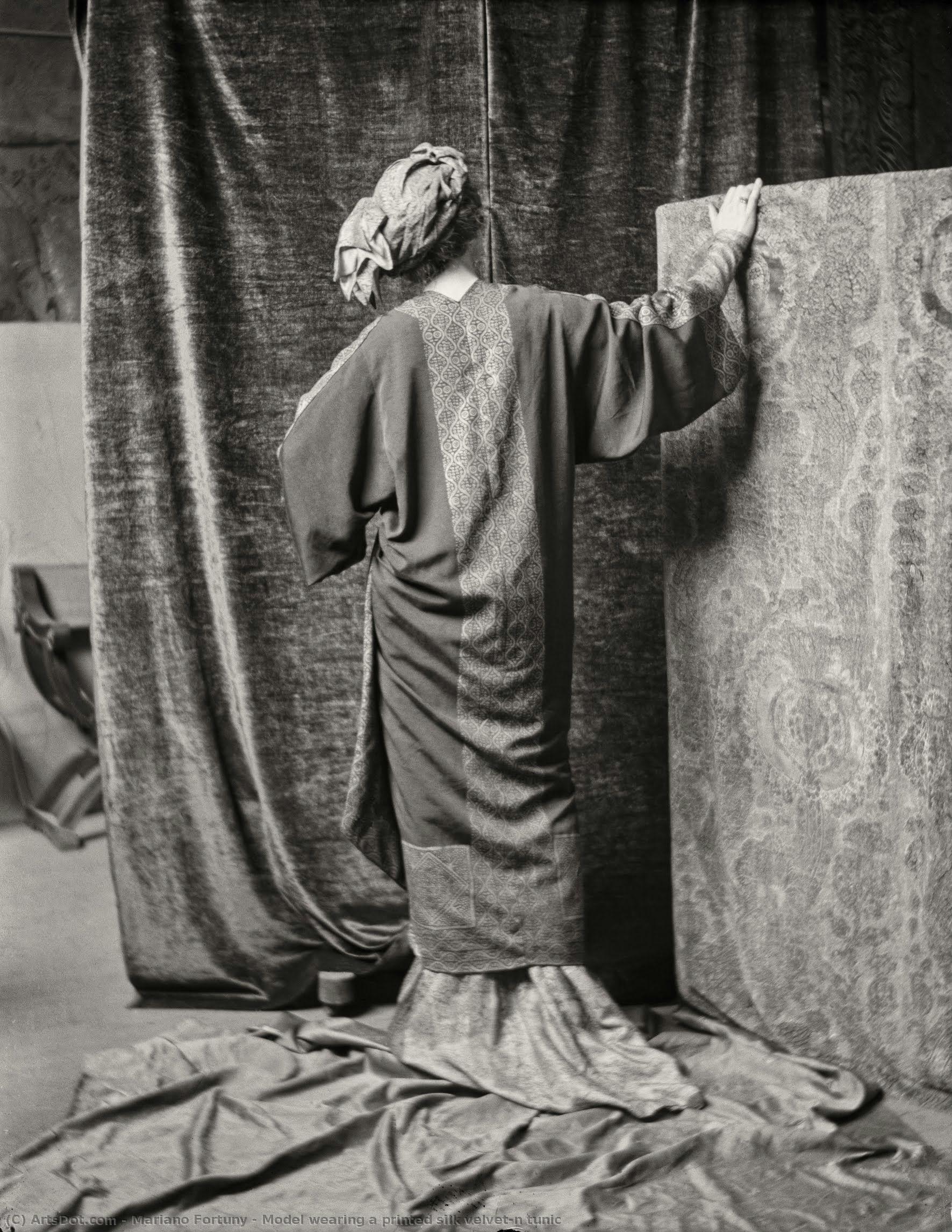
Mariano Fortuny’s “Model Wearing a Printed Silk Velvet Tunic” transcends mere representation; it embodies the spirit of Art Deco and whispers tales of Parisian ateliers during the Roaring Twenties. Captured in a striking black and white photograph measuring 12 x 9 cm, this image offers a glimpse into a moment frozen in time—a woman poised before a textured wall, radiating confidence and grace.
- Subject Matter: The portrait focuses on a single figure – a woman draped in a luxurious silk velvet tunic adorned with an intricate floral print. This deliberate simplicity contrasts beautifully with the opulent fabric itself, highlighting its texture and pattern.
- Style & Technique: Fortuny’s work exemplifies Art Deco aesthetics, characterized by geometric forms and stylized ornamentation. The photograph skillfully captures the subtle nuances of light and shadow, emphasizing the dress's flowing silhouette and creating a sense of depth within the composition.
The photograph itself is a testament to Fortuny’s pioneering approach to photography – he was among the first artists to utilize indirect lighting techniques, mirroring his groundbreaking innovations in theatrical stage lighting. His treatise “Eclairage Scenique,” published in 1904, revolutionized how light was manipulated on stage, and this photographic practice reflects that same dedication to experimentation and pushing artistic boundaries. The use of a textured wall serves as an understated backdrop, grounding the figure and subtly reinforcing the visual richness of the dress.
- Historical Context: Created in 1920, “Model Wearing a Printed Silk Velvet Tunic” speaks directly to the cultural milieu of the Jazz Age. This era witnessed a surge in artistic creativity fueled by optimism and fascination with modernity – Fortuny’s work aligns perfectly with these trends, reflecting the desire for refined beauty and sophisticated design.
- Symbolism: The floral print on the tunic carries symbolic weight, representing femininity, growth, and renewal—themes prevalent in Art Deco art. Furthermore, the woman's posture exudes poise and composure, embodying ideals of elegance and grace that were highly valued during this period.
Ultimately, Fortuny’s “Model Wearing a Printed Silk Velvet Tunic” evokes feelings of serenity and understated glamour. It invites contemplation on beauty, craftsmanship, and the enduring legacy of artistic innovation. A reproduction offers an exceptional opportunity to bring this captivating image into any interior space—a reminder that true artistry transcends time and continues to inspire awe and admiration.