Emperor Francis I – A Baroque Vision of Habsburg Majesty
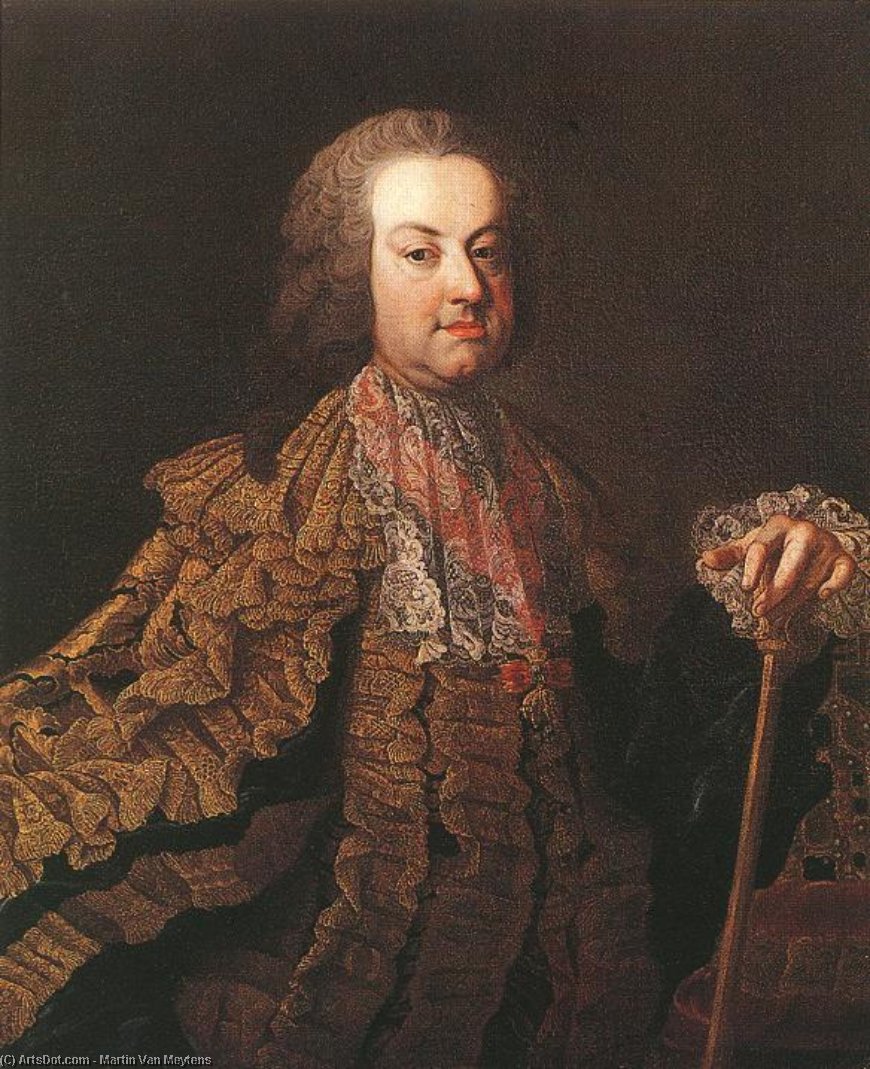
Martin van Meytens’ “Emperor Francis I” stands as an emblem of Austrian Baroque art, capturing the opulent grandeur and political ambition of Holy Roman Emperor Francis I Stephen (1708–1765). Commissioned during his reign, this monumental portrait exemplifies the artistic conventions of the era—a deliberate fusion of meticulous realism with symbolic embellishment designed to convey imperial authority and prestige. Executed around 1745, it resides within the Museum of Fine Arts, Budapest, offering visitors a glimpse into the visual culture of Habsburg Europe.
- Subject Matter: The painting portrays Francis I seated upon a richly upholstered throne, adorned with crimson velvet and embroidered gold thread—a deliberate choice reflecting his status as ruler of the Holy Roman Empire and symbolizing royal power. Beside him stands Maria Theresa, his wife, demonstrating the importance of dynastic alliances in securing Habsburg dominance.
- Style: Meytens’ style is firmly rooted in Baroque aesthetics, characterized by dramatic chiaroscuro—the skillful manipulation of light and shadow—creating a sense of theatrical depth and highlighting the regal figures. The composition adheres to classical principles of balance and symmetry, reinforcing the emperor's perceived dignity and stability.
- Technique: Painted on canvas using oil paint, Meytens employed layering techniques to achieve remarkable textural detail. Minute brushstrokes capture the intricacies of Francis I’s clothing—the sumptuous fabrics, the elaborate lace jabot—and Maria Theresa’s gown—emphasizing the wealth and sophistication associated with the Habsburg court.
- Historical Context: The portrait was created during a period of intense political maneuvering amidst the War of Succession, marking a pivotal moment in European history. Francis I's ascension to the throne followed the death of his father Leopold II, and he swiftly consolidated power through strategic marriages—most notably uniting with Maria Theresa—establishing the Habsburg-Lorraine dynasty as a dominant force on the continent.
- Symbolism: The inclusion of the imperial crown symbolizes Francis I’s divine right to rule and underscores the Habsburg emperors' belief in their ordained role as protectors of Christendom. Furthermore, the throne itself represents stability and permanence—a visual declaration of the emperor’s commitment to upholding tradition and safeguarding the empire’s legacy.
Detailed Examination: Composition and Color Palette
The painting’s masterful composition draws viewers' gaze directly to Francis I, positioned centrally on the throne, bathed in warm light emanating from a window behind him. This strategic placement reinforces his dominance within the frame and directs attention towards his regal bearing—a posture of solemn dignity and unwavering confidence. Meytens skillfully utilizes chiaroscuro to sculpt the figures’ forms, creating dramatic contrasts between illuminated areas and shadowed recesses that heighten their visual impact. The color palette is dominated by rich hues—deep reds symbolizing royal authority, gold accents signifying imperial splendor—and muted blues and greens contributing to a sense of grandeur and serenity.
Legacy and Influence
Martin van Meytens’ “Emperor Francis I” remains an enduring testament to Baroque artistic excellence. Its meticulous realism combined with symbolic embellishment established a precedent for portraiture during the Habsburg era, influencing subsequent generations of painters who sought to convey similar notions of imperial majesty. The painting continues to captivate audiences today, serving as a powerful reminder of Austria’s illustrious past and its contribution to European art history—a timeless masterpiece embodying the spirit of Baroque grandeur.
Reproductions Available
High-quality reproductions of “Emperor Francis I” are available from ArtsDot, allowing collectors and enthusiasts alike to appreciate the artistry of Martin van Meytens and experience the splendor of Habsburg Vienna firsthand. Explore exquisite detail and immerse yourself in the captivating atmosphere of this iconic Baroque portrait.