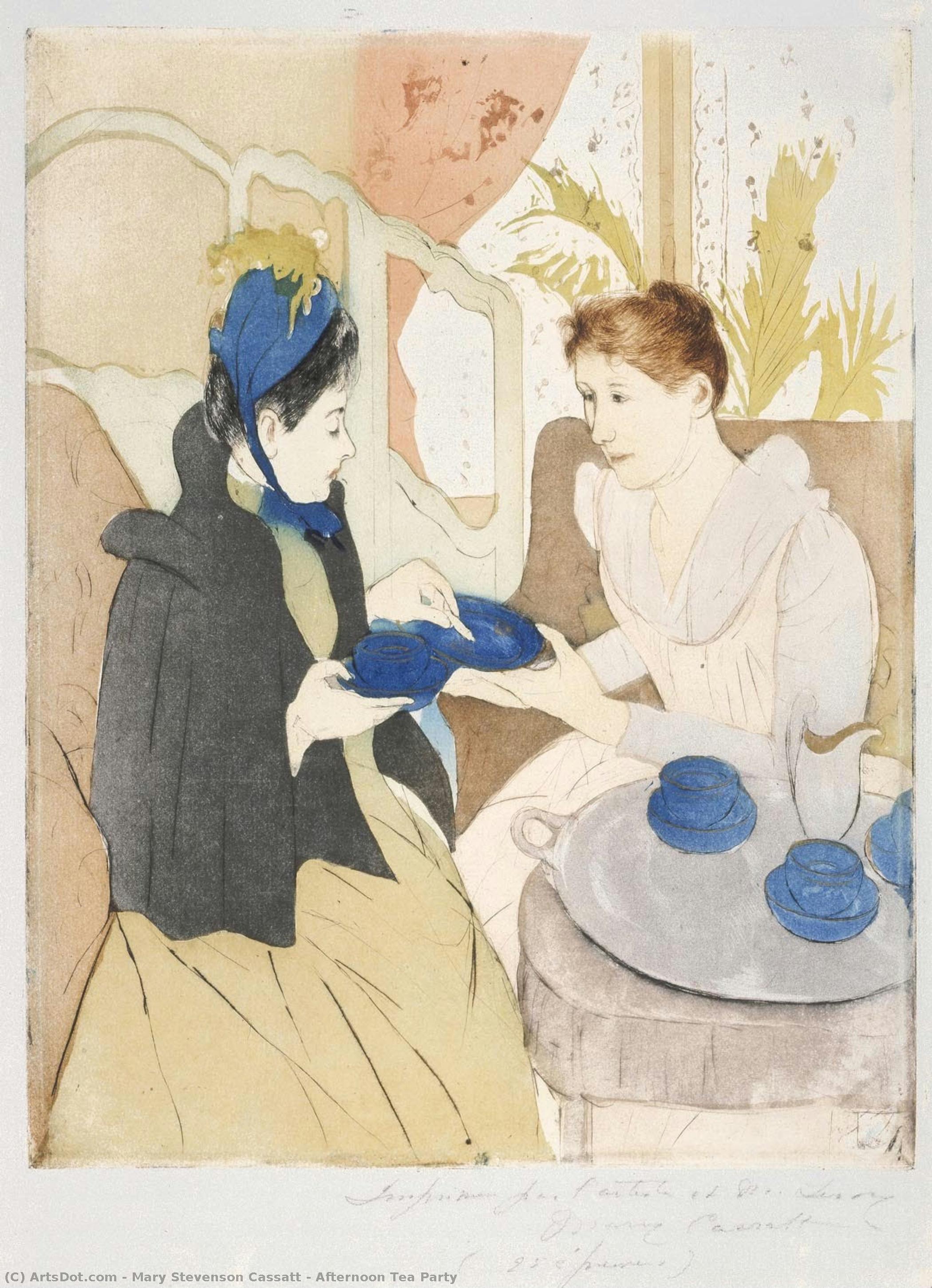
Afternoon Tea Party by Mary Cassatt
Mary Stevenson Cassatt’s Afternoon Tea Party stands as a quintessential emblem of Impressionist domesticity—a serene tableau capturing the quiet intimacy of two women engaged in conversation amidst the refined comforts of a Parisian salon. Painted in 1890-1891, this canvas exemplifies Cassatt's signature style: delicately rendered figures bathed in diffused light, prioritizing psychological observation over meticulous realism. The artwork’s muted palette—dominated by soft blues and creams—creates an atmosphere of understated elegance, mirroring the social conventions of the era while simultaneously conveying a profound sense of female companionship.
- Subject Matter: The scene depicts two women seated at a table adorned with tea cups and saucers, their gaze directed towards each other in what appears to be animated discussion.
- Style: Cassatt’s Impressionist approach eschews grand narratives for nuanced depictions of everyday life—specifically the female experience—emphasizing emotional resonance over formal representation.
- Technique: Employing drypoint and aquatint etching techniques, Cassatt achieved remarkable tonal gradations and subtle textural nuances, capturing the delicate interplay of light and shadow on fabric and skin. The artist skillfully utilized a combination of printing methods to produce an image that is both visually arresting and emotionally evocative.
The painting’s historical context illuminates the burgeoning feminist movement of the late Victorian period—a time when artists like Cassatt challenged societal expectations regarding women's roles and artistic pursuits. Afternoon Tea Party reflects this spirit of rebellion against convention, portraying women as intellectually active participants in social life rather than passive objects of domesticity. Furthermore, Cassatt’s meticulous attention to detail—particularly the rendering of facial expressions and hand gestures—underscores her commitment to psychological realism—a hallmark of Impressionist art.
Symbolism: The tea cups themselves serve as potent symbols of hospitality and social connection—representing the rituals of polite conversation and the importance of female bonds within the domestic sphere. The muted colors contribute to an overall mood of tranquility and contemplation, inviting viewers to consider themes of friendship, intimacy, and feminine resilience. Cassatt’s masterful use of light—particularly its diffused quality—creates a sense of ethereal beauty, mirroring the idealized vision of femininity prevalent in Impressionist art.
Emotional Impact: Afternoon Tea Party transcends mere visual representation—tapping into universal emotions associated with companionship, vulnerability, and quiet contemplation. The painting's serene composition encourages viewers to pause and reflect on the significance of human connection—affirming Cassatt’s belief that art should illuminate the complexities of human experience. It remains a timeless masterpiece—celebrating the beauty of female intimacy and embodying the enduring legacy of Impressionist artistic innovation.