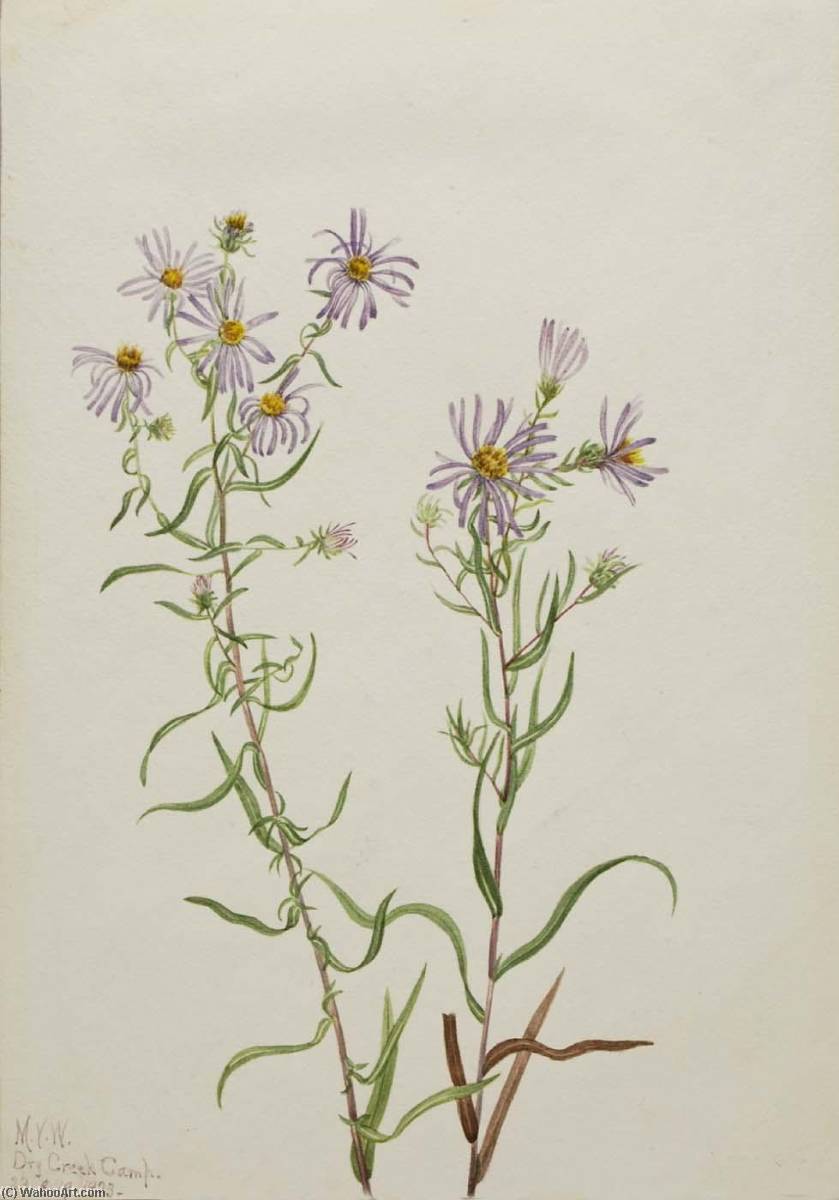
The
Prairie Aster (Aster campestris) is a stunning watercolor painting by
Mary Vaux Walcott, an American artist and botanist. Created in 1923, this beautiful piece is part of the collection at the
Smithsonian American Art Museum. Measuring 25 x 18 cm, the painting showcases the delicate purple flowers with yellow centers, surrounded by lush green leaves.
Artistic Style and Technique
Mary Vaux Walcott's artistic style is characterized by her attention to detail and ability to capture the intricate beauty of botanical specimens. Her use of watercolor as a medium allows for a level of subtlety and nuance that brings the flowers to life. The
Prairie Aster (Aster campestris) is a prime example of her skill, with delicate brushstrokes and a muted color palette that evokes a sense of serenity.
Botanical Significance
The
Prairie Aster (Aster campestris) is not only a beautiful work of art but also an important botanical specimen. As a member of the aster family, this flower is native to North America and can be found in prairies and open fields. Mary Vaux Walcott's painting provides a detailed and accurate representation of the flower, making it a valuable resource for botanists and naturalists.
Prairie Aster (Aster campestris) is a testament to Mary Vaux Walcott's skill as an artist and botanist. This beautiful painting is a must-see for anyone interested in botanical art, and its significance extends beyond the art world to the fields of botany and natural history.
The
Prairie Aster (Aster campestris) is a valuable addition to any collection, and ArtsDot.com offers
high-quality, handmade oil painting reproductions that capture the beauty and detail of the original piece.