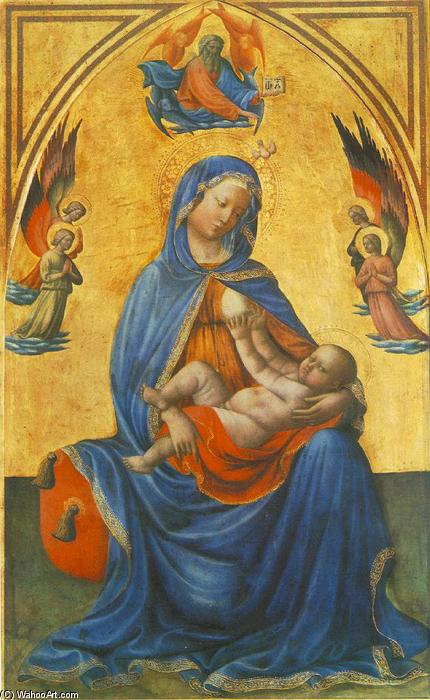
Admire Masolino da Panicale’s serene ‘Madonna of Humility,’ a pivotal Renaissance masterpiece showcasing exquisite detail and influencing Florentine art at the Uffizi Galleries.
Masolino da Panicale (1383-1447): Florentiner Renaissance-Maler bekannt für lyrische Fresken und frühe Ölmalerei. Kooperation mit Masaccio an ikonischen Werken wie der Brancacci Kapelle.
Entdecken Sie Kunstgeschichte im Neuen und Alten Pinakothek in München! Meisterwerke der Renaissance & Barock in beeindruckender Architektur erleben Sie einzigartige Kunst.
The Madonna with Child by Masolino da Panicale: A Pioneer of Fresco and Early Oil Painting
Masolino da Panicale’s *Madonna with the Child*, painted circa 1425–1426, stands as a cornerstone achievement in Florentine Renaissance art—a testament to his mastery of fresco technique and an early foray into oil painting that foreshadowed monumental developments in artistic expression. This captivating artwork resides within the Gemäldegalerie Alte Meister in Dresden, Germany, where it continues to inspire awe and scholarly contemplation.
### Subject Matter and Iconographic Tradition
The painting depicts Mary cradling Jesus Christ in her lap, a motif deeply rooted in Christian iconography dating back centuries. Masolino skillfully adheres to the established *Madonna of Humility* model—a tradition emphasizing Mary’s maternal tenderness and spiritual purity. The Virgin is seated upon a throne-like structure, adorned with drapery that echoes Gothic grandeur while subtly signaling the burgeoning humanist aesthetic. Her gaze directs upward toward heaven, conveying serenity and divine grace – emotions powerfully communicated through Masolino's masterful brushwork.
### Fresco Technique: Innovation and Precision
Masolino’s choice of fresco—a technique involving pigment applied to wet plaster—demonstrates his unwavering commitment to established artistic conventions while simultaneously pushing boundaries. Unlike later Renaissance artists who favored tempera, Masolino utilized the luminous qualities inherent in fresco to achieve remarkable depth and vibrancy. The meticulous layering of pigments—particularly noticeable in the drapery folds—reveals an astonishing level of detail and precision, reflecting the influence of Ghiberti’s sculptural prowess and highlighting the enduring legacy of Gothic craftsmanship. Careful observation reveals subtle gradations of color and texture that contribute significantly to the painting's emotional resonance.
### Symbolism: Lily and Scroll – Expressions of Faith and Virtue
The composition is replete with symbolic elements designed to elevate its spiritual significance. On Mary’s left, an angel holds a lily—a universally recognized emblem of purity and virginity—representing divine grace and symbolizing Mary’s sanctity. Conversely, on her right, another angel presents a scroll bearing Hebrew text – referencing the prophecies of Isaiah concerning the Messiah's birth. These gestures underscore the painting’s central theme: the incarnation of Christ as God incarnate, reaffirming Christian faith and embodying moral virtue.
### Artistic Influence and Legacy
Masolino’s *Madonna with the Child* exerted considerable influence on subsequent artists, notably Masaccio—whose *Trinity* fresco draws inspiration from Masolino's innovative approach to color and composition. It represents a crucial transitional phase between Gothic formalism and Renaissance naturalism, marking the dawn of oil painting in Florence and establishing Masolino as one of the foremost figures in shaping the artistic landscape of his time. Its enduring beauty continues to captivate viewers today, cementing its place as an unforgettable masterpiece of early Renaissance art.