A Glimpse of Rural Life: Max Slevogt’s “Grape Harvest at Neukastel”
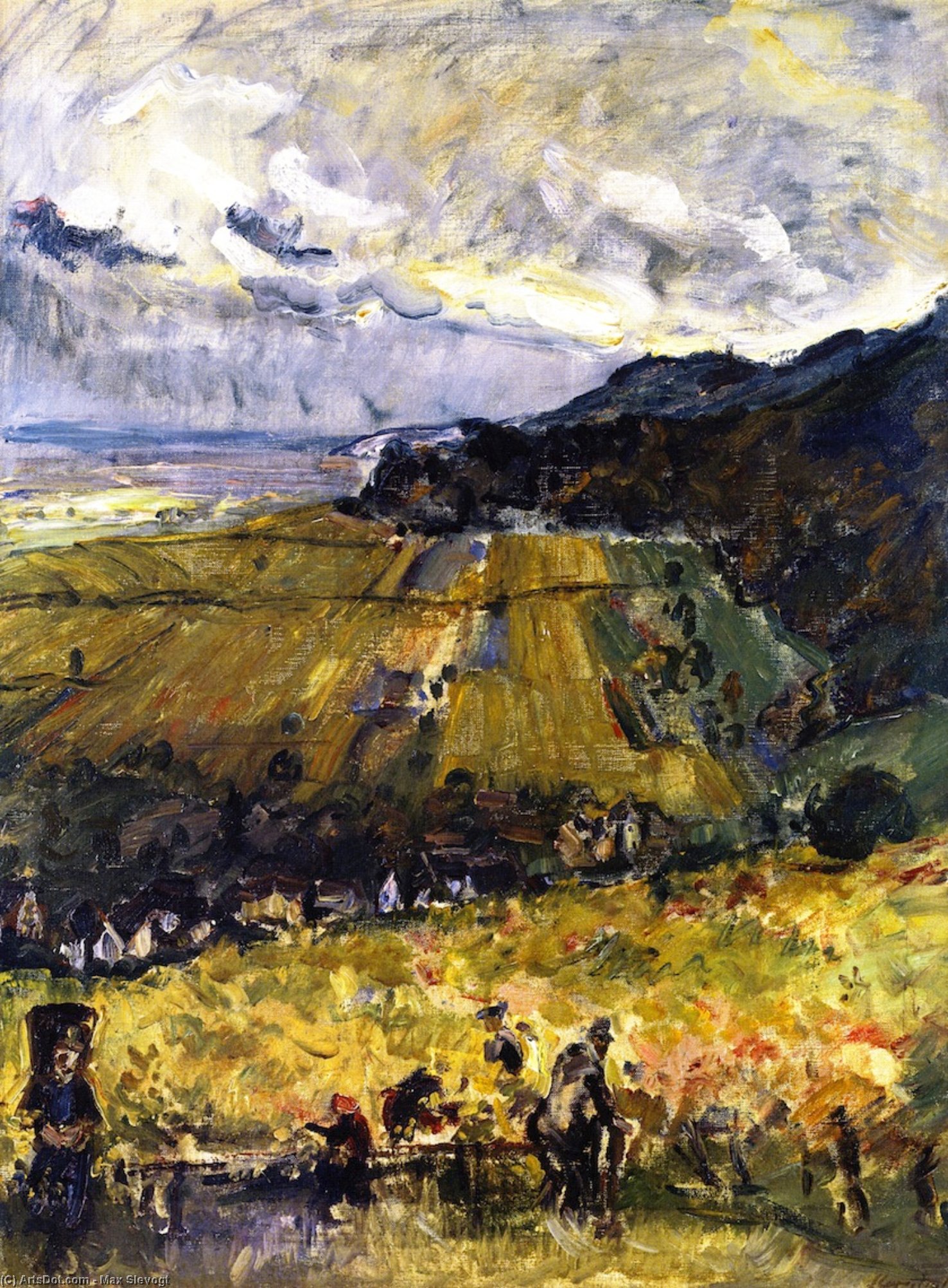
Max Slevogt's "Grape Harvest at Neukastel," painted in 1916, isn’t merely a depiction of agricultural labor; it’s a vibrant distillation of the German Impressionist spirit – a fleeting moment captured with an almost feverish intensity of light and color. Nestled within the walls of the Museum Folkwang in Essen, Germany, this oil on canvas transports us to a specific place and time: the rolling hills of Bavaria during a summer harvest. The painting immediately draws the eye with its bold palette – deep greens, ochre yellows, and cerulean blues coalesce into a landscape brimming with life and energy. Slevogt masterfully employs broken brushstrokes, characteristic of Impressionism, to create an illusion of movement and light, as if we too are swept along by the activity unfolding before us.
The scene itself is deceptively simple: a group of figures, numbering perhaps twelve or thirteen, work diligently in the vineyards. They aren’t idealized portraits; rather, Slevogt presents them with an honest immediacy, their faces etched with the effort of the day's labor. Notice how he captures the interplay of light and shadow on their clothing, reflecting the sun’s warmth and creating a sense of depth within the composition. The inclusion of horses – essential to the harvest process – adds another layer of rustic charm and reinforces the painting’s connection to rural life. The distant mountains, rendered in hazy blues and purples, provide a dramatic backdrop, anchoring the scene within its geographical context.
The Influence of Paris: A Shift Towards Plein Air
Slevogt's artistic journey was profoundly shaped by his time spent in Paris during the late 1880s. Initially trained in the more traditional style of Munich Academy, where darker tones and academic subjects were favored, he found himself captivated by the Impressionist movement’s emphasis on capturing fleeting moments of light and color *en plein air* – directly from nature. This pivotal experience led to a dramatic stylistic transformation. As documented in his biography, Slevogt abandoned the muted palettes of his early work for brighter, more vibrant hues, mirroring the techniques he observed among artists like Manet.
The “Grape Harvest” exemplifies this shift perfectly. The painting’s luminosity and sense of immediacy are a direct result of Slevogt's commitment to *plein air* painting. He wasn’t interested in creating a meticulously detailed representation; instead, he sought to capture the essence of the scene – its atmosphere, light, and emotional impact – with rapid brushstrokes and a focus on color relationships. This approach aligns him firmly within the broader Impressionist movement, which prioritized capturing subjective experience over objective reality.
Symbolism and the Rhythm of Labor
Beyond its visual appeal, “Grape Harvest at Neukastel” carries subtle symbolic weight. The act of harvesting grapes is a deeply rooted tradition in Bavaria, representing not just sustenance but also community, hard work, and connection to the land. Slevogt’s depiction suggests a harmonious collaboration between people and nature – a celebration of rural life and its rhythms. The figures working together, their movements seemingly synchronized with the sun's trajectory, evoke a sense of shared purpose and collective effort.
Furthermore, the painting can be interpreted as a reflection on the passage of time. The harvest season marks the end of summer and the beginning of autumn, symbolizing transition and renewal. Slevogt’s skillful use of light and shadow further emphasizes this theme, creating an atmosphere that is both vibrant and melancholic – a poignant reminder of the ephemeral beauty of nature.
A Legacy in Reproduction: Bringing “Neukastel” Home
Today, reproductions of "Grape Harvest at Neukastel" are readily available through platforms like ArtsDot.com, offering art enthusiasts the opportunity to bring a piece of this captivating artwork into their own homes. The meticulous detail and vibrant colors of these hand-painted reproductions faithfully capture the essence of Slevogt’s original masterpiece. Whether adorning a living room wall or gracing an entryway, this painting serves as a timeless reminder of the beauty of rural life and the enduring legacy of German Impressionism.