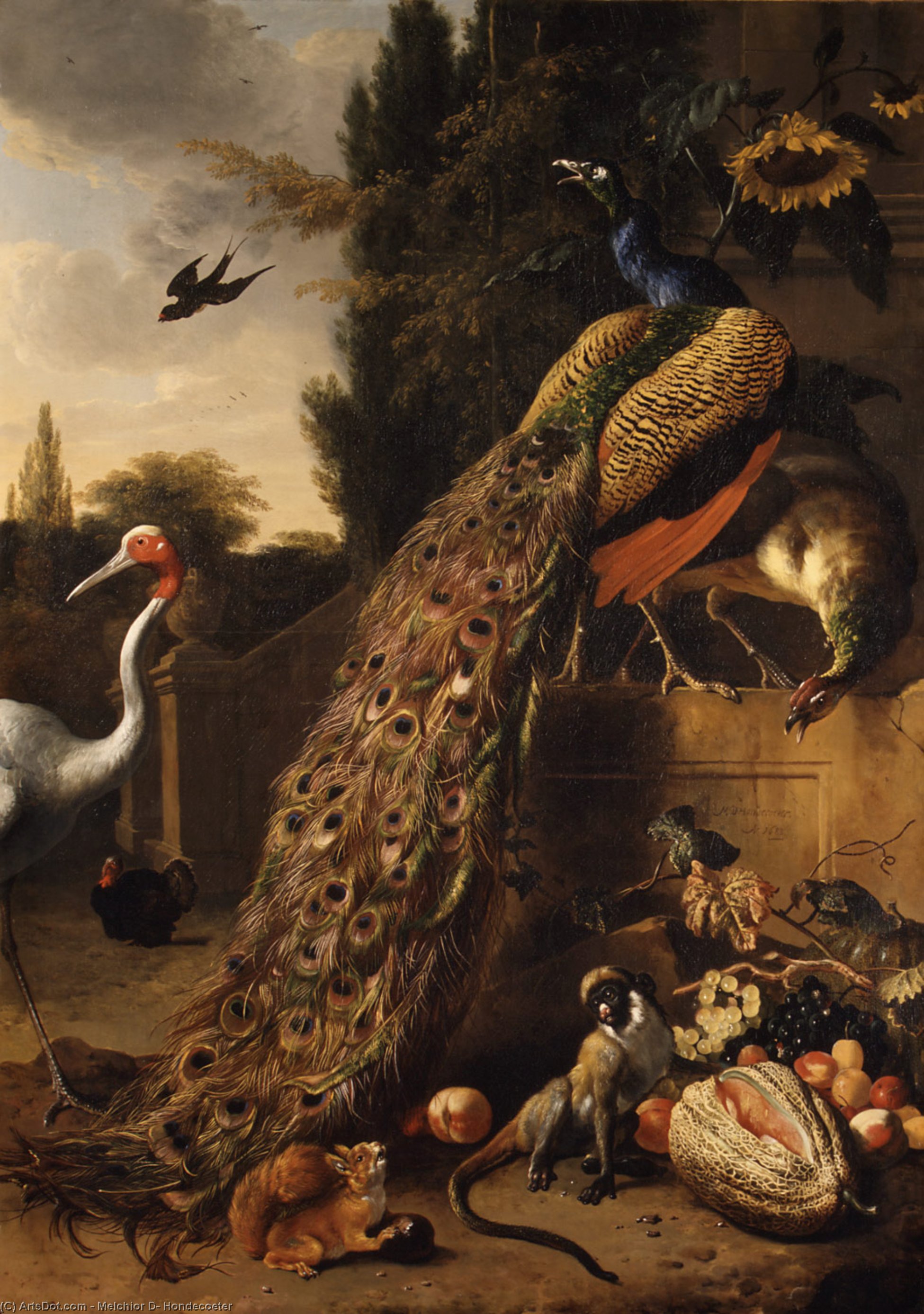
Explore Dutch Golden Age art with this stunning animalier painting.
Ein Meister des Barock und Spezialist für außergewöhnliche Vogelbilder! Melchior de Hondecoetter beeindruckte durch dynamische Landschaftsgemälde mit exotischen Vögeln und präzise Anatomie – ein unverzichtbarer Beitrag zur Kunstgeschichte der Niederlande.
Entdecken Sie das Metropolitan Museum of Art! Tausende Jahre Kunst aus aller Welt – von antiken Artefakten bis zu Meisterwerken. Ein Muss für Kunstliebhaber!
Melchior de Hondecoetter’s “Peacocks” – A Symphony of Baroque Detail
The Dutch Golden Age witnessed an unparalleled flourishing of artistic innovation, and Melchior de Hondecoetter stands as a towering figure within this era's remarkable canon. His mastery of animalier painting—a genre dedicated to meticulously capturing the beauty and dynamism of animals—reached its zenith in works like “Peacocks,” completed around 1683, now housed at The Metropolitan Museum of Art. This stunning canvas transcends mere representation; it embodies the Baroque spirit’s obsession with dramatic lighting, opulent textures, and an emotional intensity rarely achieved by his contemporaries.
A Celebration of Exotic Beauty: Subject Matter and Composition
Hondecoetter's fascination with birds extended far beyond scientific observation. He sought to convey not just their physical appearance but also their inherent character—their grace, nobility, and even their subtle expressions of emotion. “Peacocks” exemplifies this approach perfectly. The centerpiece is a magnificent peacock, rendered in exquisite detail against a backdrop of lush foliage. Its iridescent plumage shimmers with an array of colors – emerald green, sapphire blue, ruby red – achieved through masterful layering of pigments and meticulous brushwork. Surrounding the peacock are several smaller peacocks and birds—including parrots—creating a dynamic composition that captures the vibrancy of nature. The artist’s careful placement of these figures contributes to a sense of depth and spatial illusion characteristic of Baroque art.
Technique and Style: Baroque Precision Meets Emotional Resonance
Hondecoetter's technique is undeniably Baroque, prioritizing realism combined with expressive artistry. He employed oil paint on canvas—a medium favored during the period for its ability to produce rich colors and luminous effects—and utilized glazing techniques to build up layers of pigment gradually, resulting in a velvety surface texture that enhances the visual impact of the painting. The artist’s meticulous attention to detail is evident throughout “Peacocks,” from the individual feathers of the peacock to the delicate veins of the leaves. However, Hondecoetter didn't merely aim for photographic accuracy; he infused his work with emotion—a palpable sense of wonder and admiration for the natural world. This emotional resonance distinguishes him from other animaliers of his time who focused primarily on documenting specimens.
Historical Context: The Baroque Aesthetic in Dutch Art
“Peacocks” emerged during a period of immense artistic creativity in Holland, coinciding with the reign of William III—a monarch deeply invested in fostering cultural excellence. The Baroque style, originating in Italy, had gained considerable traction across Europe, influencing artists and shaping aesthetic sensibilities. Hondecoetter’s embrace of this style reflects broader trends within Dutch art, where painters sought to convey grandeur, drama, and spiritual fervor. Furthermore, the painting speaks to the burgeoning interest in scientific exploration during the seventeenth century—a fascination with observing and representing the natural world that fueled artistic endeavors like “Peacocks.”
Symbolism: Peacock as Emblem of Royalty and Virtue
The peacock’s inclusion in “Peacocks” is laden with symbolic significance. Throughout European art history, the peacock has served as an emblem of royalty—specifically the Holy Roman Emperor—due to its magnificent plumage resembling imperial robes. More broadly, it represents virtue, pride, and immortality—qualities highly valued during the Baroque era. Hondecoetter’s depiction captures not only the visual splendor of the bird but also its spiritual essence, elevating “Peacocks” beyond a mere botanical illustration into a profound meditation on beauty and nobility.
Conclusion: An Enduring Legacy
Melchior de Hondecoetter's "Peacocks" remains an extraordinary testament to Baroque artistry—a painting that continues to captivate viewers centuries later. Its masterful technique, evocative composition, and symbolic richness exemplify the genre’s ambition to elevate art beyond mere representation, achieving instead a powerful emotional impact. It stands as a cornerstone of Dutch Golden Age art, securing Hondecoetter's place among the most celebrated animaliers of his time and ensuring that “Peacocks” will forever inspire admiration for its exquisite beauty and artistic brilliance.