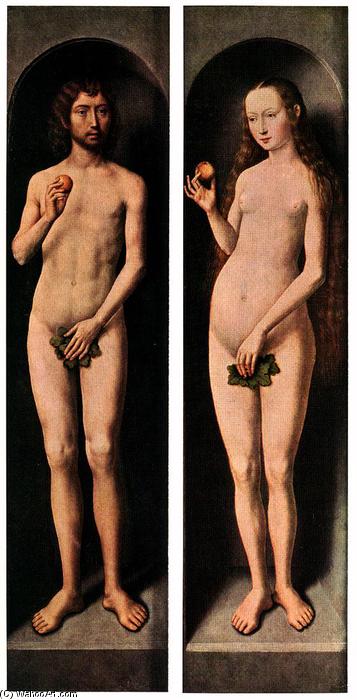
This intricately crafted painting by Hans Memling portrays Adam and Eve before God, holding an apple as a symbol of temptation. Located within Bruges’ Kunsthistorisches Museum, it exemplifies Northern Renaissance artistic excellence.
Hans Memling’s Adam and Eve: A Testament to Renaissance Faith
The painting “Adam and Eve,” created by Hans Memling around 1485, stands as an emblem of the High Renaissance's preoccupation with humanist ideals intertwined with profound religious contemplation. Executed in oil on oak panel—a technique favored for its luminosity and durability—this artwork resides within the Kunsthistorisches Museum in Vienna, offering visitors a glimpse into a pivotal moment in artistic history. Its diminutive size (69 x 17 cm) belies the monumental significance of its subject matter: the biblical narrative of humanity’s expulsion from Paradise.
- Subject Matter & Narrative Context: Memling meticulously portrays Adam and Eve after their transgression, depicting them kneeling before God—a gesture signifying repentance and humility—as he presents an apple to Eve. This scene draws directly from Genesis 3, illustrating the consequences of disobedience and highlighting God’s mercy in offering forgiveness. The inclusion of a bowl and banana adds subtle visual elements that may represent nourishment or fertility, furthering the painting's symbolic resonance.
- Style & Technique: Memling’s style embodies the Northern Renaissance aesthetic—characterized by unparalleled realism achieved through meticulous observation of nature and masterful anatomical detail. His painstaking application of oil paint creates a velvety surface texture, capturing subtle nuances of light and shadow that imbue the figures with palpable emotion. The artist's attention to drapery folds and facial expressions exemplifies the humanist emphasis on portraying human form accurately.
- Historical Significance: Produced during Memling’s prolific period in Bruges—a thriving artistic center under Burgundian rule—the painting reflects the broader cultural currents of its time. The Renaissance witnessed a resurgence of interest in classical ideals and a renewed focus on Christian theology, influencing artists across Europe. Memling's work aligns seamlessly with this intellectual landscape, demonstrating the enduring power of biblical narratives to inspire artistic expression.
- Symbolism & Emotional Impact: Beyond its literal depiction of the Fall from Grace, “Adam and Eve” communicates a deeper spiritual message concerning human vulnerability and divine compassion. The apple symbolizes temptation and sin—yet simultaneously represents God’s provision for humanity's salvation. Memling skillfully conveys the solemnity of the moment through muted colors and carefully crafted poses, eliciting contemplation on themes of morality, faith, and redemption.
- Location & Reproduction Considerations: Currently housed in the Kunsthistorisches Museum, Vienna, “Adam and Eve” exemplifies the meticulous craftsmanship of Memling’s workshop. High-quality reproductions offer collectors and interior designers alike an opportunity to appreciate the painting's beauty and artistic merit—preserving its legacy for future generations.
The two pictures are on the back side of the side wings of a small triptych, they can be seen when the altar is closed. In the open state the triptych represents the Madonna Enthroned with Saints, in an architectural setting.