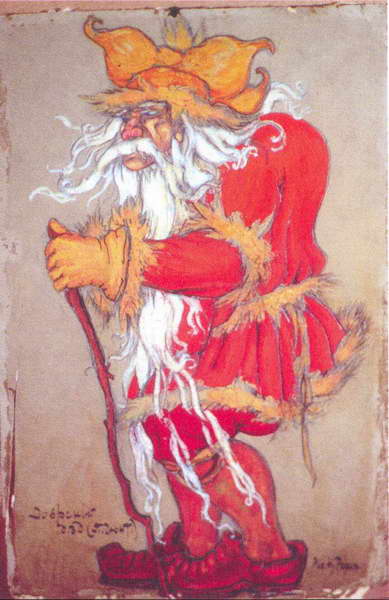
Dovrsky grandfather

Nicholas Roerich’s evocative painting captures Santa Claus in festive attire—a warm red hue accented by yellow—reflecting the artist's spiritual exploration and rooted in the early 20th century. Explore this timeless Christmas icon and bring its beauty into your home.


Nikolai Konstantinowitsch Roerich (1874 - 1947)

Erkunden Sie die fesselnde Kunst von Nicholas Roerich (1874-1947): Symbolismus, Himalaya-Landschaften und mystische Gemälde. Entwürfe für das Ballett Russes und Verfechter der kulturellen Bewahrung.

A Visionary Embrace of Tradition: Exploring Nicholas Roerich’s “Dovrsky Grandfather”

  • Subject Matter and Narrative The painting depicts Santa Claus, rendered in a stylized manner that transcends mere depiction. It's not simply a festive figure; rather, it embodies the spirit of Dovrsky, a Russian folktale centered on an old man who possesses profound wisdom and compassion—a narrative deeply rooted in Slavic mythology and folklore. Roerich’s intention wasn’t to portray Santa Claus as he is commonly represented but to infuse him with the archetypal qualities associated with elder statesmanship and spiritual understanding.
  • Style and Technique Roerich's artistic style aligns closely with Symbolism, characterized by its focus on conveying inner emotions and spiritual truths through symbolic imagery. He employed a meticulous technique—primarily tempera on canvas—resulting in luminous colors and textured surfaces that capture the essence of Dovrsky’s character. The artist skillfully blended realistic elements with fantastical motifs, creating an atmosphere of serene contemplation.
  • Historical Context Created in 1912, “Dovrsky Grandfather” emerged during a period of significant artistic experimentation and intellectual ferment within Russia. Symbolism flourished alongside movements like Futurism and Constructivism, reflecting a desire to grapple with the anxieties of modernity while simultaneously honoring traditions and spiritual heritage. Roerich’s work stands as a testament to this dynamic interplay between past and present.
  • Symbolism: Layers of Meaning The painting is replete with symbolic elements that contribute to its overarching message. The red clothing symbolizes vitality and warmth, mirroring the hearth—a central motif in Slavic culture representing home, family, and spiritual sustenance. The yellow hat represents enlightenment and divine grace, highlighting the grandfather’s role as a guide toward inner peace.
  • Emotional Impact “Dovrsky Grandfather” evokes feelings of nostalgia for simpler times, reverence for wisdom gained through experience, and an affirmation of enduring values. Its tranquil composition invites viewers to contemplate profound questions about life's purpose and the importance of compassion—themes that resonate powerfully across cultures and generations. It’s a piece designed not merely to please but to inspire contemplation and foster a connection with timeless spiritual truths.