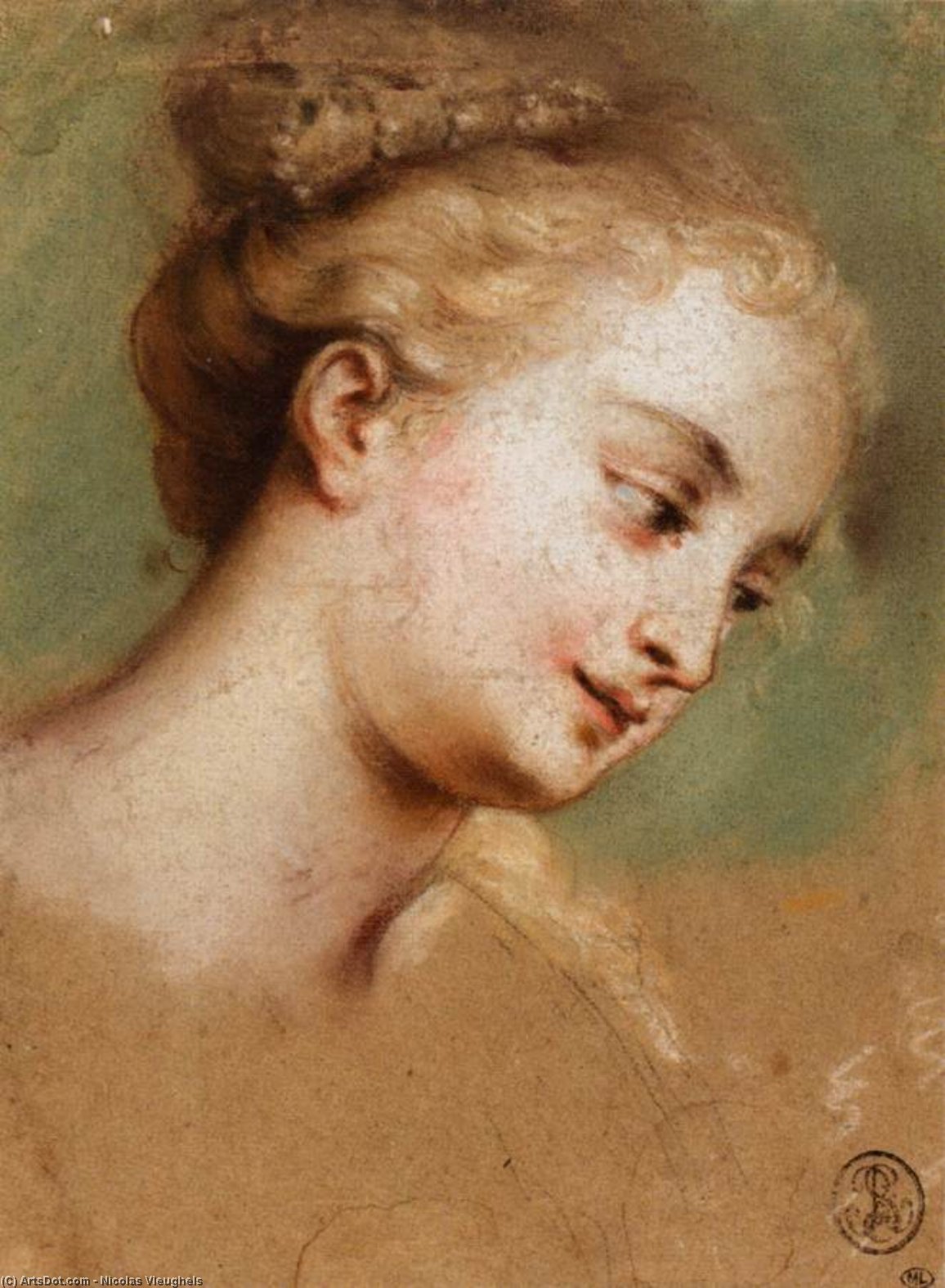
Explore Nicolas Vleughels' masterful Study for the Head of Campaspe – a serene Baroque portrait capturing classical beauty with delicate pastel hues and meticulous detail.
Ein französischer Maler des Barock und Akademiematologe, bekannt für seine venezianischen Einflüsse und klassischen Themen. Entdecken Sie Meisterwerke von Nicolas Vleughels!
Louvre
(Paris, Frankreich)
Paris
Frankreich
Entdecken Sie den Louvre in Paris! Meisterwerke wie die Mona Lisa & Venus von Milo erwarten Sie. Eine Reise durch Kunstgeschichte vom alten Ägypten bis zur Renaissance.
Louvre
Musée du Louvre
Frankreich
Paris
Louvre Museum
Mona Lisa
8.7 Millionen (2024)
380.000+ Objekte
Kunstmuseum
1793
Eine königliche Residenz
3
Wofür wurde der Louvre ursprünglich gebaut?
A Portrait Steeped in Tradition and Venetian Influence: Nicolas Vleughels' Study for the Head of Campaspe
Nicolas Vleughels (1668 – 1737) represents a fascinating intersection of artistic traditions—a testament to the dynamism of European art during the early Baroque period. Born in Paris, he descended from a distinguished Flemish lineage, inheriting not only talent but also a formative environment brimming with fellow Flemish artists who had sought refuge and patronage within the burgeoning Parisian art scene. This heritage profoundly shaped his artistic vision, propelling him towards a style that skillfully blended the meticulous realism championed by Flemish masters with the grandeur and luminosity characteristic of Venetian painting—a stylistic fusion that cemented his place as one of the era’s most accomplished portraitists.
Early Training and Reverence for Rubens
Nicolas' artistic journey commenced under the tutelage of Pierre Mignard, a celebrated portraitist whose unwavering commitment to capturing nuanced detail and conveying psychological depth undoubtedly instilled in him a foundational understanding of expressive realism. However, his influence extended far beyond mere instruction; he actively engaged in emulation—a deliberate act of absorbing and mastering the techniques honed by Rubens—arguably the undisputed champion of Baroque art. Through painstaking copying of Rubens’ monumental canvases, Nicolas internalized not only compositional principles but also the profound ability to imbue his paintings with palpable emotion and dramatic impact—skills that would become hallmarks of his oeuvre.
The Venetian Connection: Embracing Light and Color
The artistic landscape of Nicolas Vleughels' time was dominated by Venice, a city renowned for its innovative approach to painting technique and its masterful manipulation of light and color. Artists like Rembrandt and Rubens had traveled extensively to Italy, absorbing the Venetian aesthetic—a style characterized by shimmering surfaces, atmospheric perspective, and an emphasis on capturing fleeting moments of emotion. Nicolas Vleughels embraced this influence wholeheartedly, incorporating Venetian principles into his own artistic practice. This is evident in the subtle layering of pastel hues that illuminate the woman’s face and drapery, creating a luminous effect reminiscent of Venetian masterpieces—a deliberate choice designed to heighten the emotional resonance of the portrait.
A Study in Detail: Technique and Artistic Vision
The artwork itself exemplifies meticulous craftsmanship and reflects Nicolas Vleughels' unwavering dedication to artistic excellence. The artist employed fine detail—capturing the texture of hair strands, modeling subtle contours of facial features—to achieve an astonishing level of realism. This painstaking attention to observation underscores his profound understanding of anatomy and his ability to translate visual perception into compelling artistic representation. Furthermore, the pale greenish-blue background serves as a counterpoint to the woman’s skin tone, subtly enhancing the three-dimensional quality of the portrait and reinforcing its ethereal beauty.
Symbolism and Emotional Resonance
Beyond mere technical prowess lies a deeper layer of symbolic significance. The pose—slightly tilted downwards towards her right shoulder—suggests contemplation and introspection, inviting viewers to engage in a dialogue with the subject’s inner life. The serene expression—eyes gazing off into the distance—captures a moment of profound stillness, conveying a sense of quiet dignity and contemplative grace. These artistic choices resonate powerfully with the viewer, evoking feelings of serenity and admiration for the artistry involved—a testament to Nicolas Vleughels' ability to transform observation into emotive storytelling.
Conclusion: An Heirloom of Baroque Elegance
Nicolas Vleughels’ “Study for the Head of Campaspe” stands as a remarkable achievement in Baroque portraiture, embodying the harmonious fusion of Flemish tradition and Venetian grandeur. Its meticulous technique, evocative symbolism, and luminous palette continue to inspire artists and collectors alike—a timeless masterpiece that exemplifies the enduring power of art to capture beauty, emotion, and intellectual contemplation.